
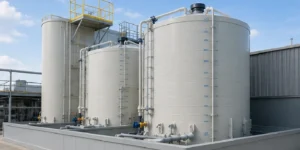
When Should a PP Secondary-Containment Bund Use an Isolated Drain and Sampling Point?
Learn when a PP secondary-containment bund needs an isolated drain and sample point, with valve control, spill segregation, access, testing, and RFQ details.
Learn when a PP secondary-containment bund needs an isolated drain and sample point, with valve control, spill segregation, access, testing, and RFQ details.
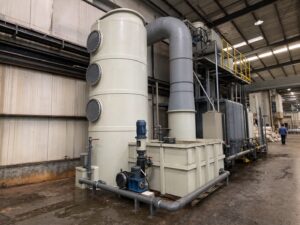
Specify a PP scrubber spray header and mist eliminator RFQ with process duty, nozzle coverage, wash access, drainage, materials, and acceptance documents.
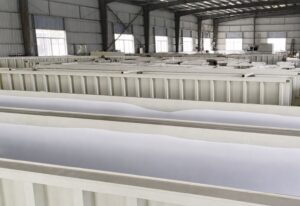
Specify PP tank supports and saddle interfaces with load cases, contact geometry, restraint, thermal movement, and inspection access before fabrication.
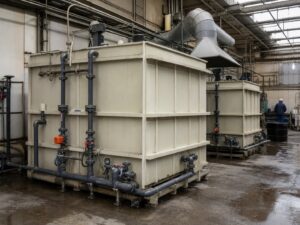
Learn what a PP chemical tank leak test record should include: test boundary, method, weld traceability, repair evidence, results, and shipment release.
Review when PP sheet can be considered for battery charging and electrolyte tanks, including concentration, temperature, ventilation, containment, welding, cleaning, and RFQ inputs.
Flame-retardant PP sheet for chemical exhaust ducts should be specified when the duct, enclosure, or connected component has a documented fire-performance requirement in addition to
Build a PP chemical tank nozzle and flange RFQ with service duty, nozzle schedule, flange, gasket, drawing, fabrication, inspection, and responsibility inputs.
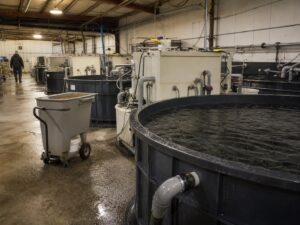
Short answer: A PP aquaculture tank RFQ should define each hatch, drain, and overflow as a controlled interface—not as a generic “opening.” Give the fabricator
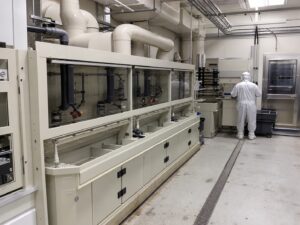
Conductive PP sheet for semiconductor wet-process equipment is justified only when the project has a defined static-control risk and a measured electrical requirement. It is