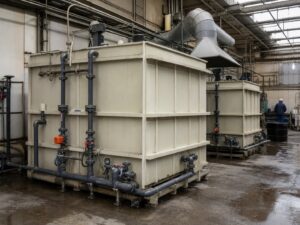
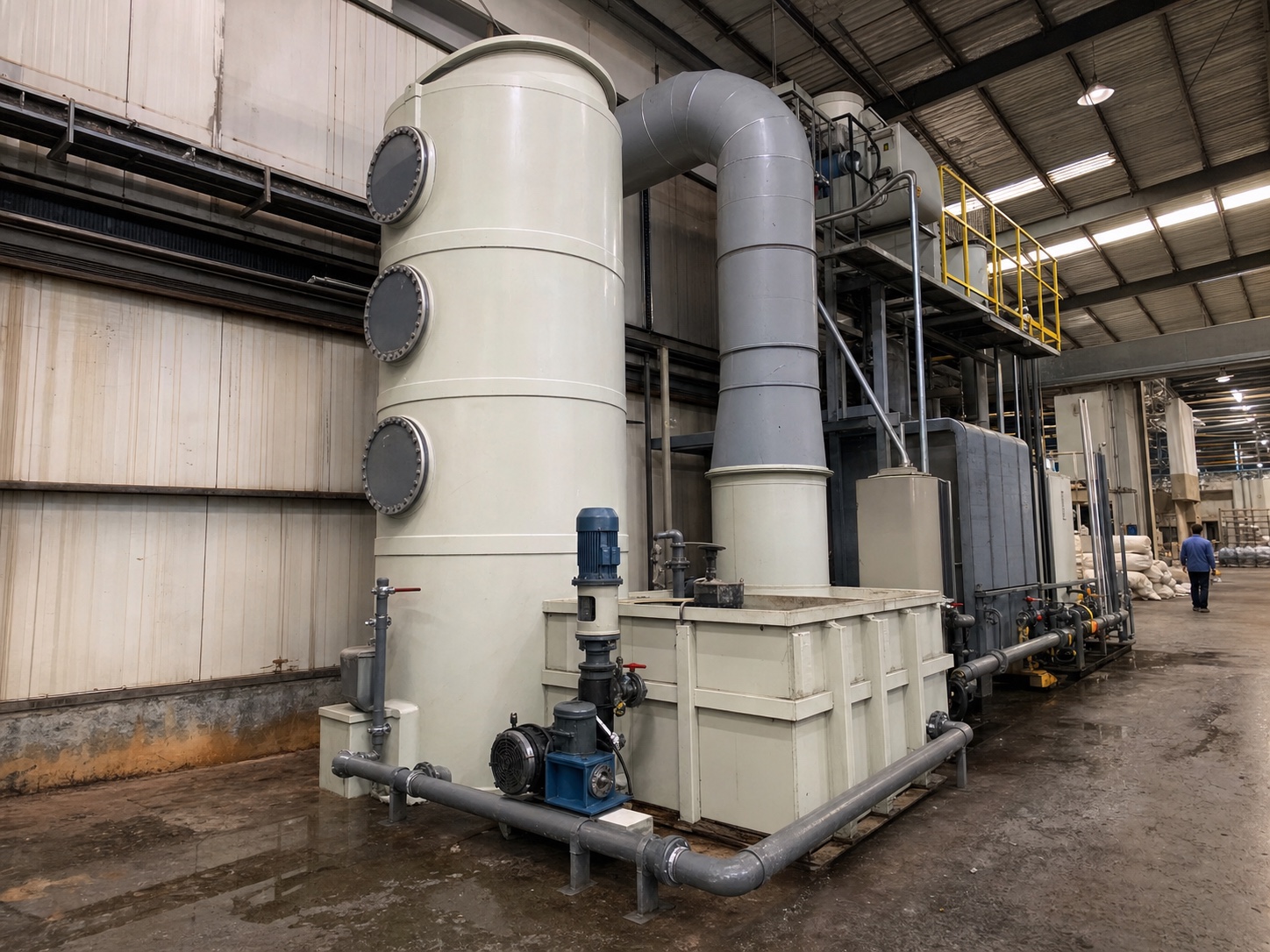
Flame-retardant PP sheet for chemical exhaust ducts should be specified when the duct, enclosure, or connected component has a documented fire-performance requirement in addition to chemical resistance. The decision should connect the exhaust stream, ignition scenario, required flame class, temperature, condensate, joint method, supports, and complete ventilation-system approval. A flame-retardant label alone does not approve a duct system.
When should flame-retardant PP sheet for chemical exhaust ducts be specified?
Start with the hazard and the system boundary, not with a product nickname. Chemical exhaust ducts can carry corrosive vapours from plating, pickling, etching, chemical cabinets, laboratories, scrubbers, and process enclosures. The material may be exposed to ignition sources, hot surfaces, electrical equipment, deposits, condensate, or a fire originating elsewhere in the facility.
Specify an FR grade when the project documents require a flame classification or when the responsible fire-protection engineer determines that ordinary PP would not provide enough margin. Typical triggers include a duct inside a building, a run serving a flammable process, a cleanroom or insurer requirement, a duct passing through a fire-rated construction, or an owner specification that names a particular test method. For flame-retardant PP sheet for chemical exhaust ducts, the required class must come from the project; do not turn a generic UL 94 result into a universal building or system rating.
OSHA’s industrial ventilation requirements address ventilation-system controls and safeguards, while UL 94 is a plastics flammability test standard. They answer different questions. A material test does not demonstrate airflow, capture, discharge, fan compatibility, fire-rated penetration, or safe commissioning of the complete exhaust installation.
Separate the fire requirement from the chemical-exhaust requirement
Ordinary PP is often considered because it is weldable and resists many acids, alkalis, and wet chemical streams. Adding a flame-retardant package changes the material specification, but it does not remove the need to review the actual gas mixture, concentration, moisture, operating temperature, cleaning exposure, and mechanical load. If chemistry or heat falls outside the confirmed material envelope, an FR label cannot rescue the selection.
| Question | What must be confirmed | Почему это важно |
|---|---|---|
| Fire performance | Required standard, class, specimen thickness, conditioning, and whether the requirement is for sheet, duct, fitting, or complete assembly | A test result applies to the tested material and conditions, not automatically to every fabricated section. |
| Химическая обязанность | Gas or aerosol composition, concentration, temperature, condensate, deposits, and cleaning method | FR additives do not create universal chemical compatibility. |
| System safety | Airflow, capture, pressure, discharge, fan, scrubber, controls, fire-rated penetrations, and commissioning owner | Material selection cannot replace ventilation or fire-system engineering. |
| Fabrication | Sheet thickness, joint method, matching welding rod, support spacing, access, and inspection records | Joints, thin sections, openings, and supports may govern the finished component. |
What does QEEHUA’s flame-retardant PP evidence actually show?
QEEHUA’s internal English SGS reports dated June 9, 2026 record tests on submitted samples, not a blanket approval for every PP sheet or duct. The V-0 report tested a 4.8 mm specimen under UL 94-2023 Rev.2-2024 Section 8 and classified the tested sample V-0. The V-2 report tested a 9.8 mm specimen under the same section and classified that sample V-2. The reports state that the results refer only to the samples tested and are for internal reference.
That distinction is important during procurement. Do not write “QEEHUA PP sheet is UL 94 V-0” without identifying the report, sample description, thickness, conditioning, test method, and product traceability. A buyer should ask which supplied grade and thickness correspond to the project requirement, whether the duct and fittings use the same formulation, and what documents will accompany the shipment.
QEEHUA’s practical review also keeps flame performance separate from fabrication release. Confirm the actual FR sheet, matching welding consumable, joint procedure, cut-edge condition, support design, and inspection plan. A coupon or report can support a decision, but it does not replace the project acceptance plan for the finished duct.
How should V-0 and V-2 be used in a duct specification?
V-0 and V-2 are classifications from the UL 94 vertical-burning method. They describe the behaviour of the tested specimen under that method; they are not interchangeable with a building-code flame-spread index, smoke-developed index, fire-resistance rating, or cleanroom approval. If the project specification names another method or class, use that requirement instead of choosing the most familiar label.
- Name the test method: include the edition or project-approved reference.
- Name the thickness: a rating at one specimen thickness should not be silently transferred to a thinner formed wall or machined section.
- Name the material identity: record grade, colour, batch or lot, and supplier documentation.
- Name the scope: state whether the requirement applies to sheet, fittings, welding rod, duct, access door, scrubber interface, or all exposed components.
- Name the acceptance authority: identify the fire engineer, owner, AHJ, insurer, or cleanroom authority responsible for final approval.
For semiconductor or cleanroom exhaust, also check whether the project requires a separate smoke, contamination, or facility-material protocol. A UL 94 result should not be presented as FM 4910, a cleanroom qualification, or a system fire approval unless the exact evidence says so.
When ordinary PP, FR PP, or another duct material is the better choice
Use ordinary PP only when the responsible project team has documented that its fire performance is acceptable for the location and process. FR PP is a candidate when the same chemical-resistance and fabrication logic is needed but the project adds a defined flame-performance requirement. Consider another material or a different fire-protection strategy when the temperature, oxidizer, solvent, smoke, pressure, structural, or code requirement exceeds the confirmed FR-PP evidence.
Do not select FR PP simply because a duct is called “chemical.” Conversely, do not delete the FR requirement because the exhaust is wet or routed to a scrubber. The correct decision depends on the hazard scenario, the duct location, the governing code, the material evidence, and the responsible engineer’s system design.
What should an FR PP chemical-exhaust duct RFQ include?
A useful RFQ makes the fire and chemical assumptions visible before the fabricator prices the work.
- Process description, chemicals, concentration or mixture, normal and upset temperature, moisture, condensate, and cleaning exposure.
- Duct route, diameter or rectangular dimensions, pressure condition, flow or capture basis, connected equipment, and support spacing.
- Required flame standard and class, specimen thickness, documentation format, and the person responsible for acceptance.
- Sheet, fitting, access-door, damper, flange, gasket, and welding-rod material requirements.
- Joint details, field-weld boundaries, inspection points, test coupons if required, and repair or retest records.
- Fire-rated wall or floor penetrations, insulation or protection interfaces, fan and scrubber interfaces, and site-installation responsibilities.
- Drawing revision, traceability, packing, delivery, and the exact certificates or test reports required at handover.
QEEHUA’s PP sheet for chemical exhaust ductwork guide covers the broader material and component-selection boundary. Use it alongside the PP ductwork RFQ guide, then add the FR-specific evidence and fire-approval fields above. For the wider material-selection context, see the PP sheet selection and fabrication guide.
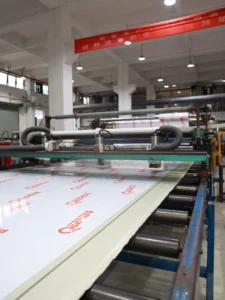
Why fabrication evidence still matters: this QEEHUA video shows a PP sheet extrusion control stage. It is general production context for a material-submittal discussion; it does not establish flame classification, chemical compatibility, welding approval, or exhaust-system compliance.
Видеоссылка: PP Sheet Extrusion: Pneumatic Control Panel | QEEHUA. Keep this production visual separate from the project fire test report and finished-duct acceptance records.
Common mistakes when specifying flame-retardant PP ductwork
- Using “fire resistant” without a test method: replace the label with a named standard, class, thickness, and acceptance authority.
- Transferring a sample result to every thickness: confirm the exact supplied sheet, formed section, fitting, and joint scope.
- Ignoring chemistry after adding FR additives: review the actual stream, condensate, deposits, temperature, and cleaning exposure.
- Calling a material rating a system approval: keep airflow, capture, discharge, fire penetrations, controls, and commissioning with the responsible system designer.
- Leaving welding and traceability open: carry the grade, rod, procedure, lot, inspection, and repair record through fabrication and handover.
Часто задаваемые вопросы
Is flame-retardant PP always required for chemical exhaust ducts?
No. It is required only when the project fire strategy, code, owner, insurer, cleanroom requirement, or responsible engineer specifies a defined fire-performance level. Ordinary PP may be acceptable in some locations after documented review.
Does UL 94 V-0 approve a complete PP exhaust duct system?
No. UL 94 describes the tested plastic specimen under its method. It does not approve airflow, capture, smoke control, fire-rated penetrations, supports, welding, commissioning, or the complete duct system.
Can the QEEHUA V-0 report be applied to every PP sheet thickness?
No. The internal SGS report identifies a tested V-0 sample and its test conditions. Match the project requirement to the exact grade, thickness, lot, formulation, and supplied component, then obtain the responsible project’s acceptance.
What is the most important RFQ input for FR PP ductwork?
State the required fire test and class together with the chemical stream, temperature, duct location, thickness, joint scope, and acceptance authority. A fire class without those boundaries is not a complete procurement requirement.
Send the controlled duct drawing, process-media record, temperature and condensate conditions, required fire standard, exact thickness, welding scope, support details, and handover-document list through the Страница контактов QEEHUA. QEEHUA can review the PP sheet and fabrication scope; final fire and ventilation approval remains with the designated project engineer and authority.