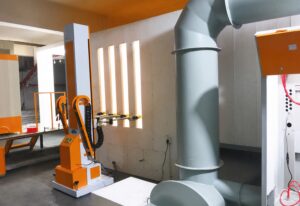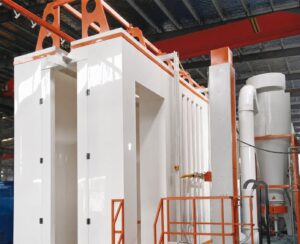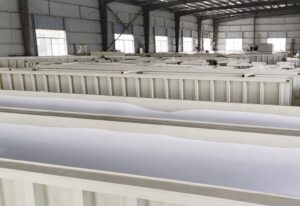
A PP ductwork inspection door RFQ should define the access location, maintenance purpose, duct geometry, closure arrangement, fabrication interfaces, documentation, and acceptance checks. These details let a supplier review the requested component without treating it as proof that the complete exhaust system is suitable, safe, or commissioned.
Start with the maintenance decision, not the door size
An inspection door is a controlled access point. The RFQ should first state what the maintenance team needs to inspect, clean, adjust, or observe and where that activity occurs in the process. A rectangular opening drawn only as a dimension does not explain its service purpose or the clearance needed to use it.
For chemical-exhaust work, identify the duct run, whether the opening is upstream or downstream of process equipment, the intended access activity, and any nearby supports, flanges, branches, dampers, instruments, or enclosure connections. Use the wider PP sheet chemical-exhaust ductwork selection guide to organize the system-level conditions separately from the access-door component.
Confirm the responsibility boundary
The request should distinguish component fabrication from system design and commissioning. A fabricated PP inspection door can be reviewed against the supplied drawing and acceptance scope; it does not, by itself, establish capture performance, air volume, contaminant control, chemical compatibility, structural support adequacy, or regulatory compliance. Those decisions require the project designer and the complete process information.
Include these RFQ fields in one controlled package
| Поле запроса предложений (RFQ) | Что определить | Почему это важно |
|---|---|---|
| Access purpose and location | Inspection, cleaning, maintenance, or another stated task; duct tag; orientation; and controlled drawing reference. | Prevents a generic opening from being interpreted as an unverified design solution. |
| Duct and interface geometry | Cross-section or diameter, straight length, frame position, adjacent joints, flanges, branches, and required clearances. | Lets the supplier review the component in relation to the actual fabricated section. |
| Process-duty inputs | Process stream description, known temperature and pressure conditions, operating cycles, and any site restrictions supplied by the project team. | Supports a project-specific material and fabrication review without assuming suitability. |
| Door and closure arrangement | Opening dimensions, frame, panel configuration, handle or fastener preference, gasket requirement if specified, and opening direction. | Aligns access needs with the requested fabrication details. |
| Support and installation interface | Who supplies supports, how the section is oriented, field-connection responsibility, lifting limits, and installation constraints. | Avoids leaving field work or support assumptions outside the quotation scope. |
| Documents and acceptance | Required drawing revision, identification, inspection points, records, packing information, and any purchaser-specified test or release requirement. | Creates a reviewable handover path before the component is made. |
Keep material selection and fabrication review connected
QEEHUA PP Sheet can be reviewed for a fabricated access-door component when the purchaser supplies the service conditions and design inputs. The final selection should consider the process stream, temperature, pressure or vacuum condition, surrounding equipment, required access frequency, and the complete joint and support arrangement. Do not use a generic material statement as a substitute for this review.
Where the RFQ includes welding or fabricated joints, define the joint preparation, inspection points, and record requirements in the purchase scope. The Руководство по подготовке сварного шва из полипропилена provides related fabrication context; the component RFQ should still state the project-specific drawing revision and acceptance responsibility.
Local exhaust ventilation design also has a system-level responsibility. The UK Health and Safety Executive’s HSG258 guidance on local exhaust ventilation is a useful reference for the broader control context. It does not specify an inspection-door design or approve a particular material for a project.
For a fabrication-related visual reference, this QEEHUA video shows a PP sheet cutting process. It is included only as a general panel-preparation example; it does not verify the access-door dimensions, joint detail, chemical duty, or exhaust-system performance for a project.
Видеоссылка: Процесс резки полипропиленовых листов: Точная резка | QEEHUA. The video illustrates general PP sheet cutting context only and does not establish inspection-door suitability or exhaust-system acceptance.
Specify documents and acceptance before fabrication starts
Use one current drawing revision and identify the inspection door on that drawing. If the purchaser requires dimensional checks, visual inspection, a defined leak test, photographs, marking, packing details, or a handover package, list each item and the responsible party in the RFQ. A request for “standard testing” is not specific enough because acceptance criteria and test conditions must be agreed for the project.
The U.S. Occupational Safety and Health Administration’s technical manual on health hazards provides broader context for controlling workplace exposure. Apply the relevant project, site, and regulatory requirements rather than relying on an inspection door as an independent safety control.
Use the RFQ to make the next review practical
Before requesting a quotation, collect the controlled drawing, duct location, access purpose, process-duty inputs, desired closure arrangement, interface responsibilities, and acceptance documents. Then request a project-specific review of the PP sheet component and its fabrication scope. For broader procurement information, see the Контрольный список для предоставления материалов из полипропиленового листа для проектов EPC и wet-scrubber material and fabrication checks.
Часто задаваемые вопросы
Is a PP ductwork inspection door the same as a commissioning test port?
No. An inspection door provides defined physical access for a stated maintenance or inspection activity. A commissioning test port has a different measurement purpose. The RFQ should name the required function and must not assume that one component performs the other role.
Does an inspection door confirm that PP is suitable for the complete exhaust system?
No. PP component suitability requires project-specific review of the process stream, operating conditions, duct arrangement, joints, supports, and applicable requirements. An inspection-door RFQ should provide these inputs rather than treating the door as proof of system suitability.
Should the RFQ require a leak test?
Only when the purchaser defines the required test, acceptance criterion, test conditions, and responsible party. Do not request a generic “standard test” because the relevant conditions and acceptance boundary must be agreed for the project.
What should be confirmed before an inspection door is installed in the field?
Confirm the current drawing revision, opening location and orientation, surrounding clearances, support and connection responsibilities, site access constraints, and the agreed inspection or handover records. The field team should also follow the project’s applicable safety and installation requirements.
Need a drawing-led review for a PP ductwork inspection door?
Send the duct drawing, access purpose, process-duty information, interface details, and required documents so QEEHUA can review the requested component scope with you.