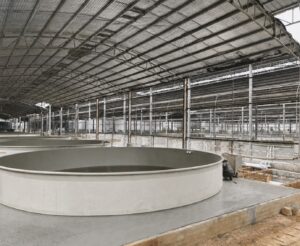
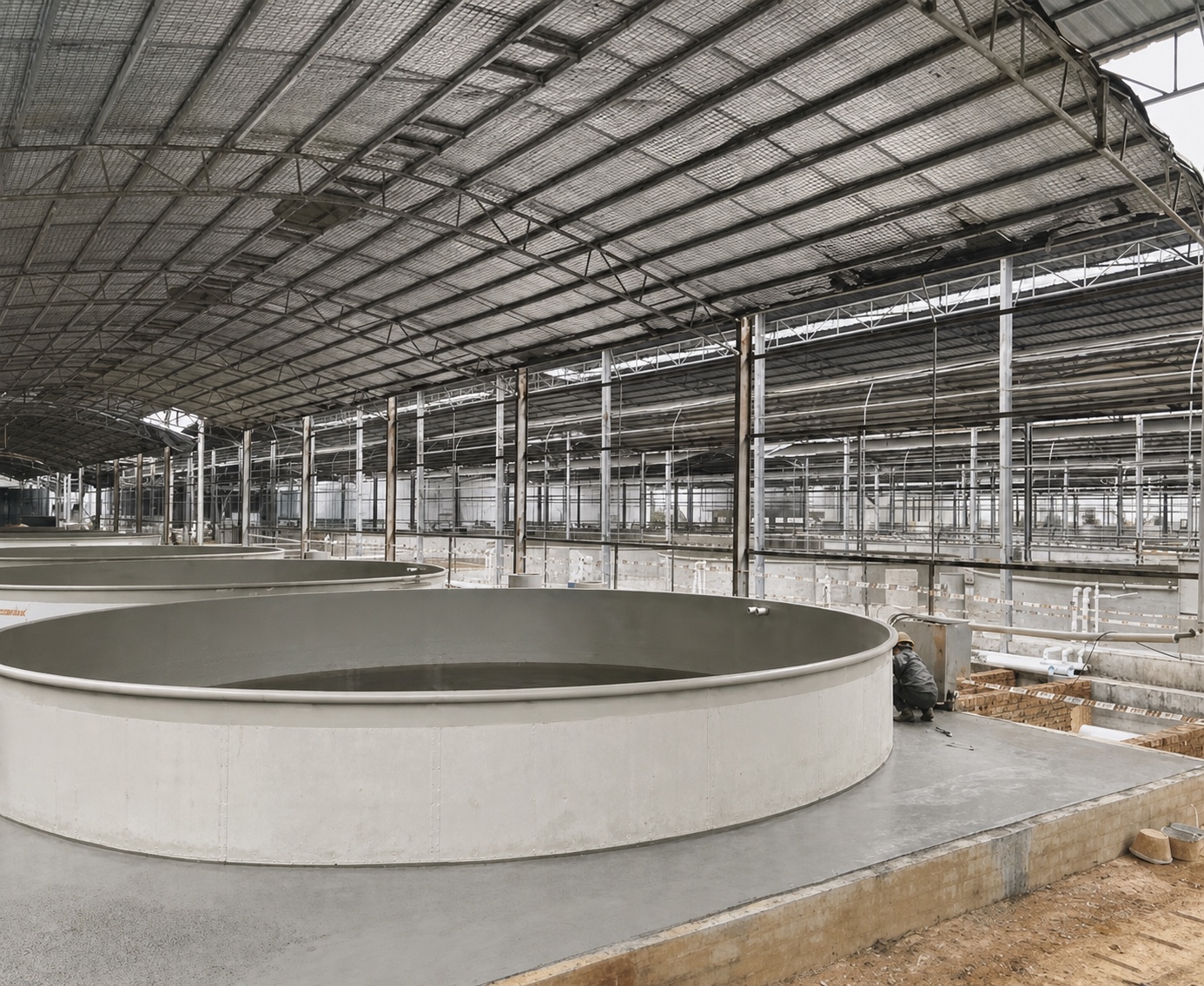
Before a fabricated PP tank, duct, scrubber, or enclosure is commissioned, the site team should record more than “installed.” A useful PP sheet site fit-up record proves that the support surface, section alignment, nozzles, flanges, drains, field welds, and deviations were checked against the approved drawings before the equipment was placed into chemical service.
PP sheet site fit-up record: why it needs its own release
Factory acceptance shows what was built under controlled conditions. Site fit-up shows whether that equipment still matches the project after transport, lifting, temporary support, access restrictions, and connection to the surrounding plant. A tank can leave the shop within tolerance and still be forced against an uneven pad. A duct section can be dimensionally correct but misaligned with the fan, scrubber, or wall penetration. Those conditions need a documented disposition before commissioning.
The record should therefore sit between installation and start-up. It gives the owner, installer, and fabricator one shared place to answer three questions: was the equipment set on the intended support, were the interfaces connected without forcing the PP structure, and were any site changes reviewed before they became hidden behind insulation, cladding, or adjacent services? The resulting PP sheet site fit-up record can also serve as the project’s PP equipment installation checklist. For the wider material, fabrication, and application context, use the PP sheet selection and fabrication guide as the parent reference.
Define the PP sheet site fit-up record before the equipment is moved
Start the form with traceable information. Use the equipment tag, drawing number and revision, work order or purchase order, installation location, fabricator, installer, date, and the names of the person performing the check and the person accepting it. If the equipment arrives in sections, list every section number and the intended mating sequence.
| Record block | What to capture | Why it matters before commissioning |
|---|---|---|
| Equipment identity | Tag, service, section IDs, approved drawing and revision | Prevents a correct measurement from being attached to the wrong vessel or duct run. |
| Site condition | Pad or steelwork condition, cleanliness, level reference, access and lifting route | Shows whether the installation environment matches the design assumptions. |
| Fit-up measurements | Support contact, plumb/level, section gap, flange and nozzle position, drain slope where specified | Creates objective evidence instead of a visual “looks aligned” approval. |
| Deviation control | Shim, gap, forced alignment, field cut, re-drilled hole, weld repair, NCR or approved concession | Stops an unreviewed site modification from becoming a hidden service risk. |
| Опубликуйте доказательства | Photos, test references, redlines, open items, signatures and date | Connects the physical installation to the commissioning decision. |
Используйте PP sheet material traceability package when the record must also show the released sheet grade, lot, welding rod, and fabrication documentation. The PP sheet site fit-up record should reference that package rather than repeat every material certificate.
Check the base, supports, and lifting condition first
Do not begin by tightening a flange. First confirm that the receiving base or support steel is complete, clean, and able to carry the equipment in the installed condition. For a flat-bottom tank, the support should be continuous and free of debris or local high points. For a round tank, saddle or leg contact should match the approved support arrangement. For a duct or enclosure, verify that hangers and frames are in the locations shown on the drawing and that they do not pinch the PP wall.
External reference: New York State DEC plastic-tank inspection guidance emphasizes level foundations, support contact, flexible restraint, accessible piping, and inspection of secondary containment. Apply the project manufacturer’s drawings and local requirements first.
Record any shim, packing strip, local gap, or support adjustment. A small correction that is designed, distributed, and approved is different from pulling a nozzle or flange into position with bolts. The latter can preload the sheet and make a later crack or leak appear to be a chemical-compatibility problem.
During unloading and setting, protect corners and edges with soft pads or slings rather than placing a wire rope directly over a PP edge. OSHA requires rigging equipment to be inspected before use and defective equipment to be removed from service; its rule also addresses rated lifting accessories for prefabricated structures. Apply the project’s local lifting requirements, but keep the inspection reference in the fit-up package when lifting damage could affect acceptance.
External reference: OSHA 29 CFR 1926.251 covers inspection of rigging equipment and rated lifting accessories. This is a safety reference, not a PP equipment design approval.
QEEHUA’s working rule is to inspect first and process second. If transport has created a cracked edge, deep cut, obvious deformation, or impact mark, isolate the area and record the disposition before field drilling, bending, or welding. Do not hide a damaged area under a support or flange cover.
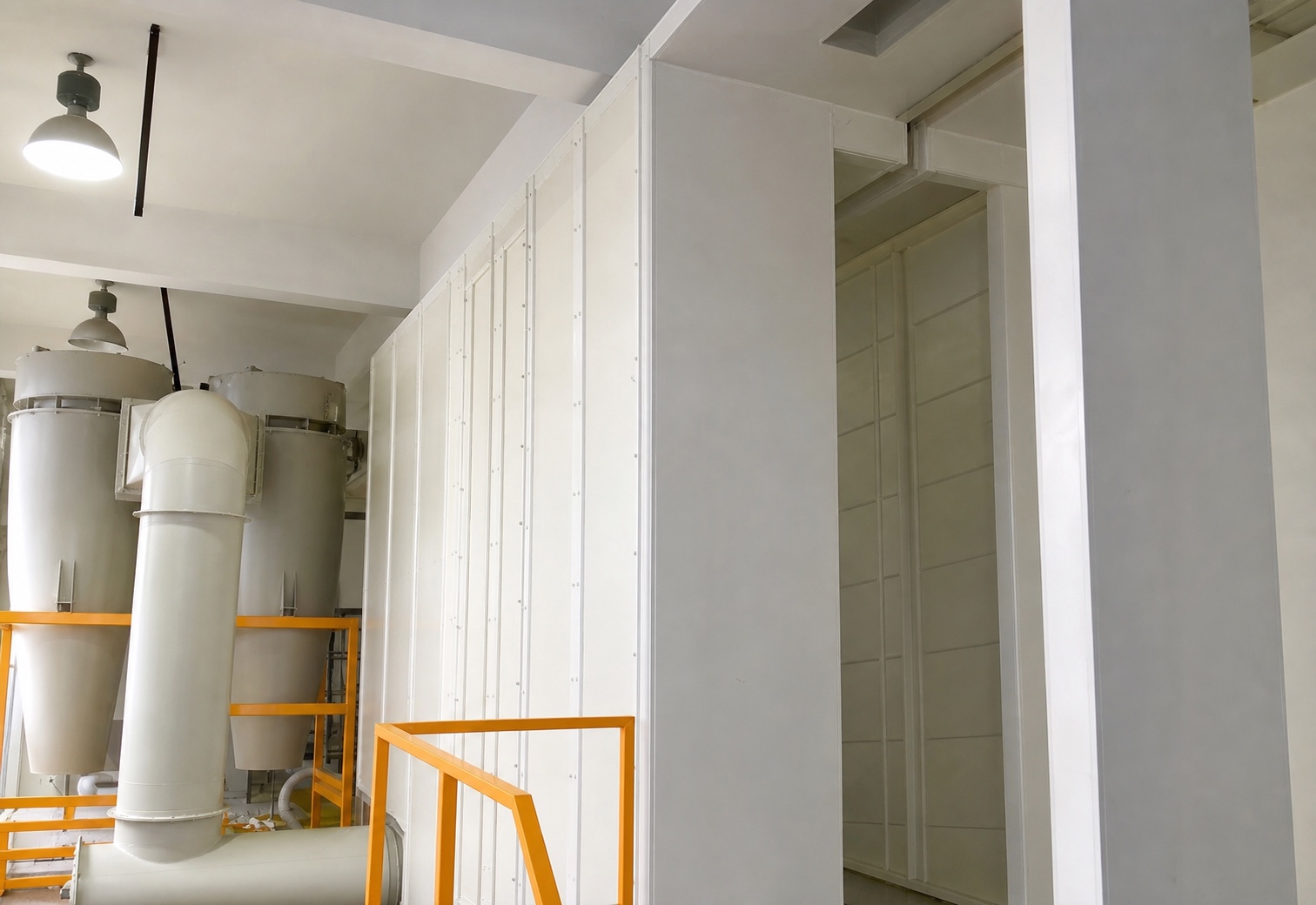
Measure alignment without forcing the interfaces
The core fit-up section should pair each required measurement with a reference and a disposition field. The exact tolerance comes from the approved drawing, equipment specification, or project procedure; do not invent one universal PP tolerance. Record the method used, such as a calibrated level, straightedge, tape, laser, or flange template, when that detail matters to acceptance.
| Interface | Fit-up check | Hold point |
|---|---|---|
| Tank or vessel base | Support contact, level reference, anchor or restraint arrangement, clearances | Do not fill or connect heavy piping until support contact is accepted. |
| Nozzles and piping | Centerline, orientation, free movement, independent pipe support, gasket face condition | Pipework must not pull the nozzle into alignment or hang its weight from the PP wall. |
| Duct sections | Route, elevation, flange face, hanger contact, expansion or movement allowance where specified | Complete alignment before final welding or concealment. |
| Drains and low points | Location, access, fall or slope requirement, valve and sampling clearance | Confirm that the drain can be operated and cleaned after adjacent services are installed. |
| Access openings | Door, hatch, removable panel, ladder and maintenance clearance | Verify the opening is usable, not merely present on the drawing. |
If a connection does not line up, stop and classify the cause: support error, transport distortion, drawing mismatch, adjacent steelwork, or a dimensional error. A field cut or re-weld may be possible, but it should be approved, recorded, and retested. The PP tank support and saddle interface review explains why support decisions belong on the fabrication and installation drawings rather than being improvised at the last flange.
Document field weld preparation and environmental conditions
When sections are joined on site, record the joint number, base-sheet and welding-rod material identification, joint preparation, cleanliness, welding procedure revision, equipment operator, and visual result. The surfaces should be clean, dry, and free of oil or loose debris. Do not treat a visually smooth bead as proof that the joint is acceptable for a liquid, vapor, pressure, or vacuum boundary; the project inspection and leak-test procedure still governs.
Weather and temperature belong on the record when they can affect the weld. The QEEHUA PP use manual treats temperatures below 5°C as a condition requiring special care and warming before processing; it also warns against welding in rain, snow, or wet conditions. Those values are internal working guidance, not a universal welding code. If field conditions fall outside the approved procedure, record the hold, protection, preheat decision, or rescheduling action.
Keep the fit-up record separate from the PP chemical tank leak-test record, but cross-reference the test number. This prevents a passed leak test from being mistaken for proof that the tank was installed on the correct support or that every nozzle was free of external load.
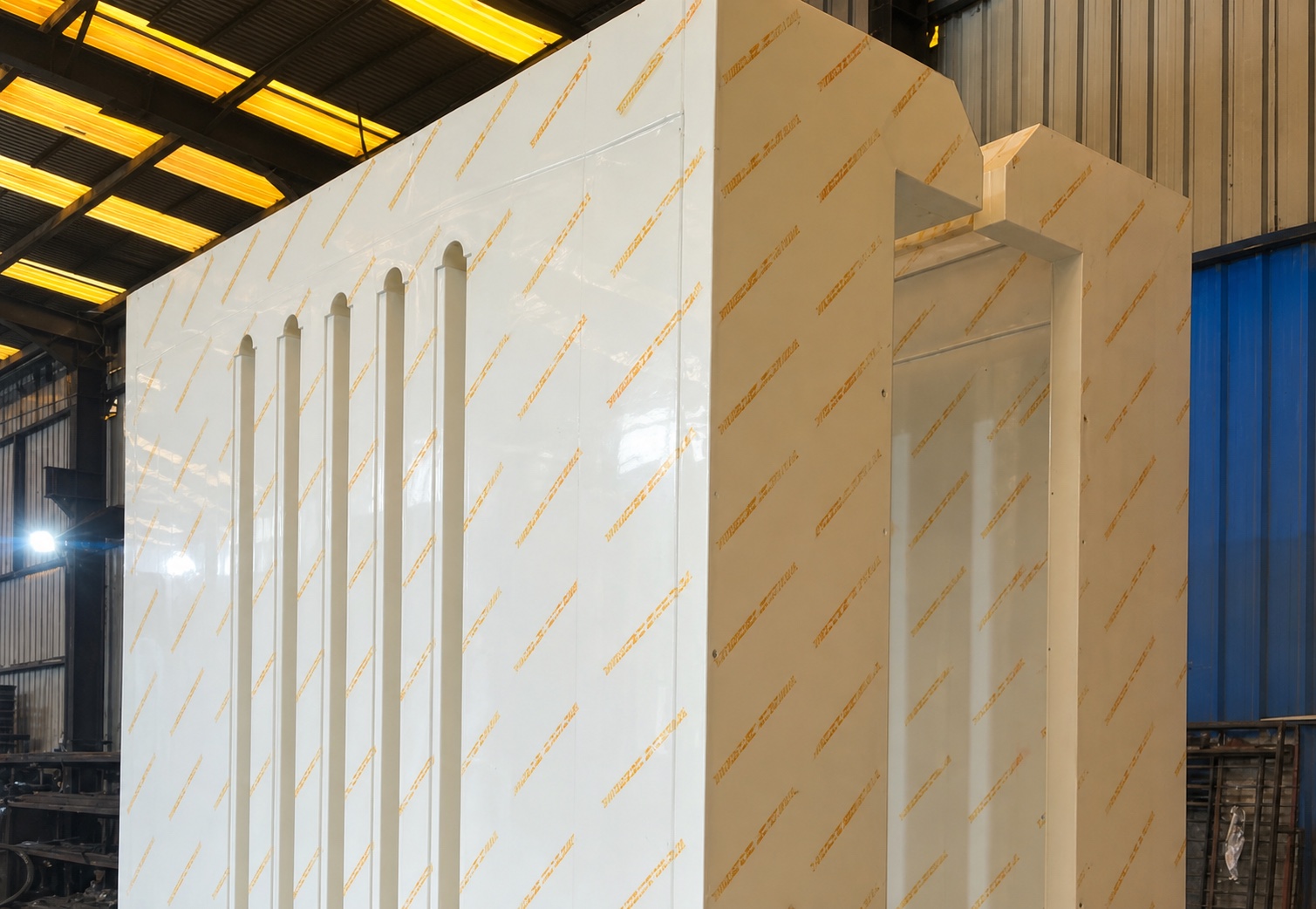
Close the record with tests, photographs, and open-item control
The last section should identify what was tested and what remains open. Depending on the equipment, this may include a liquid leak test, duct leakage or airflow check, drain operation, access-panel reassembly, pump or valve interface check, or a clean-and-close inspection. State the procedure and acceptance criteria rather than writing only “OK.” The PP sheet FAT checklist can be used as the factory-side reference, while this record confirms the post-transport and post-installation condition.
- Attach an overview photograph showing the equipment tag and installed location.
- Attach close-ups of support contact, flange or nozzle alignment, drains, field welds, and any repaired or accepted deviation.
- Mark each photograph with a date, viewpoint, section or joint number, and drawing reference.
- List every open item with an owner, due date, temporary control, and release authority.
- Sign only after the approved test records, redlines, and disposition documents are attached or referenced.
A good record makes later troubleshooting faster. If a leak appears after commissioning, the team can distinguish a fabrication issue from a support movement, forced pipe connection, impact during lifting, or an unapproved field modification. That evidence is more useful than a generic installation completion certificate.
Finished PP equipment footage is useful as a visual reminder that the installed object is a coordinated assembly, not only a sheet panel. Use the project drawing and fit-up record for the acceptance decisions.
Video reference: “PP Sheet finished Products: Finished Products” from the QEEHUA playlist. It shows finished PP products for general context only; it is not a site acceptance test or commissioning record.
What should be handed over before commissioning?
Release the equipment only when the signed PP sheet site fit-up record, approved redlines, test references, material and weld traceability references, photograph set, and open-item disposition point to the same equipment tag and drawing revision. If the owner’s procedure requires a separate commissioning punch list, reference it instead of duplicating the same checks. The purpose is a controlled evidence chain from delivered section to installed and accepted equipment.
For a new PP fabricated-equipment package, QEEHUA can review the proposed record against the equipment type, site interfaces, chemical service, drawing revision, and required acceptance evidence. Suitability still depends on the project’s actual grade, thickness, support design, operating conditions, and applicable code.
Часто задаваемые вопросы
Is a PP sheet site fit-up record the same as a FAT report?
No. A FAT report records factory inspection and testing before shipment. A site fit-up record proves that the transported equipment was installed on the intended supports, aligned with connected systems, and cleared for site testing or commissioning.
What should be recorded when a PP flange does not line up?
Record the measured mismatch, likely cause, affected drawing or interface, temporary condition, proposed correction, approval, and retest. Do not pull the flange into position with bolts or cut and re-weld the part without documented authorization.
Should field welds be listed individually?
Yes when they form part of a liquid, vapor, pressure, or vacuum boundary, or when the project procedure requires traceability. Give each joint a number and link the joint to the welding procedure, operator, visual inspection, and applicable leak or non-destructive test.
Can the record use one generic tolerance for every PP installation?
No. Alignment, level, gap, support, and drain requirements must come from the approved drawing, equipment specification, or project procedure. A generic tolerance can conceal a design-specific requirement or create an unsupported acceptance rule.
Send QEEHUA the equipment type, drawing revision, section layout, support and piping interfaces, chemical service, and required commissioning evidence. Request a technical review before installation release.