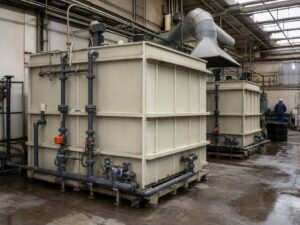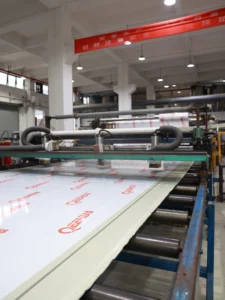
A PP spill containment pallet is only useful when the material, welded joints, capacity, access, and chemical duty are reviewed together. This checklist helps chemical warehouses, laboratories, and process plants prepare a complete request for a polypropylene (PP) sheet containment pallet or bunded platform.
Short answer: PP spill containment pallets
PP spill containment pallets should be specified from the drums, containment volume, drainage approach, handling method, and fabrication details rather than a generic material label.
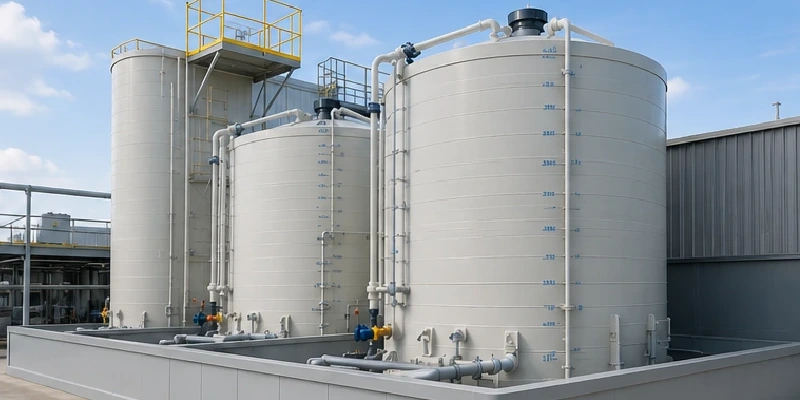
1. Define the spill-containment problem before choosing PP sheet
Start with the failure scenario rather than a nominal sheet thickness. A drum storage area may need to retain a leak from one container, a transfer hose failure, wash-down liquid, or a combination of these events. Where drums move through separate storage, receiving, dispensing, or quarantine zones, use a drum spill pallet quantity guide to map the required positions before finalizing the pallet configuration. The pallet or bund must also remain serviceable when drums are moved, pallets are cleaned, or a forklift approaches the loading edge.
List the chemical names, concentrations, temperatures, exposure time, and cleaning agents from the current safety data sheets (SDS). OSHA’s Hazard Communication overview explains why labels and SDS information should be available to workers. The SDS is the starting point for a compatibility review; it is not a substitute for a project-specific material assessment.
2. PP sheet requirements for a chemical drum pallet
QEEHUA’s PP Board product information lists acid- and alkali-resistant applications, chemical-processing equipment, environmental-protection equipment, and sheet thickness options from 3 to 100 mm. It also lists common sheet sizes of 1220 x 2440 mm and 1500 x 3000 mm. These are material options, not a universal pallet design. The fabricator still needs the load, span, support, joint, and operating details.
| Item to specify | What the buyer should provide | لماذا يُعد ذلك مهماً؟ |
|---|---|---|
| الواجب الكيميائي | Name, concentration, temperature, exposure time, and cleaning chemicals | Compatibility can change with concentration and temperature; do not select from the chemical name alone. |
| Containment geometry | Drum/IBC count, footprint, wall height, usable volume, drain or sump location | Defines whether the component is a pallet, a low bund, or a larger collection platform. |
| Structural loading | Container weight, point loads, support spacing, forklift or pallet-jack access | Controls sheet thickness, ribs, supports, and local reinforcement. |
| Fabrication details | Welded seams, corners, penetrations, lifting points, and inspection access | Leak paths often occur at joints and penetrations rather than on an intact sheet surface. |
| Project records | Drawing revision, material identification, inspection method, and packing requirements | Creates a traceable review package for EPC, EHS, and maintenance teams. |
3. Review the containment volume and drainage concept
Do not request a pallet by outside dimensions only. State the largest container, the number of containers, and whether rainwater, wash-down water, or transfer liquid can enter the same area. If an oil-regulated installation is involved, the US EPA explains that SPCC secondary containment may be arranged for an individual container or a common collection area and must be designed around the applicable rule. The EPA SPCC secondary-containment guidance is oil-specific; other chemicals may be governed by different local or national requirements.
For a PP sheet pallet, describe where a collected liquid will go after an inspection. A closed sump, removable drain fitting, or controlled transfer point may be appropriate, but the choice depends on the chemical, the site procedure, and the risk of mixing incompatible liquids. Avoid an open drain that bypasses the intended containment path.
4. Check welding, supports, and handling
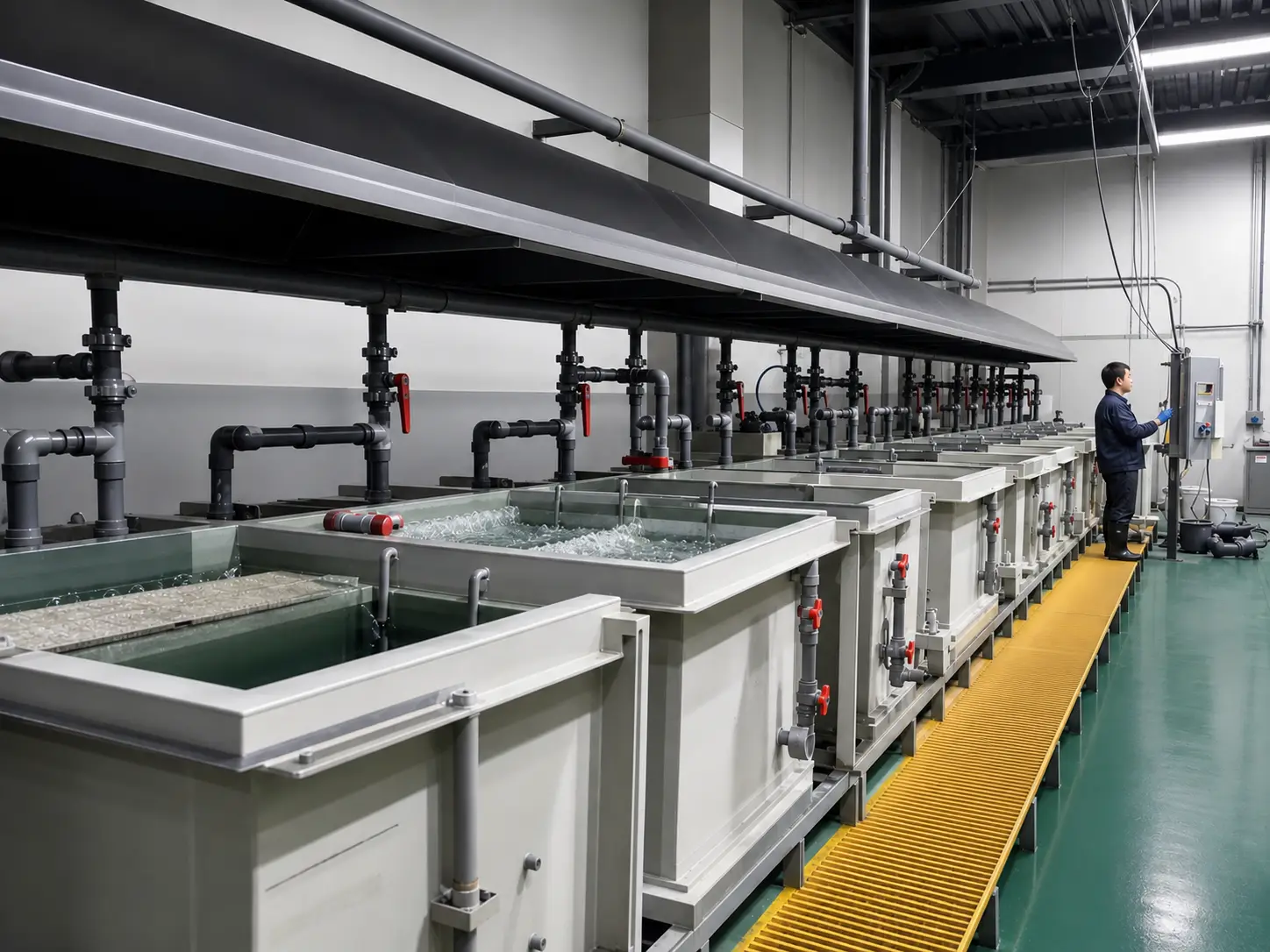
PP sheet containment components are normally assembled around welded seams, folded or supported panels, and service openings. Ask the supplier to identify the proposed welding process, joint layout, and inspection method. QEEHUA’s PP product information also lists PP welding rods for sheet processing; the rod grade and joint procedure still need to match the selected sheet and the project specification.
مرجع الفيديو: Behind the Scenes: QEEHUA’s Premium PP Sheet Production. It gives general PP sheet manufacturing context; it does not establish containment capacity, load limits, or chemical conditions for a pallet.
Support the pallet so the sheet is not asked to bridge an unreviewed span. Confirm how a full drum is placed and removed, whether the floor is level, and whether the pallet can be lifted without deforming the containment walls. If a raised grating or removable insert is required, include it in the drawing instead of treating it as a site-side accessory.
5. Procurement checklist for a QEEHUA PP sheet containment request
- Attach the SDS for every stored chemical and identify concentration, temperature, and cleaning exposure.
- Provide a plan view with drum or IBC locations, access aisles, wall height, and the intended drain or sump point.
- State the largest container, credible release scenario, wash-down conditions, and any local containment rule.
- Describe floor support, point loads, forklift or pallet-jack traffic, and any removable grate or insert.
- Request the proposed PP sheet grade, thickness, weld-rod match, joint layout, and inspection records.
- Confirm drawing revision, packaging, delivery constraints, and the person responsible for final chemical-compatibility approval.
6. Common ordering mistakes
- Choosing thickness from a catalog alone: thickness must follow span, support, load, and joint design.
- Checking only the stored liquid: transfer chemicals, wash-down agents, and mixed residues can change the compatibility question.
- Ignoring access: a pallet that cannot be inspected or cleaned is difficult to manage after a release.
- Leaving penetrations undefined: drains, pipe sleeves, and lifting points need the same leak-path review as the panel seams.
- Assuming a general regulation covers every chemical: verify the rule that applies to the actual substance, container, and jurisdiction.
الأسئلة الشائعة
Can PP sheet be used for a chemical drum spill-containment pallet?
It can be considered as a material for a fabricated containment component when the chemical duty, temperature, loading, support, joints, and site requirements are reviewed. QEEHUA-specific suitability and fabrication scope must be confirmed before ordering.
What information should I send for a PP containment-pallet quotation?
Send the SDS, chemical concentration and temperature, drum or IBC count, container footprint and weight, containment geometry, support and handling conditions, drain concept, drawing revision, and required inspection or project documents.
Does EPA SPCC specify a containment pallet for every chemical?
No. SPCC is an oil-spill-prevention rule. Its secondary-containment guidance can be a useful reference for covered oil facilities, but the applicable requirements for other chemicals depend on the substance, facility, and jurisdiction.
إرشادات هندسية عامة فقط. يجب على مهندس المشروع المسؤول والجهة المختصة تأكيد التوافق النهائي للمواد، والتصميم الهيكلي، وجودة اللحام، والامتثال للوائح، وإجراءات التشغيل.