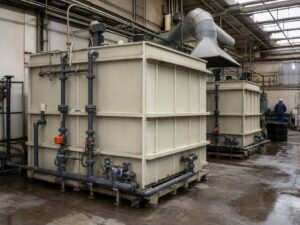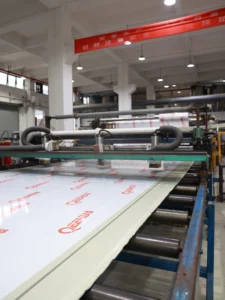
A PP sheet water-treatment baffle plate RFQ should identify the treatment stage, baffle function, liquid exposure, drawing geometry, supports, joints, inspection access, and acceptance records. A material supplier can review the requested PP sheet and fabrication inputs, while the responsible process and structural engineers retain the hydraulic and equipment-design decisions.
Start with the baffle’s job in the treatment train
A baffle plate may divide a tank, guide flow, protect an inlet zone, separate process areas, or support an inspection arrangement. The same material can be requested for very different components, so the RFQ should name the treatment stage and what the plate is expected to do. Do not use the term “water treatment” as a substitute for a process description.
For broader product context, QEEHUA’s صفائح البولي بروبيلين page identifies PP sheet applications for water-treatment and fabricated equipment. It lists standard 3-30 mm and extra-thick 40-100 mm product formats. Those public options are not a baffle-plate thickness calculation or an approval of a particular tank layout.
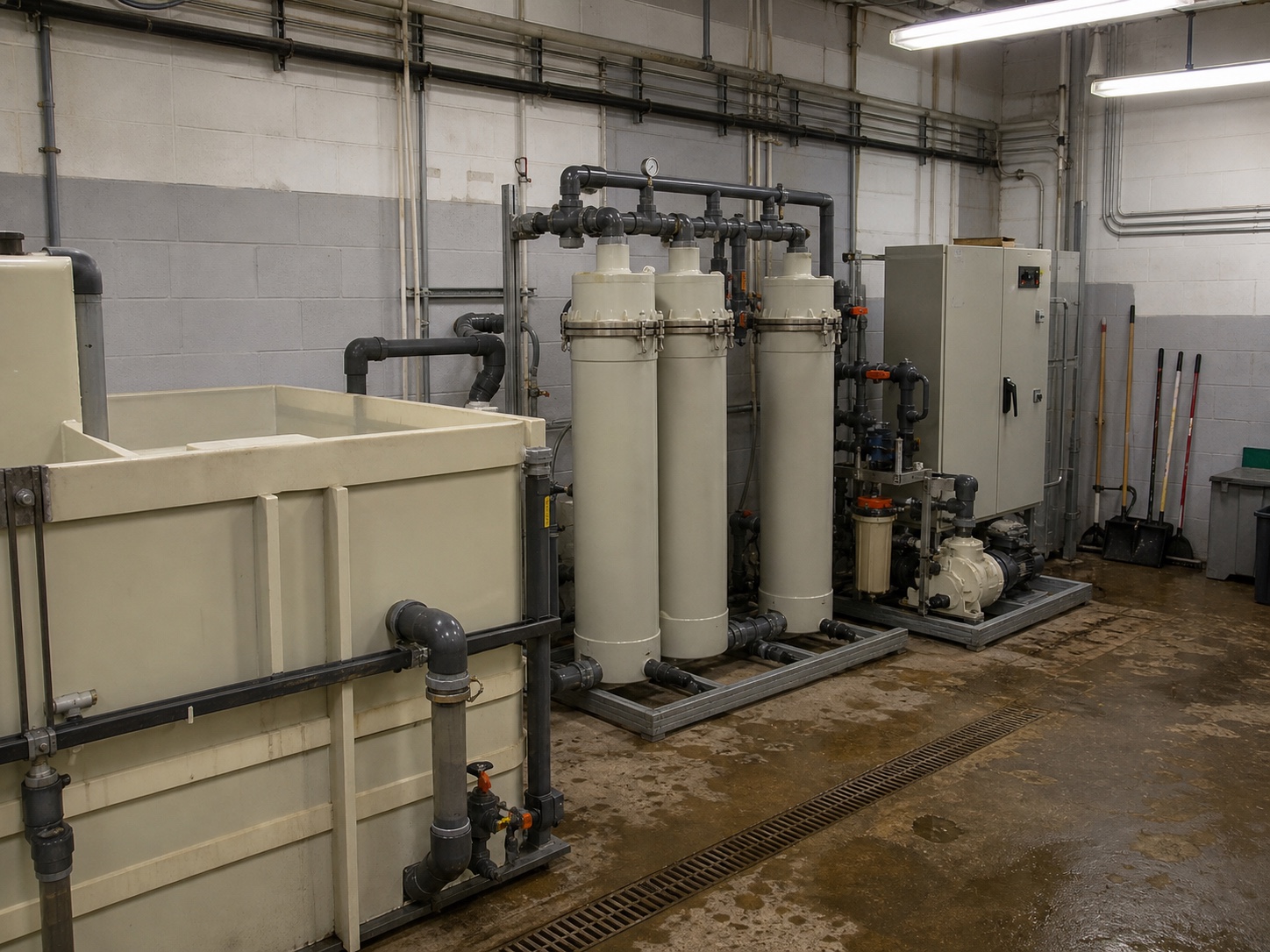
Seven inputs for a usable PP sheet water-treatment baffle plate RFQ
The most useful request lets the supplier see which material or fabrication assumptions remain open. It also keeps the hydraulic function separate from the material and component review.
| RFQ input | ما الذي يجب تقديمه؟ | Decision it supports |
|---|---|---|
| 1. Process location and function | Name the treatment stage, tank or channel identifier, and whether the plate divides, directs, shields, or separates flow. | Defines the component scope before a material is named. |
| 2. Flow and operating basis | Provide the flow range, liquid level or operating window, inlet and outlet arrangement, expected solids, and any process transients. | Lets the responsible process engineer define the hydraulic function and loading assumptions. |
| 3. Liquid and cleaning exposure | List every contacting liquid, concentration where relevant, normal and maximum temperature, cleaning media, and credible upset condition. | Creates a testable material-screening basis instead of assuming all water duties are identical. |
| 4. Controlled geometry | Send the drawing revision with overall dimensions, elevation, free spans, slot or opening geometry, clearances, and permitted tolerances. | Defines the fabricated part and prevents a sheet-size request from replacing a component drawing. |
| 5. Supports and interfaces | Show fixing points, tank wall interfaces, stiffeners, guide rails, adjacent piping, seals, and hardware supplied by other parties. | Clarifies where loads, movement, and fit-up must be considered. |
| 6. Fabrication and access | State joint type, edge treatment, lifting or removal method, inspection access, cleaning access, and any site-assembly constraint. | Aligns the material request with installation and maintenance needs. |
| 7. Acceptance and records | Specify required material documents, dimensional checks, visual inspection points, drawing revision, quantity, and release authority. | Creates a clear handoff from component supply to project acceptance. |
Keep hydraulic design separate from material selection
Baffles can affect flow distribution and short-circuiting, so their count, position, openings, and flow path must come from the responsible process design. EPA technical guidance illustrates that inlet and baffle arrangements can change distribution through a basin; it is evidence for treating the flow design as an engineering input, not a pre-approved PP plate pattern. See the EPA disinfection profiling and benchmarking guidance for this hydraulic context.
The material request begins after that decision: identify the part boundaries, media contact, connections, support arrangement, and required inspection. For adjacent equipment-level context, use QEEHUA’s PP Sheet for Wastewater Treatment Equipment article, but do not treat it as a substitute for the baffle drawing or hydraulic calculation.
Match material review to the real exposure
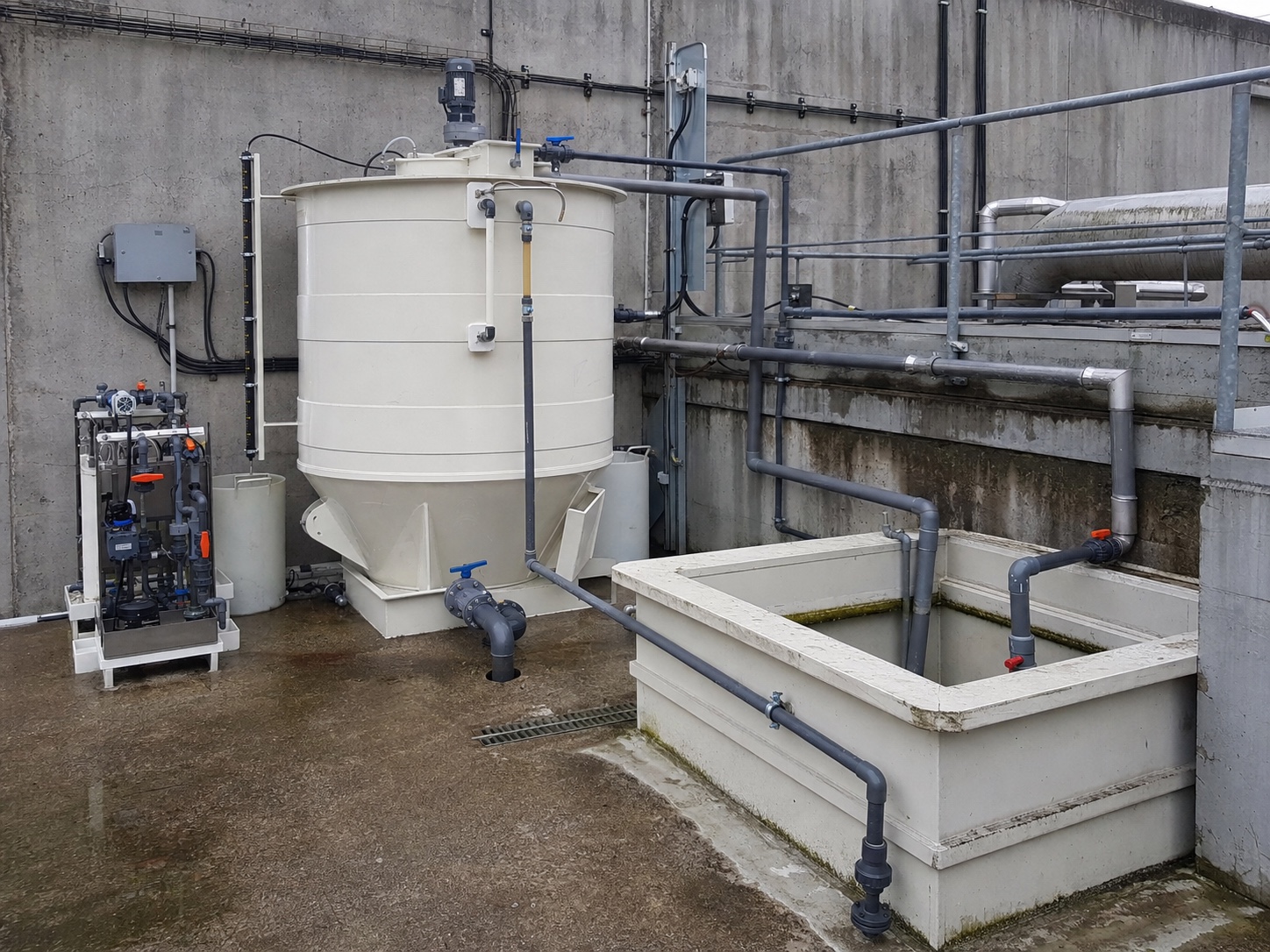
A water-treatment component can see raw water, wastewater, chemical dosing, condensate, cleaning agents, or mixed streams. If the request includes a chemical-resistance statement, supply the actual reagent, concentration, temperature, contact duration, and any mechanical stress or flexing condition. ASTM D543 explains that chemical-resistance evaluation depends on the specified reagent and end-use conditions, and that short splash exposure and continuous immersion should not be treated as the same test condition.
Use the published بيانات صفائح البولي بروبيلين ودليل التصنيع to organize the material discussion. Do not derive a service temperature, wall thickness, support spacing, or chemical guarantee from a generic mechanical-property number. Those decisions depend on the finished component and project duty.
Specify the component interfaces before fabrication
Ask for a drawing with the plate outline, openings, edge details, joint or mounting method, support points, and the parts supplied by others. If a plate is removable, show its removal path and the clearances around valves, instruments, drains, and access covers. If it is welded into an assembly, identify the joint design and the inspection point before the material is released.
For a procurement-format reference, see ما الذي يجب تضمينه في طلب عرض أسعار لخزان PP قبل طلب عرض سعر؟. This baffle article uses the same documentation discipline but applies it to an internal water-treatment component. It links back to the canonical PP Sheet selection, fabrication and applications hub.
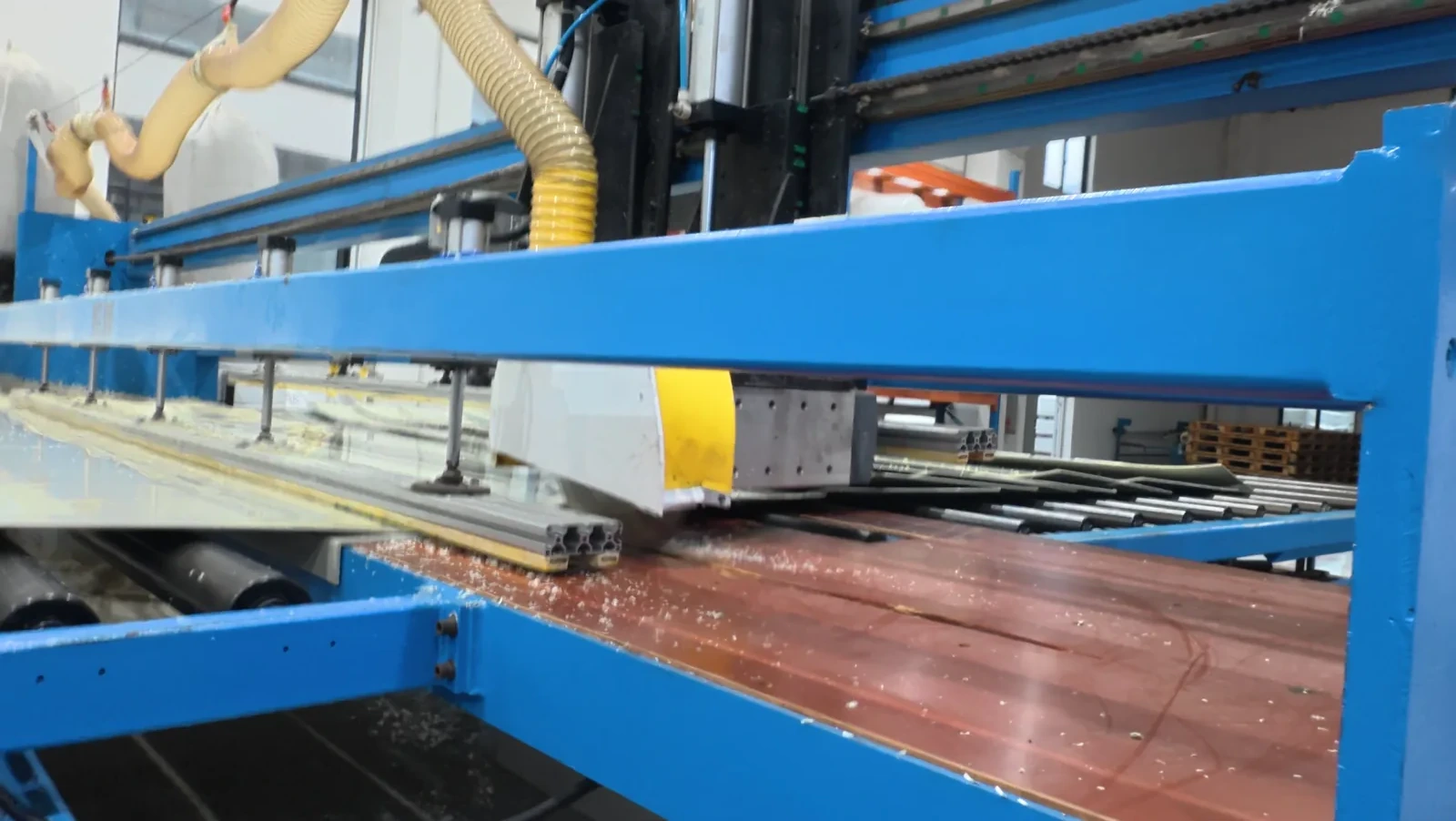
Fabrication video: PP sheet formation context
This QEEHUA playlist video gives general PP sheet production context. It does not demonstrate a water-treatment baffle design, a hydraulic calculation, material suitability for every liquid, or installed-component acceptance.
مرجع الفيديو: PP Sheet Extrusion: Sheet Formation Process | QEEHUA. It shows one sheet-formation stage; it does not confirm baffle dimensions, operating duty, or acceptance requirements.
Release a complete request to QEEHUA
Send the controlled drawing, treatment-stage description, liquid and cleaning exposures, geometry, support details, fabrication requirements, quantity, delivery location, and document list. This gives QEEHUA enough information to review the requested PP sheet or fabricated component scope without assuming the hydraulic design or site-installation responsibility.
الأسئلة الشائعة
Can QEEHUA determine the number and location of water-treatment baffle plates from a sheet enquiry?
No. Baffle quantity, placement, openings, and flow path are hydraulic and equipment-design decisions for the responsible project team. A material or fabricated-component enquiry should use the approved drawing and design basis.
What should be shown on a PP sheet baffle plate drawing?
Show the component outline, dimensions, elevation, openings, free spans, edge details, supports, joints or fasteners, adjacent equipment interfaces, removal path where relevant, drawing revision, and inspection or acceptance requirements.
Does water treatment always mean a standard PP sheet is suitable?
No. Water-treatment equipment can expose a component to different liquids, temperatures, chemicals, cleaning media, loads, and installation conditions. Confirm the actual project duty and the required material review before selection.
Why should cleaning and inspection access be included in the RFQ?
Access requirements can change the baffle’s openings, edges, supports, removal method, and inspection points. Recording them early helps prevent a component from blocking maintenance or being released without a usable acceptance basis.