A PP cleanroom panel RFQ for a wet bench should define the panel function, exposed faces, drawing revision, chemical and cleaning boundary, acceptable surface condition, package layers, transfer point, and acceptance documents. A phrase such as “cleanroom PP panel” is not enough: it does not identify which surface must stay protected, what level of cleanliness is required, or how the panel crosses into the controlled area.
Start the PP cleanroom panel RFQ with the panel boundary
The same PP panel can have very different RFQ inputs when it is a splash guard, a removable cover, a non-wetted enclosure panel, a tank partition, a drain-side shield, or a chemical-contact component. A PP cleanroom panel RFQ should identify the equipment tag, installed orientation, the face exposed to the process, the face visible to operators, and every edge, hole, weld, fastener, gasket, or interface that must remain cleanable.
This distinction keeps a cleanroom request from becoming a vague material claim. The existing PP sheet selection path for semiconductor wet-process equipment establishes the broader chemistry, temperature, geometry, welding, and acceptance review. The RFQ should translate only the conditions that apply to the specific panel.

Put the surface and package requirements into one RFQ table
A usable RFQ gives the fabricator an unambiguous release basis and gives the receiving team a way to inspect the delivered item. ISO 14644-5:2025 places material transfer, cleaning, maintenance, and monitoring within an operations-control programme, but it does not assign a universal requirement for a specific panel or packaging material. The project owner must supply those site-specific controls.
| Campo RFQ | What the buyer should define | Why it changes the result |
|---|---|---|
| Part identity | Equipment tag, panel name, quantity, drawing number, revision, material callout, and installed orientation | Prevents a panel or package label from being released against the wrong wet-bench location. |
| Exposure boundary | Wetted, splash, vapor, service-side, operator-side, or non-process face; relevant chemicals, rinse media, cleaning agents, and temperatures | Separates material compatibility review from a generic “cleanroom” description. |
| Surface condition | Which face is critical; allowed marks or protective-film status; edge finish; burr, chip, scratch, weld-spatter, or foreign-matter inspection criteria | Lets the supplier inspect the same features that the receiving team will inspect. |
| Cleaning and release | Customer-approved method, rinse/dry expectation, inspection method, hold points, and required record | A cleaning instruction without a release basis is not a measurable acceptance requirement. |
| Packaging and transfer | Inner contact material, corner/edge protection, bag or cover layers, closure, label, outer-package removal location, and opened-package disposition | Protects the accepted surface until the controlled transfer boundary. |
| Documents | Material identification, drawing revision, inspection record, package ID, photographs if requested, deviations, and receiving checklist | Connects the physical panel to the approved equipment package. |
For an overview of sheet grade, dimensions, and fabrication questions that must be settled before the panel detail is released, use the PP sheet selection and fabrication guide. It is a material-and-fabrication reference, not a substitute for the wet-bench owner’s surface-cleanliness requirement.
Describe surface requirements so the PP cleanroom panel RFQ can be inspected
Do not request “smooth and clean” without saying where it applies and how it will be checked. The PP cleanroom panel RFQ should define whether the relevant area includes only the broad panel face or also machined holes, edges, countersinks, welds, joints, protective film, and concealed surfaces. If the wet bench has an owner procedure, cite its revision and identify whether it governs particle concern, chemical residue concern, visual condition, or more than one of these.
ISO 14644-13:2026 provides guidance for cleaning specified cleanroom surfaces, equipment surfaces, and materials with particle and chemical cleanliness objectives. It also frames cleaning-method suitability and surface compatibility as project decisions. It does not prove that a PP panel, cleaning agent, or protective film is suitable for a particular wet bench.
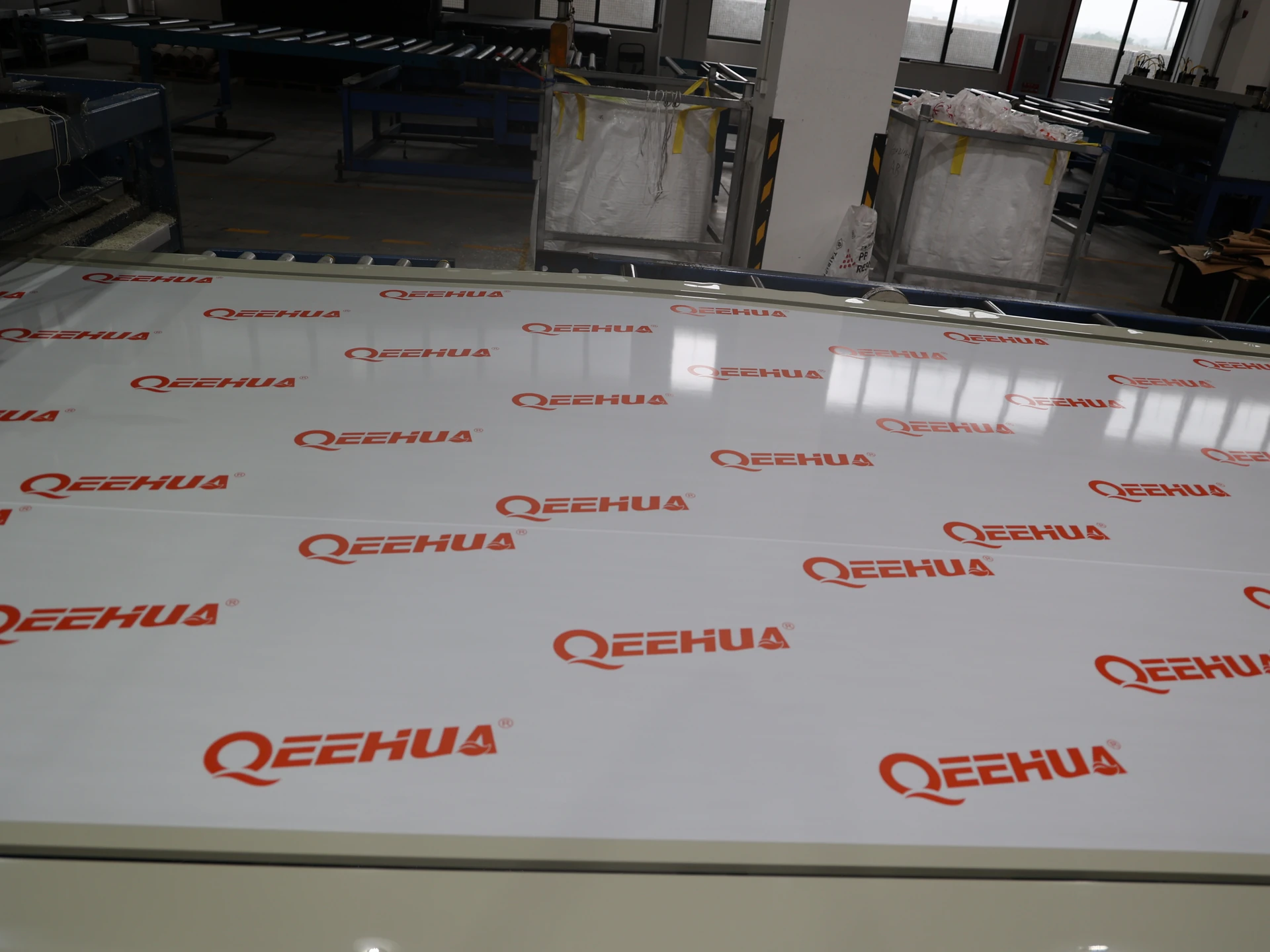
QEEHUA internal PP handling guidance adds a practical fabrication control: inspect the panel face, edges, protective film, deep scratches, cuts, bubbles, deformation, and obvious foreign material before cutting, welding, cleaning, and packing. A final wipe should not be used to hide a damaged edge, weld defect, or unapproved repair. State in the RFQ whether these findings require rework, documented disposition, or customer review.
Keep chemical duty, cleanliness, and static control as separate decisions
A panel in a wet bench may be near process chemicals, rinse water, vapors, or cleaning media. The RFQ should list the actual exposure, concentration, temperature, duration, and stress or load condition. General polypropylene chemical resistance is not a substitute for a project review, and a cleanliness request does not qualify the chemical-contact face.
Likewise, standard PP should not be called antistatic or conductive because the panel is installed in a semiconductor area. If electrical behavior matters, state the required resistance range, test method, conditioning, grounding or isolation detail, and finished-part acceptance requirement as a separate line item. QEEHUA can review the proposed material route when the project defines those inputs; do not write a material feature into the RFQ without confirmation.
Related QEEHUA process video: calibration and haul-off are relevant manufacturing context when a buyer is reviewing panel surface and dimensional inputs. The video does not demonstrate cleanroom qualification, cleaning validation, package integrity, or wet-bench acceptance.
Video reference: PP Sheet Extrusion: Haul-off and Calibration Process | QEEHUA. It gives general sheet-production context only and is not evidence of a cleanroom-panel acceptance result.
Use the PP cleanroom panel RFQ to specify the controlled handoff
For a wet-bench panel, packaging must protect the agreed surface while also defining what may cross into the controlled transfer route. Use the PP cleanroom panel RFQ to specify the surface-contact packaging material, whether protective film stays on, how cut edges and projections are protected, how the inner layer is closed, and where outer layers are removed. Do not assume that cardboard, pallets, desiccant, double bags, vacuum packing, or a particular wipe is acceptable unless the project procedure approves it.
The QEEHUA internal manual recommends indoor, dry, clean, flat, fully supported storage and gentle handling for PP sheet and fabricated parts. Its 5-35 C storage range and 2 m stack-height limit are internal working guidance, not a cleanroom standard or a universal project limit. If the customer needs a different storage route, maximum hold period, or special package, put that requirement in the RFQ and make it part of release review.

Define the evidence required at release
Ask for records that prove the RFQ was followed, not generic certificates. A practical package can include the drawing revision, part and package identity, material/lot reference where required, final visual-inspection result, cleaning and packaging status, photographs if required by the project, deviation record, and delivery/receiving instruction. Define who reviews each document and what condition triggers a hold.
The related article on cleanroom PP sheet cleaning and packaging records is the post-fabrication companion: it addresses the evidence supplied with a finished component. The RFQ should instead establish those evidence fields before purchase and fabrication start. For material-submittal structure, the Lista de verificación para la presentación de material en láminas de PP helps keep the drawing, data, and approval path together.
Hold the PP cleanroom panel RFQ when a critical field is open
Keep the request on hold if the drawing revision is missing, the critical surface is not identified, process exposure is incomplete, a cleaning requirement has no acceptance method, the package contact material is not approved, or the transfer point is unknown. These are not minor shipping details: they decide whether the supplied panel can be reviewed without assumptions.
For project review, send the wet-bench panel drawing, equipment location, chemical and cleaning boundary, surface requirement, packaging/transfer instruction, required documentation, and requested quantity through the QEEHUA technical inquiry channel. QEEHUA can review the proposed PP sheet and fabrication scope against the documented requirement; the equipment owner remains responsible for the cleanroom level, process qualification, and final acceptance decision.
Preguntas frecuentes
Does a “cleanroom PP panel” description make an RFQ complete?
No. The RFQ still needs the panel function, controlled drawing, critical surfaces, exposure boundary, cleaning acceptance method, packaging layers, transfer point, and required records.
Should the RFQ identify both sides of a PP panel?
Yes, when one face is process-exposed, operator-visible, bonded, welded, or protected differently. Naming the critical face helps control inspection, protective film, packaging contact, and installation orientation.
Can a packaging photograph prove a panel is cleanroom ready?
No. A photograph can support package-condition review, but the project must define the relevant cleaning, inspection, packaging, and controlled-transfer evidence before the finished panel is accepted.
What changes if the panel contacts process chemicals?
Add the actual chemical names, concentrations, temperatures, exposure mode, duration, stresses, and required chemical-review evidence. Surface-cleanliness and packaging instructions do not replace a material-compatibility review.
Share the released drawing, critical surface map, process and cleaning conditions, package boundary, and requested records. QEEHUA can identify the material and fabrication inputs that still need project confirmation before production release.