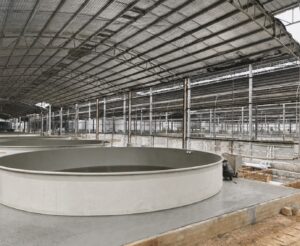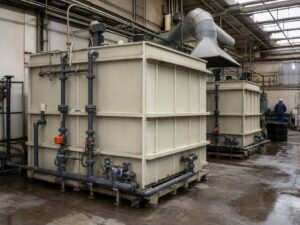
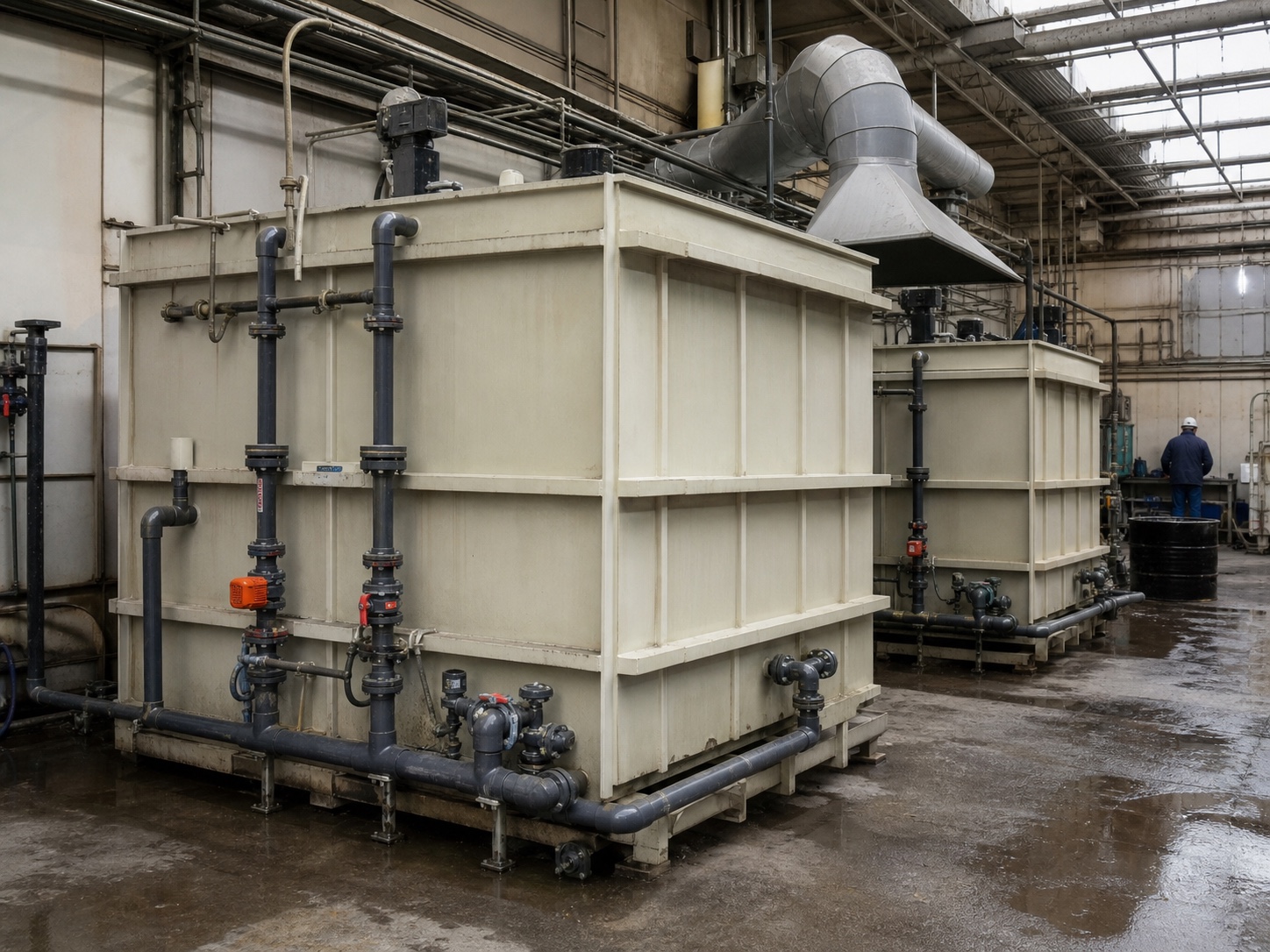
A bunded chemical storage container vs drum spill pallet decision starts with what is being stored and how it moves. Choose a container-based system when the project needs a defined storage assembly with its own interfaces and secondary-containment boundary; choose a drum spill pallet when sealed drums must be received, staged, dispensed, or quarantined in manageable zones. Neither option by itself confirms chemical compatibility, containment capacity, or regulatory compliance.
This comparison does not replace the detailed chemical drum spill-pallet buyer checklist or the review needed for a fabricated container.
Start by separating primary storage from secondary containment
The first question is whether the liquid remains inside drums or needs a dedicated storage assembly. A drum pallet sits below portable containers and collects a spill within the agreed boundary. A bundled container arrangement may include a primary tank or container plus a surrounding bund, access route, pipe penetrations, and drainage or emptying provisions. It is not simply a larger pallet.
For facilities managing regulated hazardous-waste containers, the U.S. container-storage rules at 40 CFR 264.175 describe secondary-containment provisions for the regulated scope. Applicability depends on the jurisdiction, waste status, site permit, and operating conditions; use the applicable local requirements rather than treating this reference as a universal design approval.
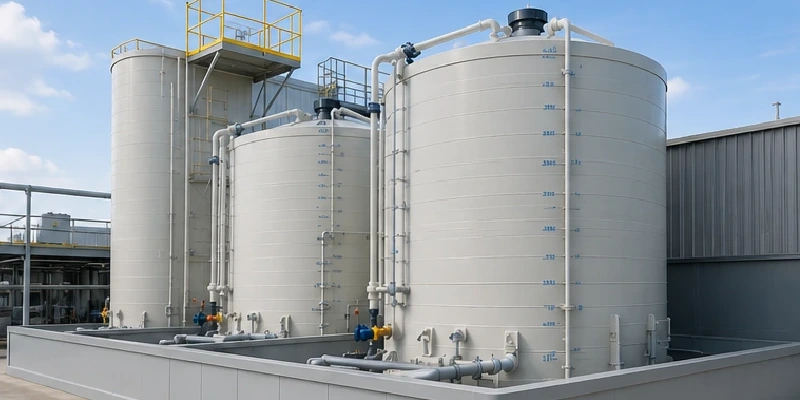
Use the storage format and operating workflow to make the choice
| Decision factor | Bunded chemical storage container | Drum spill pallet |
|---|---|---|
| Stored format | Dedicated tank or container assembly with defined interfaces. | Sealed drums or other portable containers placed above a local containment unit. |
| Typical workflow | Fixed or semi-fixed storage, transfer connections, defined access, inspection and maintenance. | Receiving, staging, dispensing, temporary storage or quarantine where drums must move between zones. |
| Engineering scope | Primary container, bund geometry, supports, penetrations, drainage, access and fabrication documents. | Drum count, footprint, handling equipment, operating zones and the selected pallet’s stated containment arrangement. |
| What it should not be assumed to prove | Process suitability, structural capacity or compliance without a project review. | That it replaces a fixed bund, a storage tank or site-wide spill controls. |
Use a pallet layout when the number, location, and movement of drums are the main variables. The drum spill-pallet quantity guide explains why receiving, dispensing, storage and quarantine zones should be assessed separately.
Bunded chemical storage container: when interfaces define the risk
A bundled chemical storage container is the better starting point when the project is driven by a dedicated vessel, permanent connections, a fixed process location, or a need to integrate containment with an equipment layout. The RFQ should distinguish the primary storage duty from the secondary-containment duty and show every connection, opening, support, access point, drain, and interface completed on site.
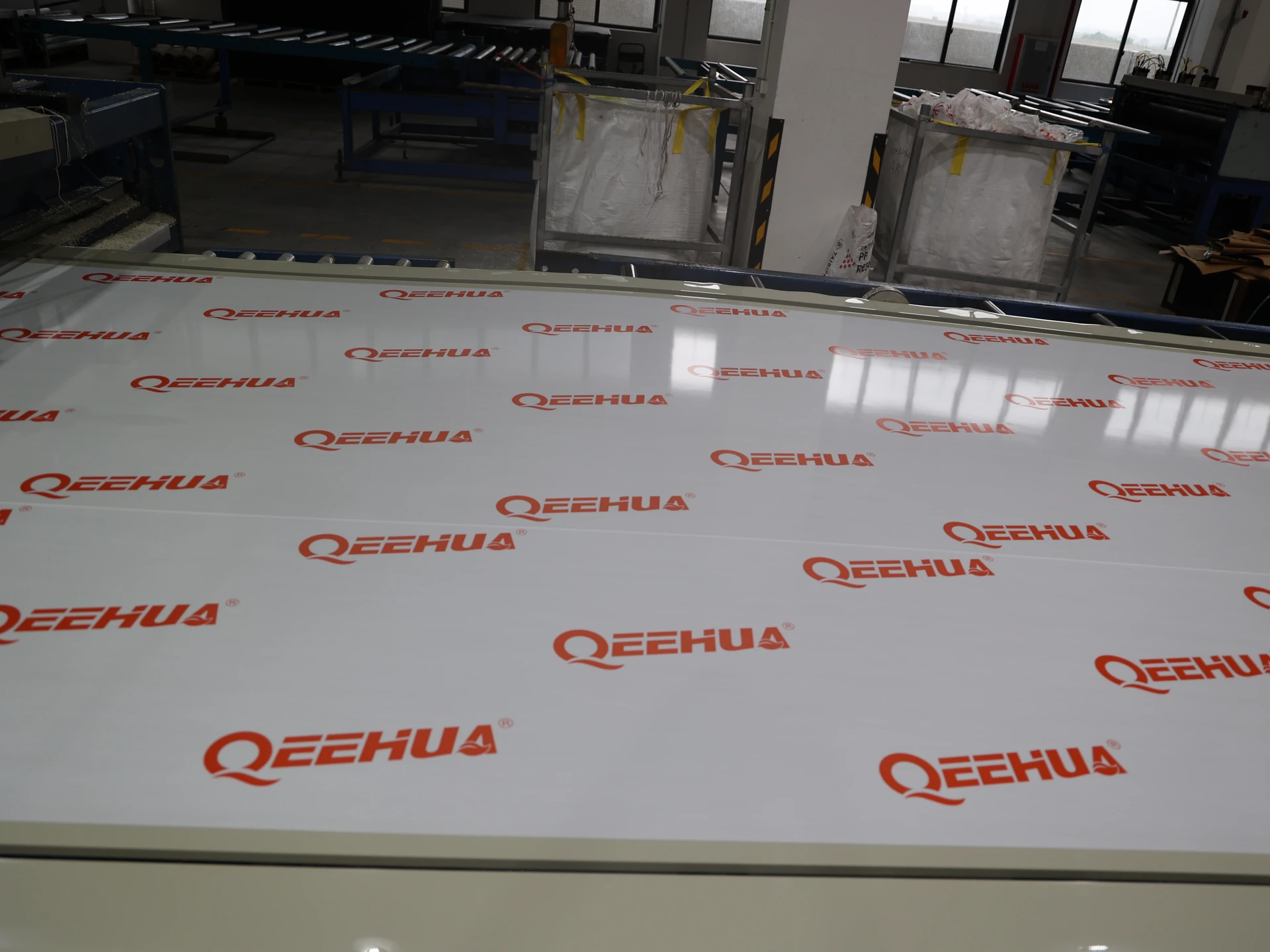
Where a PP-fabricated component is under consideration, QEEHUA can supply PP sheet and compatible PP welding consumables for fabrication review. The correct material and construction are still project-specific: provide the actual chemical, concentration, temperature, cleaning conditions, design drawing, and required inspection records. For an existing fixed bund rather than a new container, see the chemical storage bund re-lining guide.
Choose a drum spill pallet when portable drums drive the operation
A drum spill pallet is usually the more direct choice when containers arrive and leave as drums, operators need local secondary containment at a handling point, or the layout changes by shift, batch, or storage zone. The decision should account for the actual drum type, maximum simultaneous inventory, fork-lift or pallet-jack access, dispensing practice, and the response plan for a spill.
Do not convert a movable-drum requirement into a custom storage-container project without a reason. Conversely, do not treat a pallet as a substitute for the tank, fixed bund, pipework controls, or access provisions required by a dedicated chemical-storage installation.
Review chemical duty and fabrication evidence within their limits
A containment choice is meaningful only after the chemical-duty, fabrication, and application conditions for the PP sheet are defined. The entries below are local material-screening data, not a containment-capacity, installation, or regulatory approval.
| Local chemical-resistance entry | 20 °C | 60 °C | Decision use |
|---|---|---|---|
| 30% aqueous hydrogen peroxide | Excellent | Good | Check the actual concentration and exposure before selection |
| 50% nitric acid | Good | Limited | Local table marks this entry as unsuitable for welding or thermal bending |
| Calcium hypochlorite | Excellent | Excellent | Still confirm actual formulation, temperature, and system duty |
The local table defines Excellent, Good, and Limited by observed dimensional or weight-change and elongation criteria. It is a screening input for the stated chemical and temperature only; the project team must confirm the actual mixture, contact time, stress, joints, and containment requirement.
The internal QEEHUA product records distinguish sheet material, profile extrusions, and welding rod. That distinction matters when a buyer calls an item a bundled container. A finished container is an assembly of controlled panels, joints, openings, supports, and interfaces; it should not be treated as a single generic PP material line. The review should identify which evidence applies to sheet material, which applies to a joining consumable, and which acceptance checks apply to the fabricated assembly.
For a drum spill pallet, make the same distinction in simpler form: confirm the intended drums, handling method, contact scenario, and site requirements before asking whether a pallet format is appropriate. Use material records as one input to the project’s review, then keep the system-level containment and regulatory decisions with the responsible project team. This avoids converting a local product description into an unsupported promise about the completed installation.
For a PP component, chemical-resistance data is a screening input rather than an approval for a finished storage system. ASTM D543 covers evaluating the resistance of plastics to chemical reagents. A project still needs the real medium, concentration, temperature, stress, exposure time, joint design, and service conditions before it can confirm suitability.
The following QEEHUA video shows a general PP sheet cutting step that may occur before a fabricated component is assembled. It does not demonstrate a completed bunded container, a spill pallet, containment capacity, or an acceptance test.
Odniesienie do filmu: PP Sheet Cutting Process: Precision Edge Cutting | QEEHUA. It provides limited context for cutting a PP panel before fabrication; it does not verify a chemical-storage container, a drum spill pallet, or containment performance.
Turn the choice into a usable RFQ
For either option, document the stored medium, container format, maximum quantity, operating zone, movement method, required containment boundary, drainage or recovery approach, access restrictions, inspection records, and the project acceptance route. A bundled-container RFQ also needs the vessel drawing and all fabrication interfaces. A pallet RFQ should state the drum arrangement, handling method, and each zone where the pallet will be used.
For a material or fabrication discussion, review QEEHUA PP sheet options I kontakt QEEHUA with the storage layout, chemical duty, container arrangement, drawing revision, and required project documents.
FAQ
Can a drum spill pallet replace a bundled chemical storage container?
No. A drum spill pallet is normally local secondary containment for portable drums. A bundled chemical storage container is a broader storage-system decision that may include the primary vessel, surrounding containment, fixed interfaces, access, drainage, and inspection requirements.
Can PP sheet be selected for a bundled chemical storage container from a chemical name alone?
No. A chemical name alone does not define PP suitability. Confirm the concentration, temperature, exposure time, stress, fabrication method, joint design, and project acceptance requirements before releasing material for fabrication.
What information should be included when requesting a spill pallet or bundled-container quotation?
Provide the chemical and service conditions, container type and quantity, maximum simultaneous inventory, operating zone, handling method, required containment boundary, drawings or interfaces, drainage or recovery expectations, and the project inspection or documentation requirements.