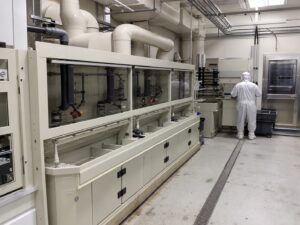
Removable PP sheet splash guards help define a practical local boundary around chemical dosing connections, small tanks, pumps, and transfer points. The right specification is not a generic panel size. It should describe the actual splash zone, chemical duty, clearances, attachment method, maintenance access, and the operating controls that remain outside the guard.
A PP splash guard for an acid pickling line and a dosing-skid guard face different access conditions. A dosing skid has tighter clearance around instruments, tubing, calibration work, and routine chemical replenishment, so its removable panels need a more deliberate interface review.
Map the actual splash zone before choosing the panel outline
Start with a simple operating sketch. Mark fill points, pump heads, injection connections, sample points, isolation valves, unions, drain points, and any location where an operator disconnects or calibrates equipment. Then show the nearest walls, walkways, electrical items, instruments, and access paths. This map sets the panel boundary more reliably than copying the skid footprint.
Ask what event the panel is intended to address: a small connection drip, a hose disconnect, a transfer splash, or an occasional cleaning operation. The answer affects height, return edges, joints, access cut-outs, and the need for a related tray or bund. For broader secondary-containment decisions, see the PP spill containment pallet guide.
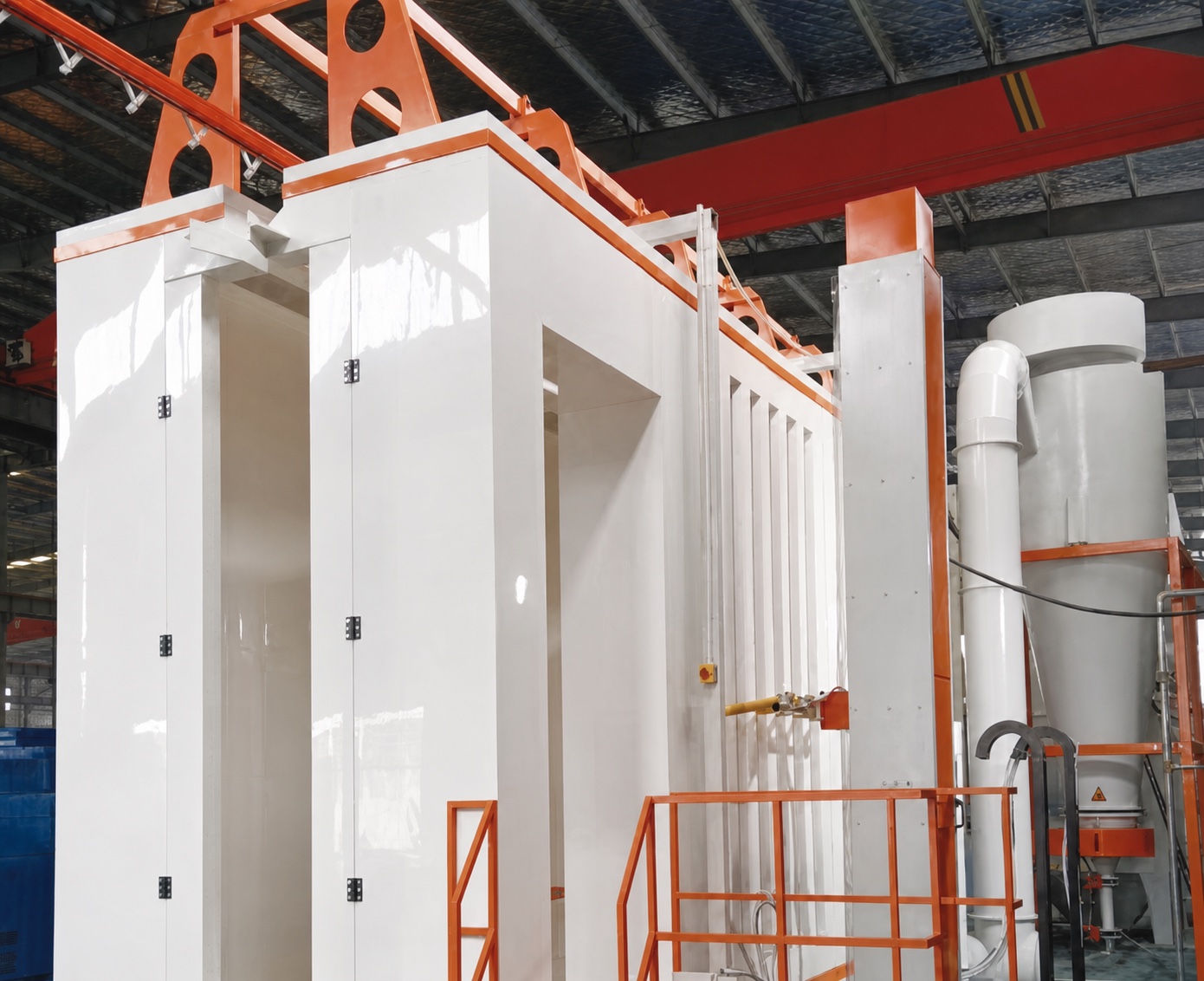
Record chemical duty instead of specifying PP by name alone
The chemical-duty record is one part of the PP sheet selection and fabrication decision; it must describe the actual dose chemical, concentration, temperature, contact route, and cleaning conditions. The local entries below show why an unspecified PP label is not enough.
| Local chemical-resistance entry | 20 °C | 60 °C | Use in a dosing-skid review |
|---|---|---|---|
| 10% aqueous hydrogen peroxide | Excellent | Excellent | Confirm the actual formulation and exposure route |
| 30% aqueous hydrogen peroxide | Excellent | Good | Record temperature and cleaning exposure separately |
| Calcium hypochlorite | Excellent | Excellent | Do not infer compatibility for a different concentration or mixed service |
Excellent and Good are the local table’s screening grades for the stated entries and temperatures. They are not a splash-guard safety rating or a substitute for project-specific chemical, ventilation, PPE, containment, and maintenance controls.
A PP sheet splash guard specification should identify the chemical or mixture, concentration, operating and cleaning temperature, expected contact method, and approximate exposure duration. The latest SDS and process record should be available to the project reviewers. OSHA Hazard Communication Standard requires hazard information to be communicated through labels, safety data sheets, and training for covered workplaces; the design team should use the applicable project information rather than assumptions about a chemical name.
ASTM D543 explains that chemical-resistance evaluation depends on conditions such as reagent, concentration, temperature, contact, stress, and exposure duration. That is why an approved duty record belongs with the panel RFQ and drawing package. It also prevents a guard from being described as universally suitable for every chemical service.
Make removal and reinstallation a defined function
“Removable” should be a controlled feature, not an informal instruction. State which panels are removable, the intended removal route, expected handling method, attachment locations, and whether any fasteners are captive or supplied by the skid contractor. The specification should also preserve safe access to labels, gauges, sample points, valves, and emergency isolation devices.
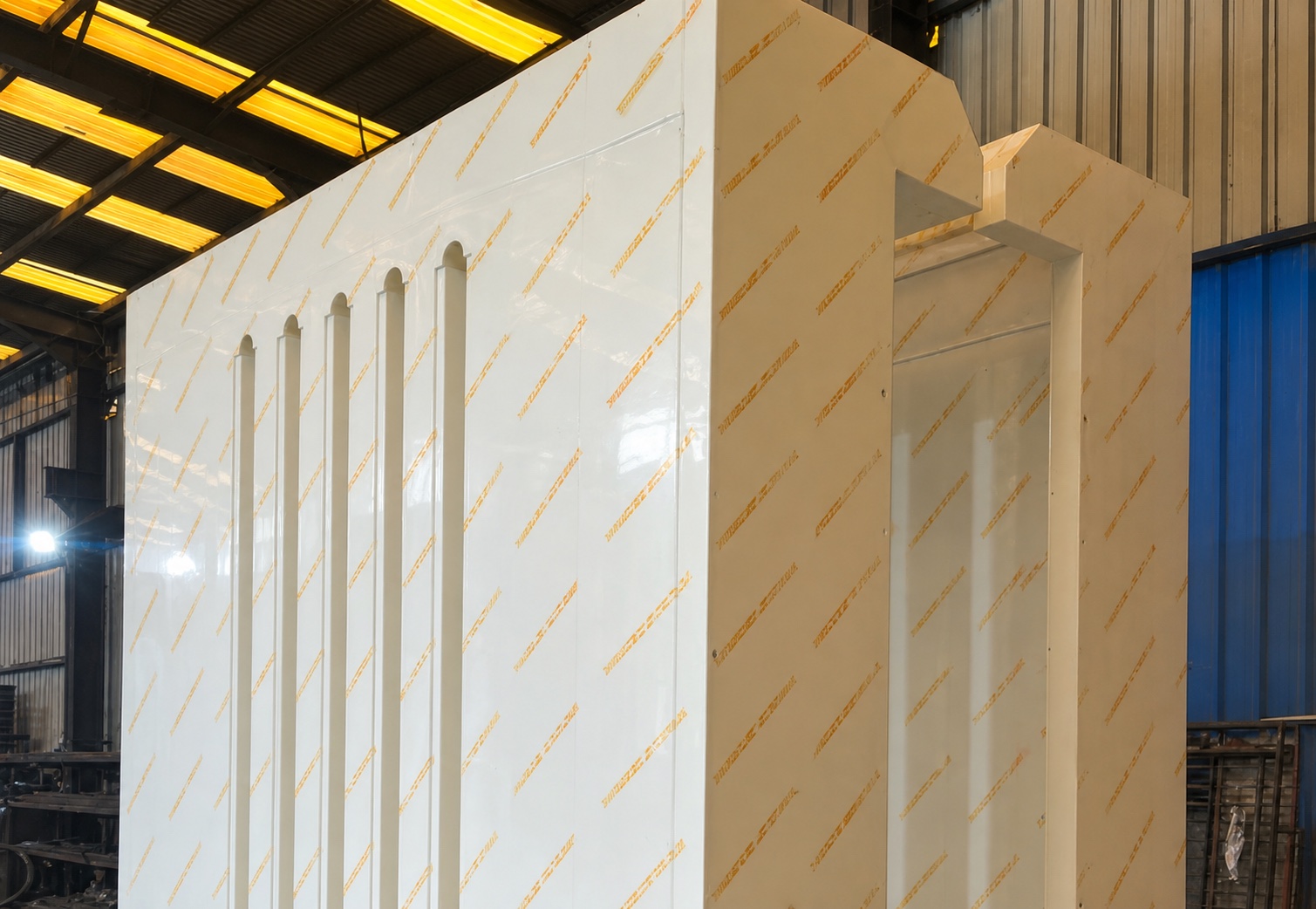
| Review item | Question to close before fabrication |
|---|---|
| Panel outline and returns | Does the drawing show the splash-side boundary and all required cut-outs? |
| Access and removal | Can an operator reach valves, gauges, labels, and maintenance points without unsafe panel handling? |
| Attachment method | Are fasteners, support points, mating parts, and supplied-by responsibilities identified? |
| Interfaces | Are gaps at pipes, tubing, doors, and adjacent guards intentionally controlled? |
Coordinate panels with the skid, not as an isolated add-on
The skid drawing should show the relationship between the guard and the pump base, chemical tank, instrument tubing, cable routes, and any secondary-containment surface. Do not let a late-added panel cover an identification label, block a required inspection point, or create an unplanned load path on a small pipe or instrument support.
For chemical dosing equipment selection, QEEHUA’s guide to PP sheet for sodium hypochlorite dosing equipment is useful background. The final panel design, however, must follow the confirmed chemical, equipment layout, and customer-approved interfaces for the actual skid.
Define edges, seams, and penetrations on the drawing
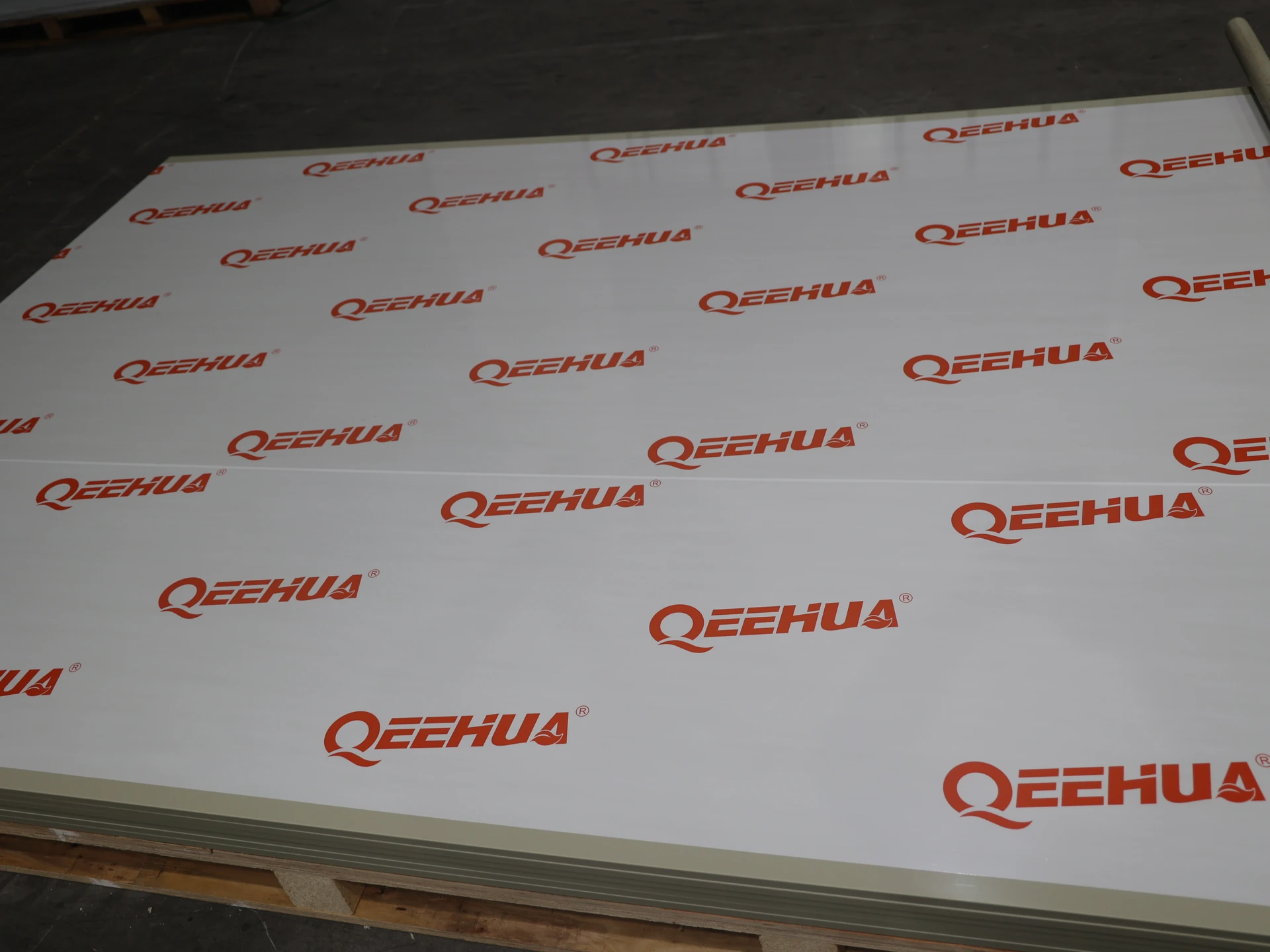
QEEHUA’s product records distinguish PP sheet, U-shaped profile extrusions, and PP welding rod. Use those names precisely when a splash-guard drawing includes a panel edge treatment, a formed or welded return, or a removable frame detail. A drawing that simply says PP guard leaves the fabricator to infer whether an edge is a bare cut, a profile interface, a weld detail, or a clearance around a penetration.
Keep the fabrication note tied to function. Identify cut-outs, seal or clearance expectations where specified by the project, removable fasteners, panel orientation, and the inspection point for each critical edge. Then verify that cleaning and reinstallation can occur without changing the stated splash boundary. This is a practical way to use internal product knowledge without turning it into an unsupported claim about the skid’s overall safety or containment performance.
The fabrication drawing should show panel thickness only after the project has agreed its duty and support concept. It should also identify folded or returned edges where needed, overlap direction, joints, pipe penetrations, drain path, and any service cut-outs. Each opening needs a purpose: a controlled access gap is different from an accidental void around a tube bundle.
Use a revision-controlled drawing with a tag number for each panel. When a tubing route or valve position changes, update the guard drawing rather than modifying the panel by memory at site. If panel reinforcement is part of the agreed scope, coordinate it with the approved project design and the PP U-shaped channel reinforcement reference.
Include cleaning, inspection, and replacement in the handover plan
A panel arrangement is easier to keep useful when the handover record says how it is removed, cleaned, inspected, and returned to service. Record the approved cleaning method, visible damage criteria, missing-fastener action, and escalation route for changed chemical service. Keep replacement panel drawings and material identification with the skid documentation.
Use a short RFQ checklist
A complete RFQ for removable PP sheet splash guards should include the chemical-duty record, skid general arrangement, panel tags, required panel boundaries, access and removal expectations, attachment interfaces, finish requirements, document deliverables, and delivery conditions. Attach photos only as context; do not use photos in place of dimensions and controlled interfaces.
Request a removable PP splash-guard review
Share the skid layout, chemical duty record, panel sketch, and access requirements with QEEHUA PLASTIC. A coordinated review helps close panel and skid interfaces before fabrication begins.
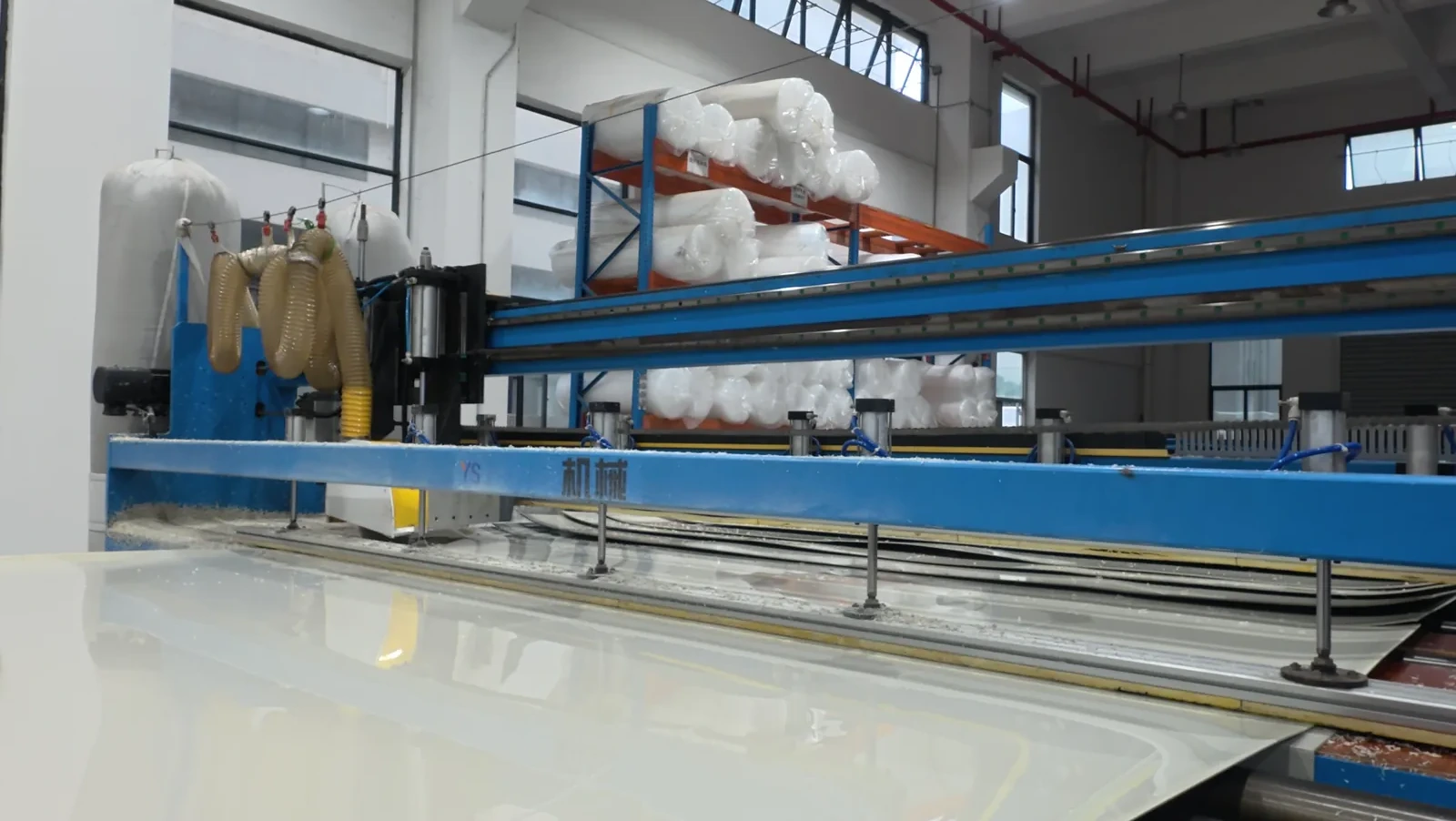
Odniesienie do filmu: This QEEHUA video provides limited PP sheet production context for the material used in fabricated splash-guard panels. It does not demonstrate chemical dosing operation, guard performance, or site safety compliance.
Często zadawane pytania
Can a removable PP splash guard replace secondary containment?
No. A local splash guard and a secondary-containment system serve different functions. Define the containment boundary, capacity, drainage, and compliance responsibilities separately in the project documents.
What information is needed before selecting PP sheet for a splash guard?
Provide the actual chemical or mixture, concentration, temperature, exposure method and duration, together with the panel geometry, supports, cut-outs, and maintenance conditions.
How should a removable guard be shown on a skid drawing?
Show the panel tag, outline, cut-outs, attachment method, removal direction, nearby interfaces, and the revision that authorizes fabrication. Make the owner of each mating interface clear.