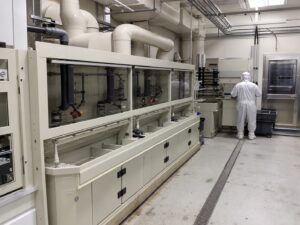
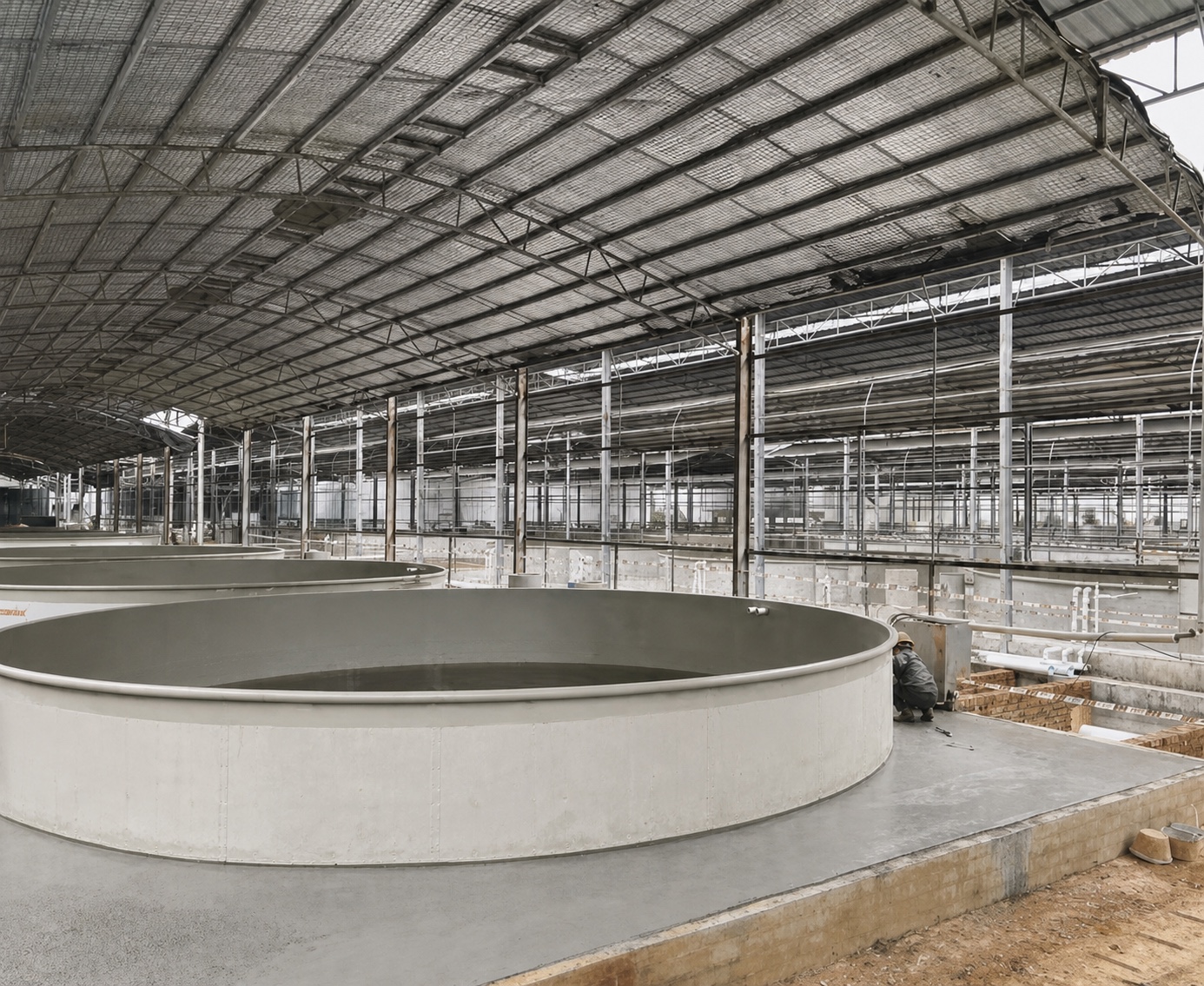
PP equipment drainage design and cleanout access should be planned from the actual drained state, not added as a last-minute bottom nozzle. The design must show where liquid collects, how it leaves, how operators reach residue, and how the connection remains serviceable after fabrication.
This distinction matters in chemical process areas because a tank can appear to have a drain while still retaining liquid behind a stiffener, below an outlet, or inside a connected pipe. The same issue can occur in a bund, drip tray, or equipment base where a small amount of residue changes the next maintenance task. The broader PP sheet selection and fabrication guide explains the wider material and application path; this article focuses on drainage and cleanout decisions.
PP Equipment Drainage Design Starts with the Drained State
Before a drain is shown on a drawing, define what “drained” means for the process. A customer may need complete gravity emptying, removal of a controlled residual layer, periodic flushing, or only a connection point for a transfer pump. Those are different acceptance conditions and should not be represented by the same generic drain note.
For a fabricated PP tank or tray, record the liquid, concentration range, normal and maximum temperature, exposure time, cleaning agent, allowable residue, discharge route, and whether personnel may enter. A PP equipment drainage review should keep those service conditions with the drawing revision so later outlet changes do not lose the original duty.
General tank-drainability guidance also treats orientation, bottom geometry, internals, outlet position, cleaning method, and acceptance as one relationship rather than a single nozzle detail; see this OSHA housekeeping and drainage-surface requirements.
| Input to define | Why it changes the PP equipment layout |
|---|---|
| Normal and upset liquid condition | A settled liquid, intermittent flush, or mixed chemical service can leave different residues and may require different cleanout access. |
| True low point after installation | Supports, feet, site slope, and connected piping can move the practical low point away from the apparent center of the vessel. |
| Discharge destination | The outlet may lead to a process line, a neutralization system, a controlled collection point, or a temporary hose connection. The route must be defined before fabrication. |
| Cleaning method | Manual rinse, spray cleaning, flushing, or vacuum removal changes the access opening, cover, and inspection requirements. |
| Residual acceptance | “Empty” should be tied to an observable or testable site requirement instead of an unqualified promise of zero residue. |
Separate a process drain from a cleanout
Use a process drain for normal transfer or controlled emptying, and use a cleanout when the operator needs access for flushing, inspection, residue removal, or maintenance. Combining both functions can make the opening difficult to isolate, difficult to clean, or unsafe to access during a process change. That separation is a core PP equipment drainage decision, not a cosmetic drawing preference.
A process drain normally needs a defined connection, valve or isolation boundary, and a route that remains compatible with the liquid. A cleanout may instead need a removable cover, a larger opening, tool clearance, and a safe way to capture rinse liquid. The final arrangement depends on the equipment and site procedure; it should be shown in the RFQ rather than inferred from a general phrase such as “bottom drain.”
Review low points, outlet paths, and supports together
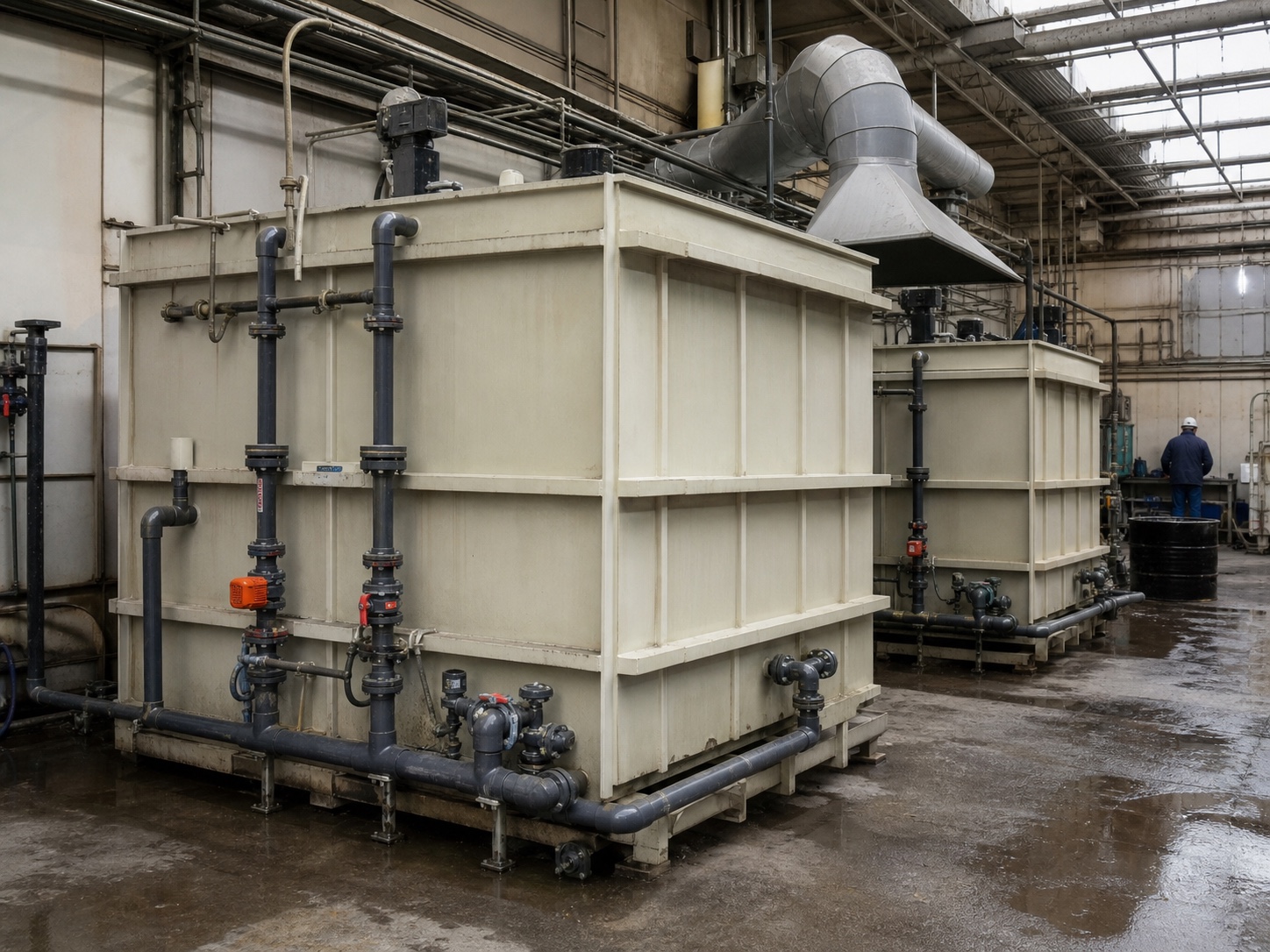
Drainage performance depends on the assembled equipment. A nominal outlet can be defeated by a level base, a welded reinforcement, a trapped corner, or a downstream pipe that rises before it reaches the collection point. Review the tank or tray orientation, support frame, outlet direction, hose or pipe flexibility, and the access needed to inspect the weld around the penetration. This PP equipment drainage check belongs in the fabrication review before the outlet is released.
For a bund or drip tray, confirm whether the floor should discharge to a removable collection point or remain closed until an operator has checked the liquid. A permanently open drain can transfer an incompatible chemical into a shared system. If a common collection area is proposed, its regulatory and site basis must be checked separately; the U.S. EPA explains that secondary-containment arrangements depend on the facility and the applicable plan in its SPCC secondary-containment guidance.
QEEHUA’s material review should follow the actual chemical, concentration, and temperature combination. The internal chemical-resistance table is a screening input with temperature-specific ratings; it is not a blanket approval for every mixture, cleaning cycle, weld, or connected fitting. The final suitability decision belongs in the project review with the complete service conditions.
Make cleanout access real after fabrication
A cleanout opening is useful only when it remains accessible after covers, pipes, guards, insulation, and adjacent equipment are installed. Put the opening on the maintenance route, provide enough room for the intended tool or hose, and make the removed cover manageable under the site procedure. A PP equipment drainage plan is incomplete when the cleanout is technically present but blocked by the installed layout. If the opening will be used for visual inspection, the sight line and lighting requirement should be stated in the drawing review.
- Access: show the operator side, cover removal direction, and tool clearance.
- Isolation: identify which valves or blanking points prevent process liquid from entering during cleaning.
- Capture: define where rinse liquid, sludge, or residual chemical is collected.
- Reassembly: specify gasket, fastener, cover, and inspection expectations without assuming an unverified standard.
- Inspection: leave the weld, outlet, support, and low-point areas observable for the agreed acceptance check.
Where this decision appears in a project
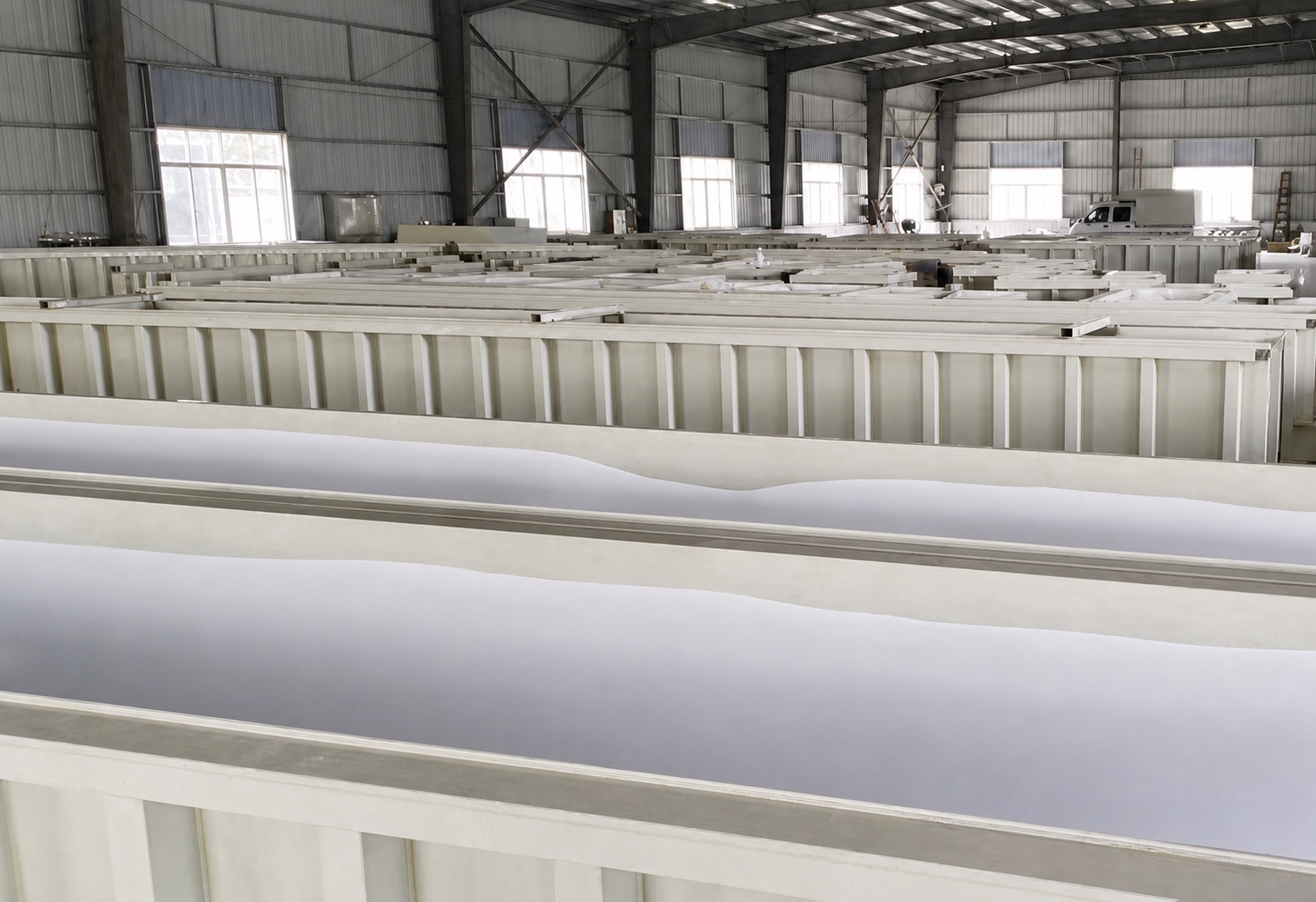
The same drainage logic applies to several PP sheet applications, but the acceptance question changes with the equipment. A clear PP equipment drainage brief keeps the design decision tied to the actual process boundary:
| Aplicativo | Primary drainage question | Typical review emphasis |
|---|---|---|
| Process or storage tank | Can the defined liquid state be emptied and inspected? | Low point, outlet path, cleanout cover, connected piping, and safe isolation. |
| Chemical bund or equipment base | Should liquid be held, sampled, or routed to a controlled collection point? | Containment boundary, compatibility separation, drain isolation, and cleaning access. |
| Pump or valve area | Can a small leak be collected without blocking operation? | Local tray geometry, hose disconnection space, removable sections, and inspection. |
| Wet-process or treatment equipment | Can rinse liquid and residue leave without bypassing another process step? | Flush route, removable panels, internal obstructions, and maintenance sequence. |
For a tank project, the PP sheet chemical-tank selection guide helps frame service conditions, while the Lista de verificação para solicitação de cotação (RFQ) de tanques PP turns connections, drains, overflows, and inspection scope into quote-ready inputs. Use this PP equipment drainage guide to add detail to those decisions rather than repeat the full tank guide.
Use the approved video as material context
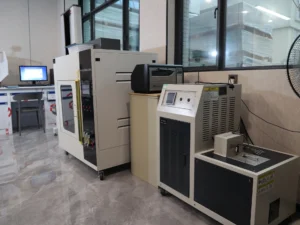
Material verification is one part of a drainage review. The following QEEHUA lab video shows a PP sheet pendulum impact test and provides general context for how sheet performance is checked before fabrication. It does not establish a drainage design, chemical compatibility, or project acceptance requirement.
Referência em vídeo: “PP Sheet finished Products: Finished Products | QEEHUA” is a general finished-product reference; project drainage, cleanout access, and chemical suitability still require application-specific review.
Drainage and cleanout inputs for a PP sheet RFQ
Send the fabricator a short, zone-by-zone scope instead of only writing “provide drain.” Include:
- equipment type, dimensions, liquid identity, concentration, normal and maximum temperature, and cleaning agent;
- the required drained state, allowable residue, and discharge or collection destination;
- low-point location after installation, outlet size or connection standard, isolation method, and overflow relationship;
- cleanout opening, cover-removal direction, operator access, hose or tool clearance, and inspection route;
- support, lifting, adjacent pipe, guard, and maintenance-clearance constraints; and
- material, welding, inspection, leak-test, and handover requirements that are actually part of the project.
QEEHUA can use those inputs to separate material review, fabrication details, and commercial scope for a PP equipment drainage design. If the service conditions are incomplete, the responsible next step is to close the information gap rather than infer a universal PP drain arrangement.
Perguntas frequentes
What is the difference between a process drain and a cleanout?
A process drain is the normal controlled outlet for transferring or emptying liquid. A cleanout is an access point for flushing, inspection, residue removal, or maintenance. They may be connected, but they should not be treated as the same function without a documented isolation and cleaning procedure.
Does every PP tank need a sloped bottom?
Not every tank has the same drained-state requirement. A slope or other low-point arrangement should be selected only after the liquid, residue, cleaning method, supports, outlet route, and acceptance condition are defined. The tank geometry must be reviewed as a fabricated assembly.
Can a PP equipment drain connect to a common collection system?
It may be possible, but compatibility, isolation, capacity, site procedures, and applicable regulations must be checked first. A common collection route should never be assumed to be suitable for incompatible or unidentified liquids.
What should a PP equipment drainage design RFQ include?
Include the equipment and liquid conditions, drained-state definition, low point, outlet and isolation details, discharge destination, cleanout access, maintenance clearances, supports, cleaning method, and the required fabrication and inspection records.
Need a PP drainage or cleanout review?
Share the equipment drawing, liquid conditions, cleaning method, outlet route, and site-access constraints. QEEHUA can review the PP sheet material and fabricated interface scope before quotation.