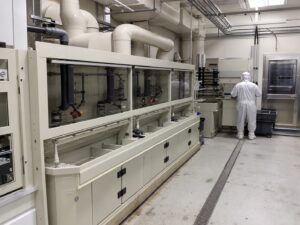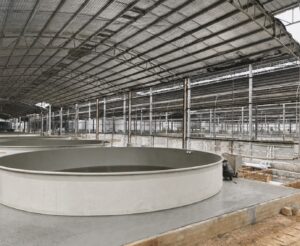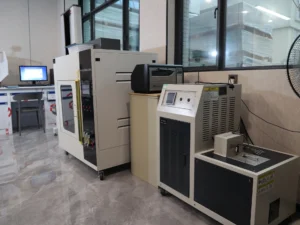
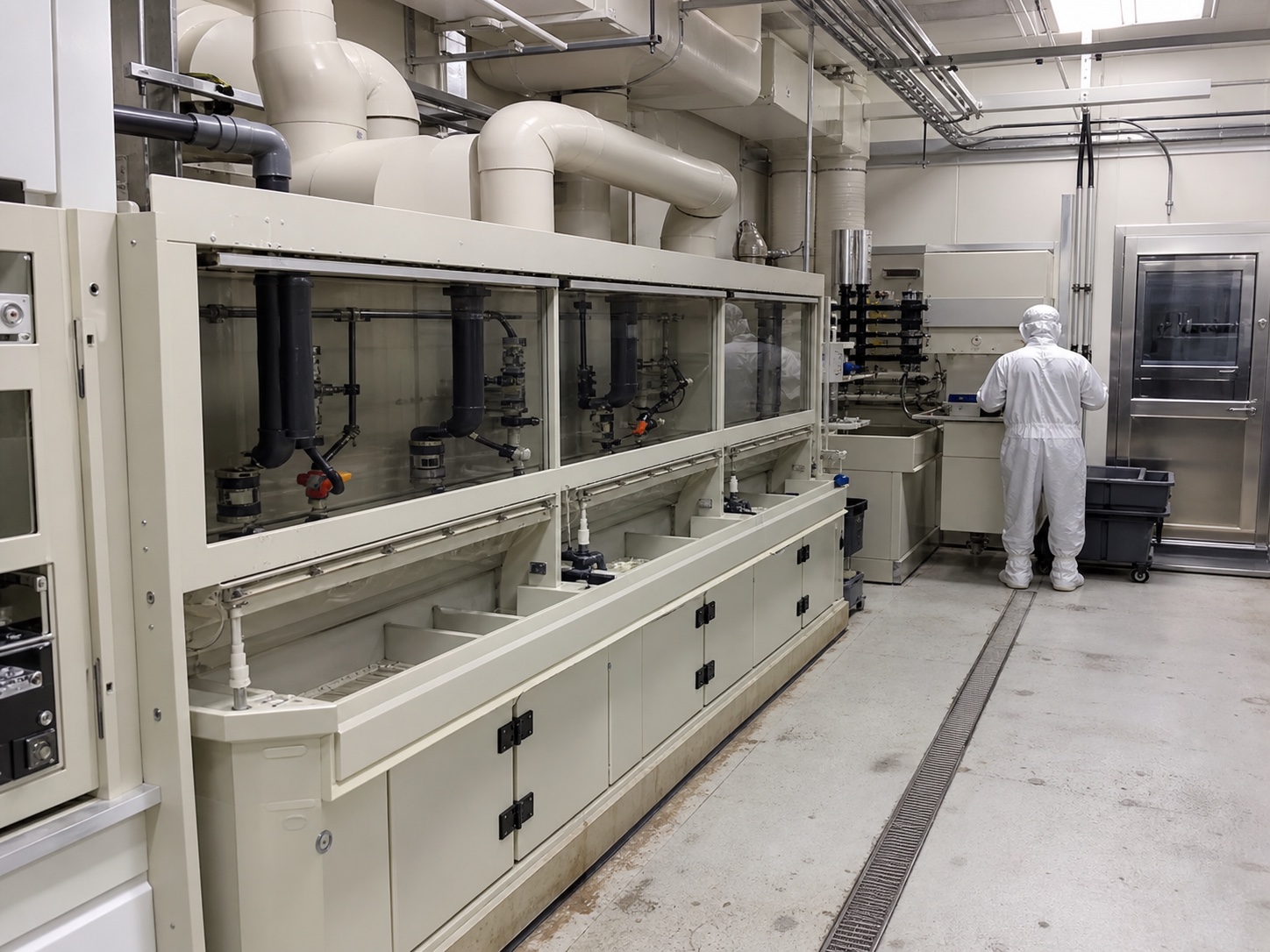
Conductive PP sheet for semiconductor wet-process equipment is justified only when the project has a defined static-control risk and a measured electrical requirement. It is not a default upgrade for every wet bench or chemical tank. The decision should connect the equipment zone, process chemistry, cleanliness controls, grounding path, and surface-resistance test method.
When should conductive PP sheet for semiconductor wet-process equipment be used?
Conductive PP is worth considering when charge accumulation can affect a wafer, electronic component, chemical delivery path, measurement, or hazardous-area control. The requirement should come from the process risk assessment or equipment specification, not from the word “semiconductor” alone.
- Use conductive PP for a defined charge-dissipation path. The component must be connected to a grounding or bonding design that gives the charge somewhere to go.
- Use antistatic or static-dissipative PP when controlled dissipation is enough. A higher resistance range may be more appropriate near sensitive electrical circuits or where a slower discharge is required.
- Use standard PP when static control is not part of the component requirement. Chemical compatibility, temperature, cleanliness, support, and fabrication still need to be reviewed.
For conductive PP sheet for semiconductor wet-process equipment, map the requirement to the part. A tank liner in continuous chemical contact, a removable splash guard, a wafer-handling screen, a dry external cover, and a cable or sensor enclosure may have different electrical and cleanliness duties. Treating the whole machine as one material zone is a common way to over-specify some parts and under-specify others.
Conductive, antistatic, and ordinary PP are not interchangeable
The labels describe different electrical behaviours, but the boundary between them is meaningful only when the test method, conditioning, specimen, and acceptance range are stated. Surface resistance and surface resistivity are also affected by contamination, humidity, temperature, applied voltage, and electrification time. ASTM D257 explains why the test configuration and reporting conditions matter, while ANSI/ESD STM11.11 defines a reproducible method for surface-resistance measurements on planar materials.
| Material route | When it may fit | What must be confirmed |
|---|---|---|
| Ordinary PP | Static control is not a design requirement, or the component is intentionally insulating. | Actual chemical duty, temperature, geometry, cleanliness, and fabrication method. |
| Antistatic / static-dissipative PP | Charge needs to dissipate in a controlled range without making the component a low-resistance conductor. | Surface or volume resistance range, conditioning, charge-decay requirement, grounding interface, and cleaning compatibility. |
| Conductive PP | A lower-resistance path is required for a grounded panel, enclosure, handling interface, or other defined static-control function. | Target resistance, test method, uniformity, finished-part result, grounding continuity, and process contamination limits. |
QEEHUA’s modified-sheet information lists AS-10 as an antistatic series with a stated surface-resistivity range of 106–1011 ohms and EC-01 as a conductive series with a stated surface resistivity below 106 ohms. These values are starting points for a project discussion, not a blanket acceptance for every thickness, surface, cleaning process, or finished assembly. Confirm the exact product evidence and test conditions before putting a value into a purchase specification. The modified PP sheet product page is the appropriate product reference for that review.
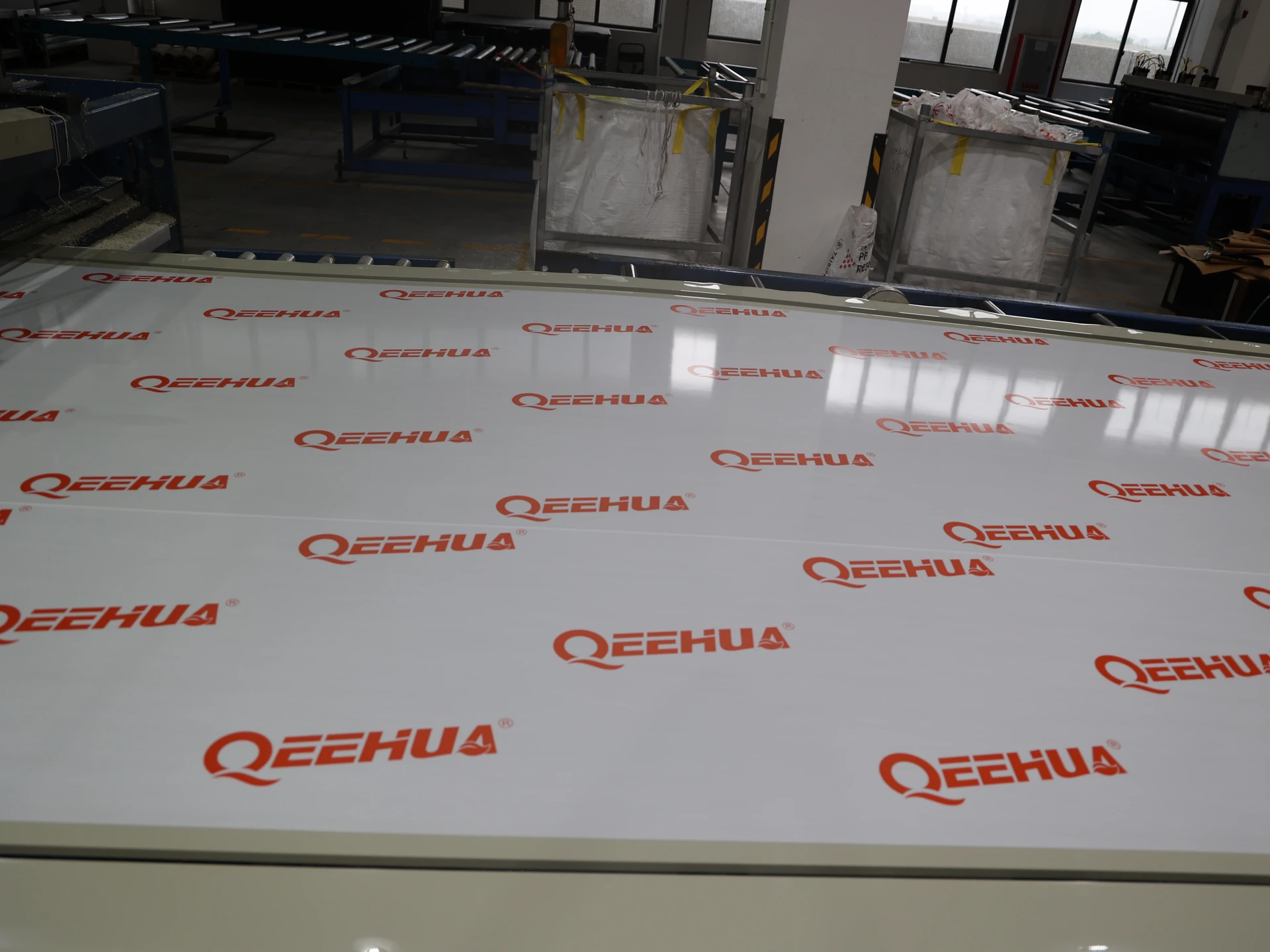
Choose by equipment zone, not by industry label
Wafer and panel handling interfaces
Conductive PP may be appropriate for a handling surface, screen, guide, or fixture when the project requires charge dissipation near sensitive devices. The drawing should identify the contact area, movement, cleaning cycle, allowable particles, and the grounding route. If the part slides against a wafer carrier or panel, review wear, particle generation, and surface damage together with resistance.
Wet benches, tanks, and splash-control components
A wet bench or tank can contain conductive components without every wetted wall needing the same electrical property. Check the process liquid, temperature, immersion time, cleaning chemistry, drainage, supports, and weld details first. A lower-resistance sheet does not automatically improve chemical resistance or make a tank design acceptable. In a QEEHUA project review, the same modified sheet may be considered for a dry cover but not automatically released for a wetted liner; assign the electrical and chemical duty to each part on the drawing.
Dry covers, enclosures, and cable interfaces
Conductive PP can be useful on an enclosure or cover when the risk comes from charge on the exterior surface, removable access panels, or a cable and sensor interface. The design must show how hinges, fasteners, coatings, gaskets, and grounding straps maintain continuity after maintenance. A conductive panel that is isolated by an insulating gasket may not perform the function intended by the specification.
Chemical delivery and exhaust components
For chemical delivery, drain, or exhaust components, electrical behaviour is only one input. Chemical compatibility, temperature, condensate, pressure, support, and cleanliness can control the selection. A project that requires conductive material near a chemical line should document whether the requirement applies to the wetted surface, the outer enclosure, or only a handling fixture.
What should be tested before approval?
A supplier datasheet is not the same as a finished-equipment qualification. Build the approval plan around the component that will be delivered.
- Define the measurement. State surface resistance or surface resistivity, the target range, electrode arrangement, voltage, electrification time, temperature, humidity, and conditioning. ANSI/ESD STM11.11 describes the equipment, specimen preparation, and conditioning needed for reproducible planar surface-resistance measurements.
- Identify the specimen. Record the sheet grade or series, thickness, colour, surface side, production lot, and whether the specimen represents a cut, machined, welded, or formed part.
- Check uniformity. Test more than one location when the part is large or when a conductive additive may not be uniform through the sheet or across a fabricated assembly.
- Verify the grounding interface. Test the path from the working surface through fasteners, inserts, straps, or bonding hardware to the designated ground point. A resistance value on a loose coupon does not prove continuity after installation.
- Repeat after the relevant cleaning process. Surface contamination and cleaning residues can change a resistance measurement. Record the cleaning method and acceptance condition instead of assuming that a dry laboratory value represents the process state.
ASTM D257 notes that surface resistance measurements are influenced by surface contamination and environmental variables, and that the usefulness of a measurement depends on the specimen and electrode arrangement. Use the standard as a test-method reference, not as an automatic approval for a semiconductor tool. Read the ASTM D257 method description beside the project’s own acceptance plan. For a QEEHUA project, carry the measured value with the lot, thickness, surface side, cleaning state, finished-part location, and grounding record so the result remains traceable after fabrication.
Selection and fabrication checks
The practical review should start with the finished component rather than the grade name. Send the drawing revision, part function, chemical media, temperature range, cleaning method, required resistance range, surface condition, support and fastening details, and the acceptance documents requested by the equipment owner. If a screen, cover, tank liner, or enclosure will be welded, identify the parent sheet and matching PP welding rod in the same review so QEEHUA can match the proposed series and fabrication route to the actual duty.
This is where conductive-sheet projects often fail in practice. A buyer may approve an EC-01 or similar material from a small coupon, then release a large panel with a different surface finish, machined openings, insulating gaskets, or untested weld areas. The electrical requirement should remain attached to the part and installation detail through cutting, machining, welding, cleaning, and final inspection.
For a broader material decision, use the PP sheet selection and fabrication guide. For static-control procurement, the anti-static PP sheet RFQ guide provides a related comparison of target values, test conditions, grounding interfaces, and acceptance controls. The semiconductor application still needs its own chemical and cleanliness review.
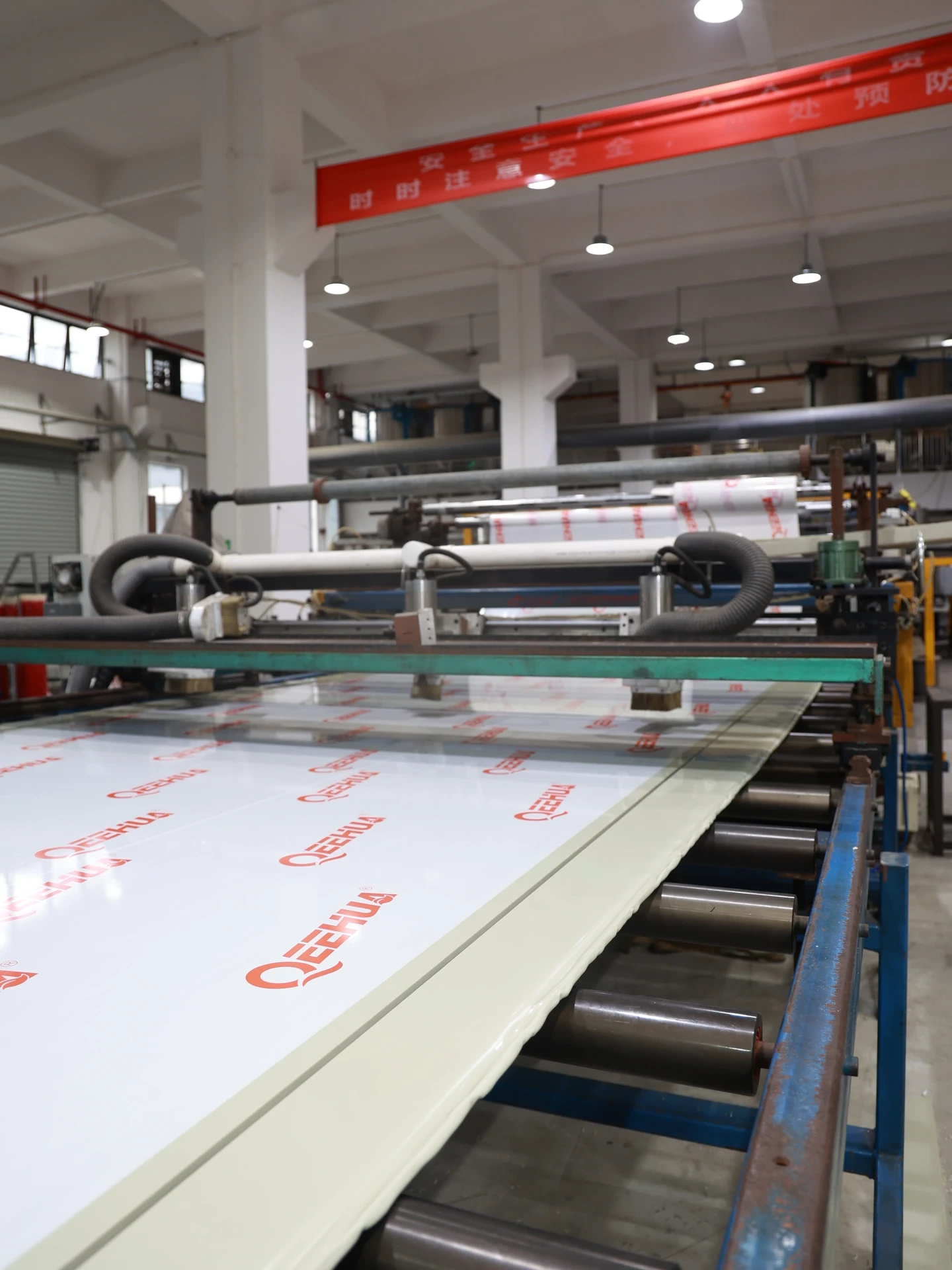
A fabrication and quality-verification video can help a buyer understand how a PP sheet is checked, but it cannot establish conductive performance. The following clip is included only beside the discussion of sheet processing and cut-part review.
Referência em vídeo: “PP Sheet Cutting Process: Precision Edge Cutting | QEEHUA” is a limited fabrication visual reference only; it does not establish conductive grade performance, chemical compatibility, cleanliness, grounding, or finished-part acceptance.
The test clip is not a substitute for the project test plan. Confirm the selected sheet grade and finished panel against the specified resistance method, cleaning route, grounding path, and acceptance record before release.
When should conductive PP not be the first choice?
Do not specify conductive PP simply because the equipment is in a cleanroom. It may be the wrong starting point when:
- the process has no defined electrostatic hazard or device-sensitivity requirement;
- the required resistance range and test conditions have not been agreed;
- the part must remain electrically isolated from nearby circuits or sensors;
- the conductive additive, surface condition, or cleaning route has not passed the project’s contamination review; or
- the equipment is in a hazardous classified location where the complete electrical installation still needs separate approval.
OSHA 29 CFR 1910.307 requires electrical equipment and installations in hazardous classified locations to be intrinsically safe, approved for the location, or demonstrated to be safe for the hazards present. A conductive plastic sheet can support a static-control design, but it is not a substitute for hazardous-location classification, grounding, bonding, or equipment approval. Review the applicable OSHA hazardous-location requirements with the responsible engineer.
RFQ checklist for conductive PP sheet
A useful RFQ lets the supplier identify what is confirmed and what still needs project approval.
| Campo RFQ | O que fornecer | Por que isso importa |
|---|---|---|
| Component and zone | Panel, screen, tank liner, enclosure, cover, fixture, or other part; wet or dry location. | Different parts have different electrical, chemical, and cleanliness duties. |
| Electrical target | Surface or volume resistance/resistivity range, test standard, conditioning, and charge-decay requirement if applicable. | A grade label alone cannot define acceptance. |
| Grounding design | Ground point, bonding hardware, fasteners, gaskets, and continuity check. | The material must be connected to the intended discharge path. |
| Process exposure | Chemicals, concentration, temperature, cleaning fluids, immersion or splash condition, and exposure time. | Conductive behaviour does not replace chemical-compatibility review. |
| Fabrication scope | Cutting, machining, bending, welding, openings, support spacing, and matching rod or profile. | Processing can change the surface, geometry, and inspection points. |
| Evidence package | Current datasheet, lot identity, sample result, finished-part test, inspection record, and deviation list. | It gives the equipment owner a traceable release decision. |
For a component-level semiconductor screen or perforated panel, add the aperture pattern, support frame, edge finish, cleaning route, and interface dimensions. The separate PP semiconductor screen RFQ checklist can support that drawing review. This keeps the material choice tied to the actual component rather than to a generic semiconductor label. For a project quotation, send the complete requirement through QEEHUA’s enquiry page.
Perguntas frequentes
Is conductive PP required for every semiconductor wet bench?
No. Conductive PP is appropriate only when the equipment specification identifies a static-control risk, target resistance range, and grounding path. Chemical, cleanliness, temperature, and fabrication requirements still apply to every wet-bench component.
What is the difference between antistatic and conductive PP sheet?
Antistatic or static-dissipative PP is intended to control charge within a specified resistance range. Conductive PP has a lower resistance and is selected when the design requires a more direct, grounded dissipation path. The project must define the test method and acceptance range instead of relying on the label alone.
Can a supplier datasheet prove that a finished conductive PP panel is acceptable?
No. The datasheet is evidence for the stated material sample and test conditions. The finished panel may require location checks, grounding-continuity verification, cleaning-condition testing, dimensional inspection, and a project-specific acceptance record.
Can conductive PP be used near semiconductor chemicals?
It may be considered when the exact grade is compatible with the chemical, concentration, temperature, cleaning route, and mechanical duty. Conductive performance does not by itself prove chemical compatibility, cleanliness, or suitability for a finished tank, screen, enclosure, or wet-process tool.
Conductive PP sheet for semiconductor wet-process equipment is a component-level decision, not a cleanroom label. Start with the static-control risk, define the resistance test and grounding path, then review chemistry, cleanliness, geometry, fabrication, and acceptance evidence together. If those conditions are documented, QEEHUA can review the proposed PP sheet series and fabricated detail against the project requirement.