For a custom polypropylene sheet order, start with clear polypropylene sheet specifications: define the end use, then lock the material, thickness, width, cut format, surface texture, corona-treatment requirement, inspection method, and packing condition. A single request for “PP sheet” leaves too much room for a technically correct sheet that cannot be printed, welded, machined, or fitted to the drawing.
This guide covers the custom-order decisions that appear repeatedly in supplier RFQs. It complements QEEHUA’s Guia de Chapas de PP: Seleção, Fabricação e Aplicações. The existing PP sheet thickness review for fabricated equipment focuses on structural and equipment decisions; this article focuses on turning a buyer’s dimensional and surface requirements into a production-ready sheet specification.
Polypropylene sheet specifications start with the downstream job
The same polypropylene sheet specification can be suitable for one conversion route and unsuitable for another. A tank panel, a machined guard, a thermoformed cover, and a printed or laminated sheet may all be called a custom PP sheet, but they do not impose the same requirements on thickness, surface, or treatment.
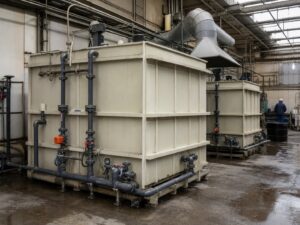
- Fabricated equipment: define chemical duty, support spacing, weld route, openings, and the finish that must remain clean after fabrication.
- Machined or cut parts: define the finished dimensions, edge condition, drilling or routing process, and the amount of material needed for trimming.
- Thermoformed parts: define the formed geometry, draw depth, draft, trimming allowance, and the sheet condition needed for a forming trial.
- Printing, coating, or lamination: define which face will receive the treatment and how adhesion will be verified; do not assume a treatment intended for printing is also a fabrication requirement.
Writing this duty statement at the top of the RFQ lets the supplier challenge an incompatible combination before material is produced. It also prevents a surface request, such as “matte,” from being mistaken for a structural grade or chemical-resistance decision.
Define polypropylene sheet thickness as a controlled range
“5 mm PP sheet” is not a complete thickness requirement. Record the nominal value, permitted tolerance, measurement method, and whether the dimension applies before or after cutting, forming, machining, or protective-film removal. If the sheet becomes a tank wall or equipment panel, connect thickness to the unsupported span, load case, temperature, reinforcement, and weld detail rather than selecting it from a catalogue line alone.
| Thickness input | What to state in the order | Por que isso importa |
|---|---|---|
| Nominal thickness | Target thickness and the unit used on the drawing. | Prevents a mismatch between purchasing, fabrication, and inspection records. |
| Tolerância | Acceptable upper and lower limits, or the governing drawing/data-sheet requirement. | Controls fit-up, weight, stiffness, forming response, and machining allowance. |
| Measurement basis | Where and how thickness is checked, including edge or trimmed-area exclusions if applicable. | Ensures the buyer and supplier are comparing the same measurement. |
| Process condition | As-extruded, cut, formed, machined, or post-trim condition. | Separates incoming-sheet acceptance from the finished-part dimension. |
For fabricated equipment, ask for the material data and the design assumptions that support the chosen thickness. QEEHUA can review the sheet request together with the drawing, supports, nozzles, weld access, and service conditions; the sheet thickness itself is not a substitute for an equipment design review.
Specify width, length, and usable format together
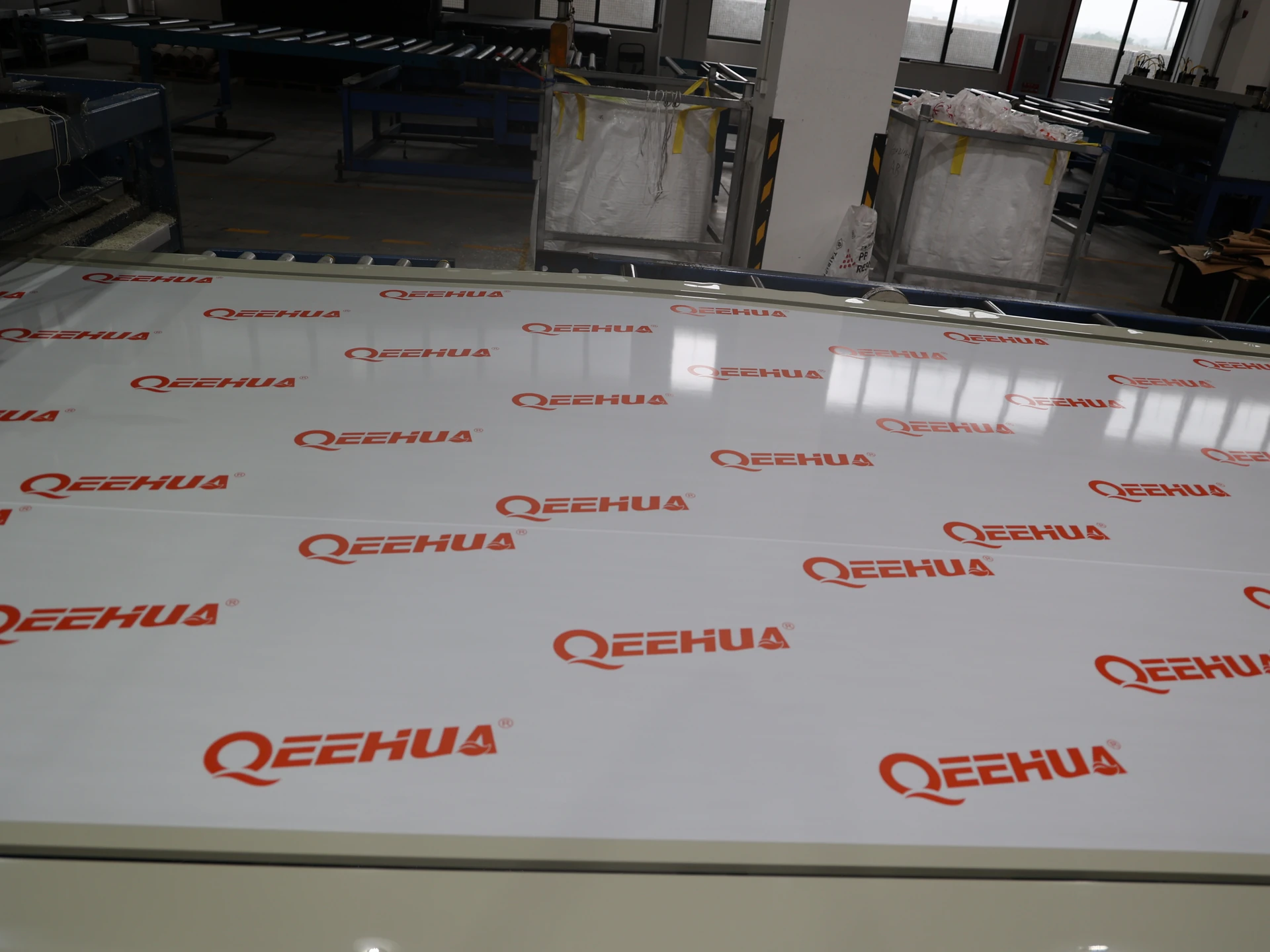
Width is a production and layout constraint, not just a number in the purchase order. State the required sheet width, cut length or roll format, edge-trim allowance, squareness requirement, and the finished blank size needed by the fabricator. If the order will be cut into panels, provide the nesting or minimum usable size so the supplier can distinguish nominal stock width from the area that can actually be delivered.
Also record whether the width is measured between trimmed edges, across the full sheet, or on a protected sheet before edge preparation. When the sheet is destined for a welded tank, duct, or guard, the panel layout may be more important than the largest theoretical extrusion width: a wider blank can still be wrong if it forces a seam into a high-stress corner or leaves insufficient material around a nozzle.
Describe texture as a functional surface requirement
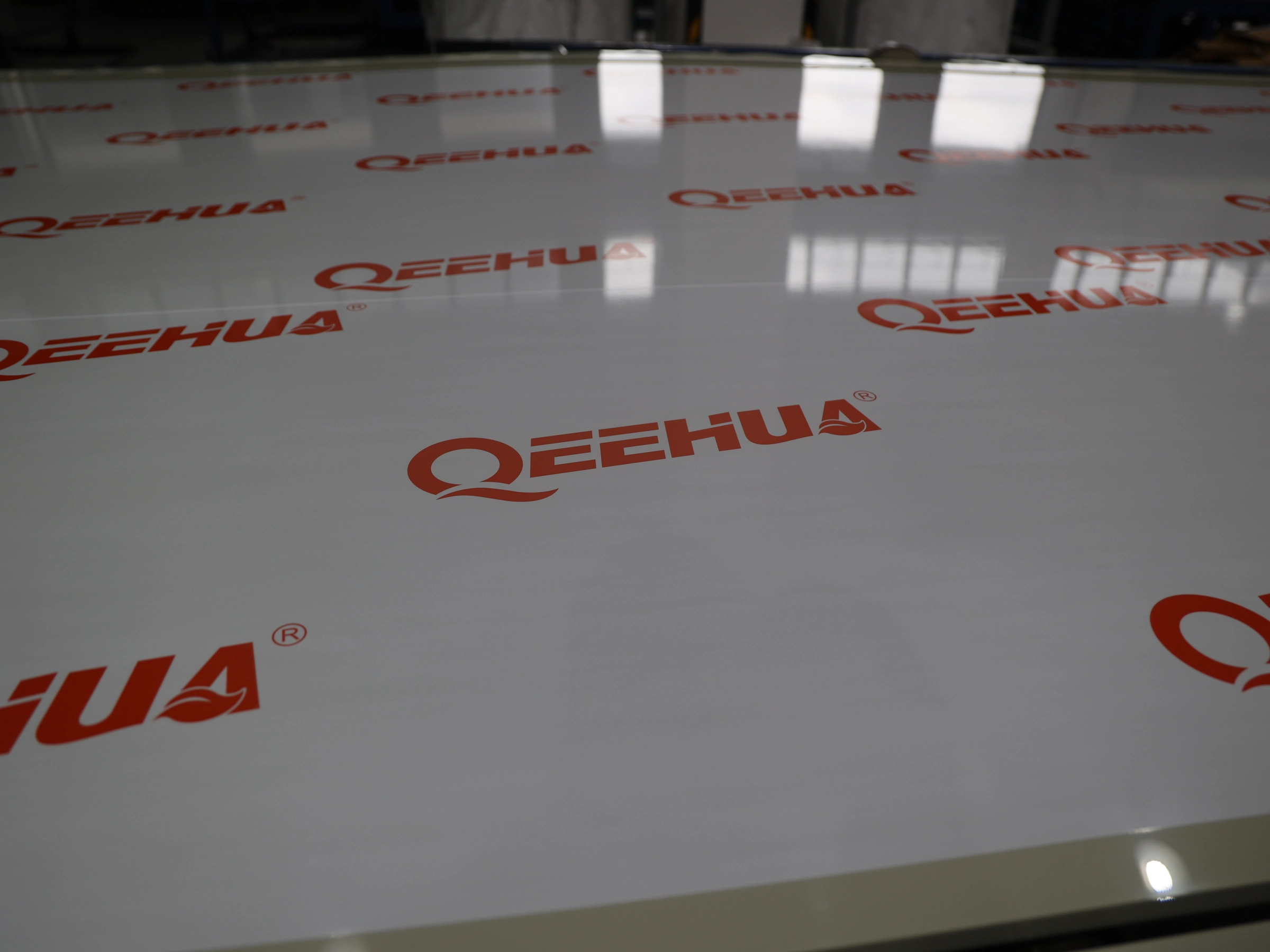
Texture can describe appearance, friction, cleaning behavior, print anchorage, or a surface pattern. Use a reference sample, drawing, or agreed vocabulary such as smooth, matte, embossed, or textured, and identify which face is affected. If both sides have different finishes, write “side A” and “side B” on the drawing rather than relying on a photograph.
For chemical equipment, the surface decision should also consider cleanability, residue retention, inspection lighting, and the location of welds or gaskets. A decorative texture is not automatically an anti-slip rating, and a matte appearance does not prove a particular roughness. If the surface affects sealing, printing, bonding, or cleaning, add an acceptance method: visual sample approval, roughness measurement, contact-angle/wetting test, or a functional trial as appropriate to the project.
Protective film can further confuse the specification. State whether the requested texture is the PP surface itself or the temporary film, and define when the film is removed and what contamination or adhesive residue is unacceptable. QEEHUA’s PP sheet storage and handling guide is useful when the surface must remain protected between production, shipment, and fabrication.
Use corona treatment only when the next process needs it
Polypropylene has a low-energy, non-polar surface, so a printing, coating, or adhesive process may require surface treatment. Corona treatment changes surface wetting behavior; it does not automatically improve chemical resistance, stiffness, weld strength, or service temperature. The order should therefore state the downstream process and the evidence required, not simply say “corona treated.”
ASTM D2578 describes a wetting-tension test for polyethylene and polypropylene film surfaces, while ISO 15989 describes water-contact-angle measurement for corona-treated polymer films. These standards help define a measurement approach, but the buyer and supplier still need to agree the test solution, treated side, sampling location, timing after treatment, and acceptance level for the actual ink, coating, or adhesive. Link the standard beside the requirement and avoid turning a test method into a guaranteed performance value.
Include the following corona fields in the RFQ:
- the reason for treatment: printing, coating, lamination, adhesive bonding, or another named process;
- treated side: face A, face B, or both;
- the agreed wetting-tension or contact-angle method and target, if the downstream process supplies one;
- when the treatment is tested and how the result is recorded on the inspection report;
- storage and packaging controls that protect the treated surface before conversion; and
- any areas that must remain untreated for welding, sealing, cleanroom handling, or another project-specific reason.
Do not request corona treatment merely because it appears on another supplier’s catalogue. For a welded chemical tank or duct panel, the more useful requirement may be a clean, protected, weld-ready surface. If printing is added later, treat that as a change requiring a new surface and acceptance review.
Add grade, color, and documentation inputs without inventing a material claim
Record the required PP form or grade only when the application has a verified reason for it. “Natural,” “white,” or a project color code should be tied to the drawing and sample approval. If the project needs a specific additive, flame behavior, anti-static property, or compliance statement, identify the requested document and acceptance authority rather than assuming that a catalogue phrase proves QEEHUA capability.
A controlled custom-order package should identify the applicable product data sheet, SDS, batch or lot traceability, and any inspection report needed at delivery. QEEHUA’s Ficha técnica e guia de fabricação da chapa de PP can help the project team turn a general material request into questions that a supplier can answer with documents.
Turn the four headline dimensions into an acceptance plan
A specification is only useful if the receiving team can verify it. Separate the supplier’s certificate or data-sheet review from the physical inspection of thickness, width, cut length, surface, and treatment. Define what happens when a sample is outside tolerance: hold the batch, request a concession, rework, or reject according to the project quality plan.
| Order field | Minimum acceptance evidence | QEEHUA-oriented review question |
|---|---|---|
| Thickness and tolerance | Inspection record with locations and method. | Does the value support the drawing, spans, forming route, and weld detail? |
| Width, length, and edges | Measured dimensions, trim condition, and layout confirmation. | Will the delivered usable area make the required panels without moving a seam? |
| Texture or finish | Approved sample, visual standard, or agreed surface test. | Will cleaning, sealing, printing, or inspection be affected by the chosen face? |
| Corona treatment | Treated-side identification and dated wetting/contact-angle result when required. | Is the treatment tied to a real downstream process and protected until use? |
| Packing and traceability | Label, lot/batch record, protective packaging, and delivery inspection plan. | Can the fabricator identify the sheet used in each equipment component? |
This evidence-first approach is especially important when a custom sheet feeds several operations. When polypropylene sheet specifications identify the acceptance evidence before production, they stop a visually attractive panel from passing inspection while the thickness, surface, or treated side remains ambiguous.
Send a complete custom PP sheet RFQ
A supplier can quote more accurately when the request contains the drawing and the decision logic behind it. Include:
- application, service environment, and downstream process;
- PP form/grade request and any required data sheet, SDS, or traceability record;
- nominal thickness, tolerance, test method, and process condition;
- width, cut length or roll format, edge-trim condition, flatness/squareness, and usable layout;
- color, opacity, texture, gloss/matte description, side A/side B, and approved samples;
- corona-treatment purpose, treated side, agreed test method, target, timing, and storage controls;
- quantity, repeat-order expectation, packing, labels, and inspection/acceptance records; and
- the contact responsible for approving substitutions or deviations.
For cut or machined components, connect this request to QEEHUA’s PP sheet cutting requirements for OEM parts. For a fabricated tank, duct, or process panel, send the drawing, chemical duty, supports, openings, weld requirements, and access constraints with the sheet request instead of asking for a material-only quotation.
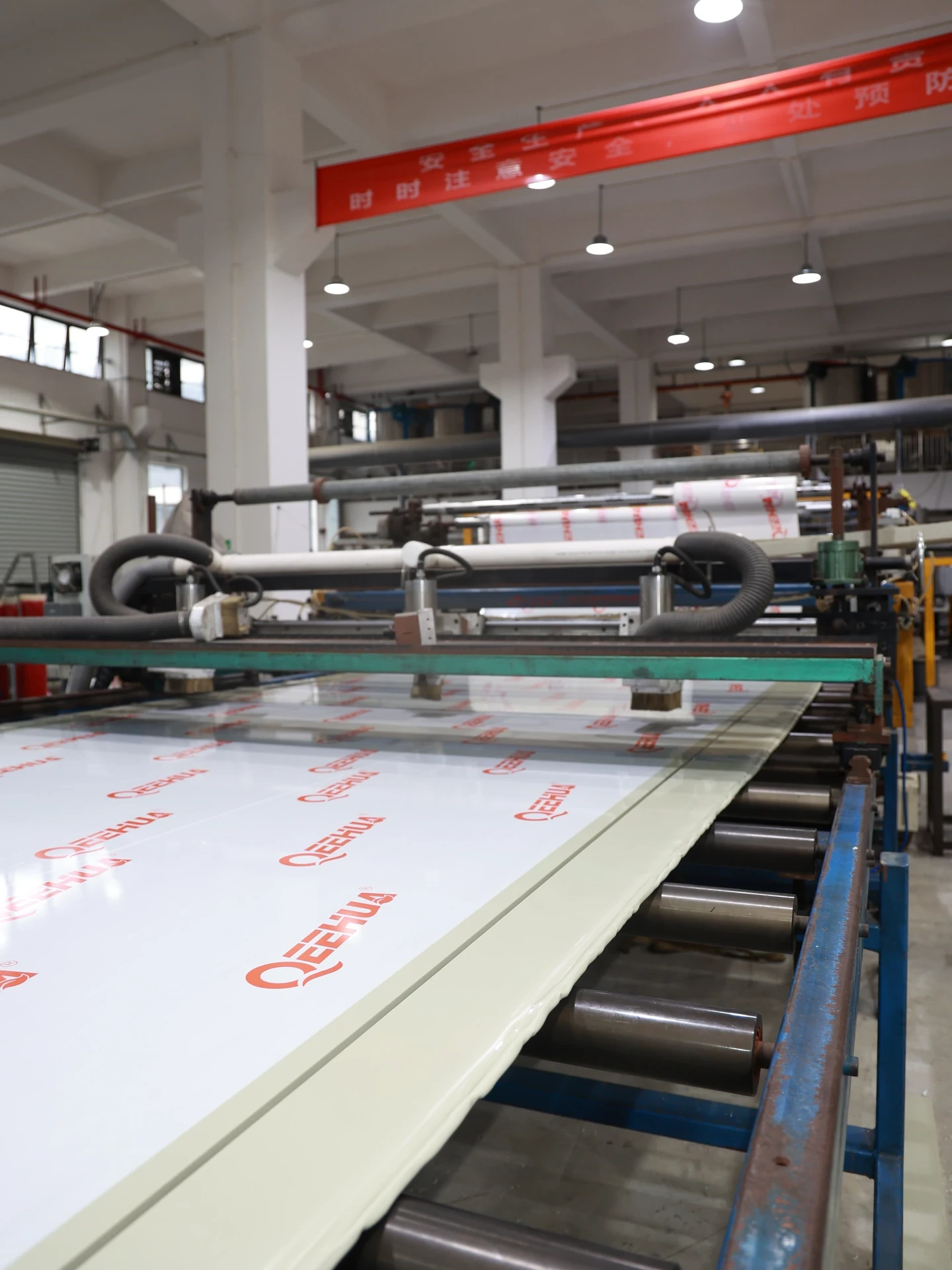
The following QEEHUA production video shows thickness and surface control during PP sheet calendering. It provides process context for an RFQ; it does not establish a project-specific tolerance, corona level, texture, or chemical-service approval.
Referência em vídeo: “PP Sheet Calendering: Thickness and Surface Control | QEEHUA” illustrates general process-control context only; confirm the custom order’s dimensions, finish, treatment, and acceptance evidence in the written specification.
Perguntas frequentes
What should a custom polypropylene sheet order specify first?
Start with the application and downstream process, then state the PP form or grade, thickness and tolerance, width and cut format, surface finish, treatment requirement, inspection evidence, and packing condition. This sequence keeps the specification tied to the final part rather than to a generic stock-sheet description.
How should polypropylene sheet thickness be written on an RFQ?
State the nominal thickness, permitted tolerance, unit, measurement method, and process condition such as as-extruded, cut, formed, or machined. For equipment panels, also provide the drawing, unsupported span, load, temperature, reinforcement, and weld assumptions used in the design review.
When is corona treatment appropriate for PP sheet?
Corona treatment is appropriate when a named downstream process such as printing, coating, lamination, or adhesive bonding needs improved surface wetting. Identify the treated side, test method, target, timing, and storage controls. Do not treat corona as proof of chemical resistance or weld suitability.
Can a textured PP sheet be used for chemical equipment?
It may be possible when the texture is compatible with cleaning, sealing, inspection, and the chemical duty, but a visual label such as “matte” or “embossed” is not enough. Use an approved sample or agreed surface test, and review the effect on welds, gaskets, residue retention, and maintenance access.
Need a custom PP sheet specification review?
Send the drawing, application, thickness and dimensional targets, surface sample, treatment requirement, quantity, and acceptance documents. QEEHUA can help turn those inputs into a fabrication-ready PP sheet enquiry.
For repeat orders, keep the approved polypropylene sheet specifications in the released drawing and purchase order so replacement panels match the original geometry.