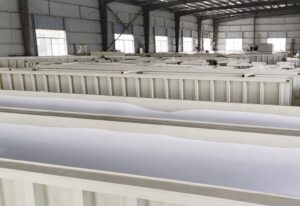
An RFQ for chemical bund trays should define the liquid duty, containment job, tray geometry, loading arrangement, drainage policy, interfaces, fabrication scope, inspection records, and acceptance criteria. Those inputs let a PP fabricator review whether the requested tray is a defined secondary-containment component rather than an undefined plastic box.
Krótka odpowiedź: When requesting chemical bund trays, start with the chemical names and concentrations, the primary containers being protected, the required footprint and usable containment basis, and the operating details around drainage, handling, and access.
This checklist is for a fabricated tray or low-profile containment component made from PP sheet. It does not replace the design review of the primary tank, drum, support frame, site drainage, or applicable local rules. For the wider material-and-fabrication context, begin with the Przewodnik po arkuszach PP: wybór, produkcja i zastosowania.
Chemical Bund Trays RFQ: Start with the Containment Job
Before requesting dimensions, state what the tray is expected to contain and what it is not expected to contain. A tray beneath drums, an insert within an existing bund, and a fabricated floor pan under dosing equipment can have different interfaces, exposure patterns, cleaning practices, and handling constraints.
Identify the primary containers, their maximum simultaneous arrangement, and whether routine transfer, maintenance, or temporary staging occurs inside the tray footprint. This keeps the RFQ focused on a real operating condition instead of a nominal outside length and width.
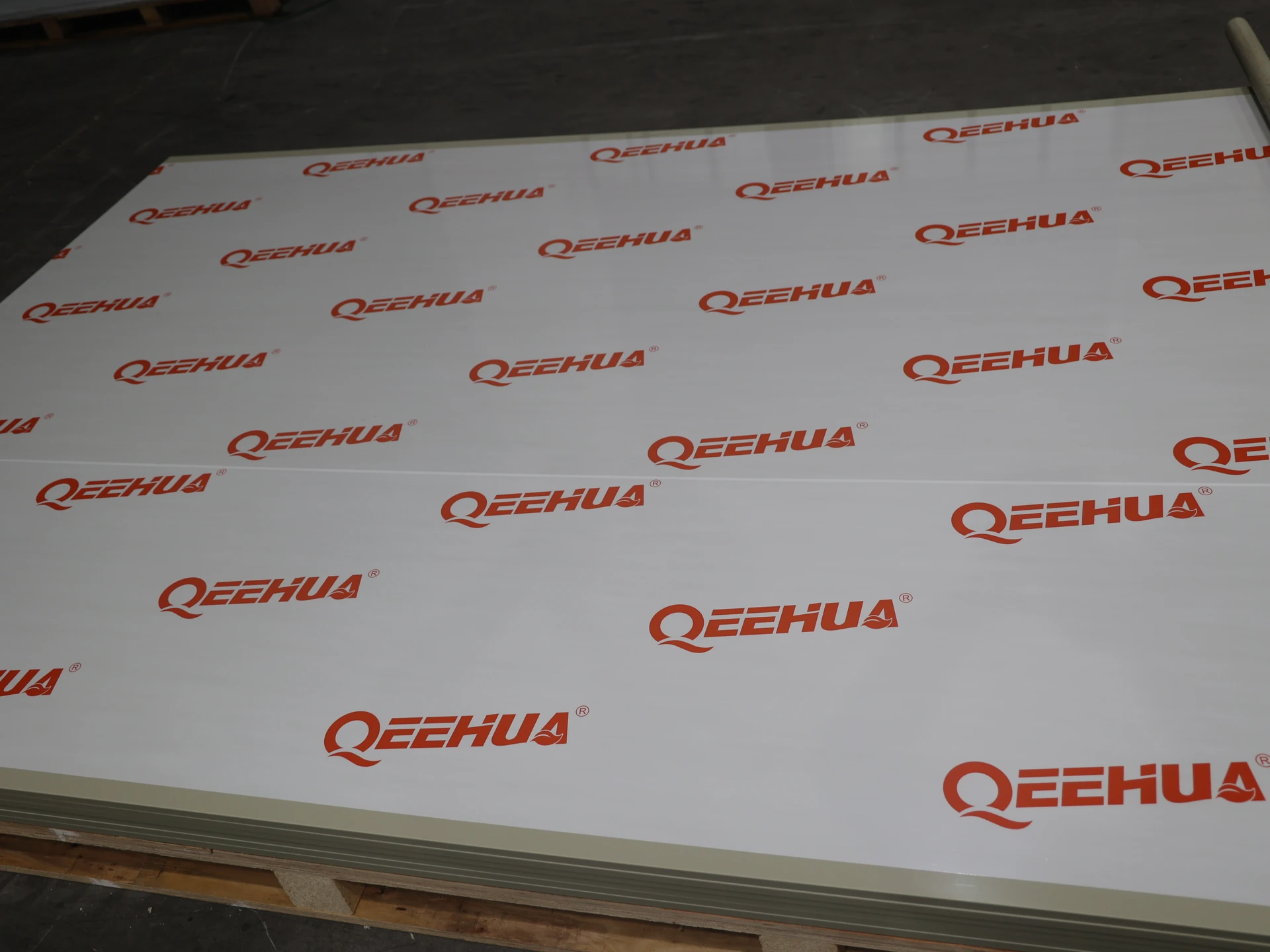
The 10 Inputs a PP Fabricator Needs
| RFQ input | Co zapewnić | Dlaczego to ważne |
|---|---|---|
| 1. Containment purpose | State whether the item is a standalone tray, a bund insert, a drip pan, or part of a larger equipment base. | Defines the scope boundary and avoids treating a secondary-containment component as a primary process vessel. |
| 2. Chemical duty | List every liquid, concentration, normal and upset temperature, and the relevant safety data sheet revision. | Supports material review. Do not assume PP is suitable for every chemical or concentration. |
| 3. Primary containers | Give container type, count, outside dimensions, maximum simultaneous inventory, and support arrangement. | Lets the reviewer see the actual occupied area and loading layout. |
| 4. Required geometry | Provide plan dimensions, wall height, corner treatment, clearances, and a drawing with units. | Prevents ambiguity between outside dimensions, internal clear space, and usable containment volume. |
| 5. Containment basis | State the project or site basis used to determine required capacity and freeboard. | Capacity rules vary by jurisdiction, liquid, installation, and project specification. |
| 6. Drainage and cleaning | Describe drain location, valve expectations, sump detail, cleaning method, and whether drainage is normally closed or controlled. | Drainage is a functional and compliance-sensitive interface, not a late fabrication detail. |
| 7. Interfaces | Show pipes, penetrations, cable routes, supports, curbs, floor condition, and any removable covers or grating. | Interfaces often govern fabrication sequencing and leak-path review. |
| 8. Handling and access | Describe forklift, pallet-jack, lifting, walk-on, maintenance, and replacement requirements. | Separates normal access assumptions from a structural design commitment. |
| 9. PP fabrication scope | Specify the requested PP sheet color, any matching welding consumable requirement, and the expected drawing or sample-approval stage. | Creates a clear handoff between material selection, fabrication, and approval. |
| 10. Documents and acceptance | List drawings, material records, visual inspection, test requirements, packing, and delivery records required by the buyer. | Turns 鈥渜uality documents鈥?into a checkable list rather than an open-ended request. |
Give the Chemical Information in a Usable Form
A fabricator needs more than a trade name. Include the chemical name, concentration, operating temperature, expected contact duration, and whether accidental mixtures or washdown chemicals are credible. Attach the current safety data sheet where the project allows it. OSHA explains that chemical labels and safety data sheets communicate hazards and handling information; use them as project inputs, not as a substitute for a material-compatibility review.
If the duty changes after quotation, flag the change before releasing fabrication. QEEHUA PP sheet should be reviewed against the actual chemical duty and fabrication condition for the project; a general statement that PP is chemically resistant is not enough for an RFQ decision.
For related equipment-selection context, see how to choose PP sheet for chemical tanks and process equipment. When the project includes drums rather than a fabricated tray, the PP spill containment pallet buyer checklist covers a different procurement route.
Separate Geometry, Capacity, and Structural Assumptions
Put the containment basis in writing, but do not turn an RFQ checklist into an unverified structural calculation. A drawing should distinguish internal usable dimensions from external dimensions, identify where supports contact the tray, and show penetrations or drain points. If the tray may receive a point load, traffic, or a support frame, provide that information for engineering review instead of asking the fabricator to infer it from a general application description.
For U.S. hazardous-waste container areas governed by the rule, 40 CFR 264.175 addresses containment-system requirements. It is not a universal tray-sizing rule: confirm the applicable jurisdiction, permit, chemical classification, and project specification with the responsible compliance team.
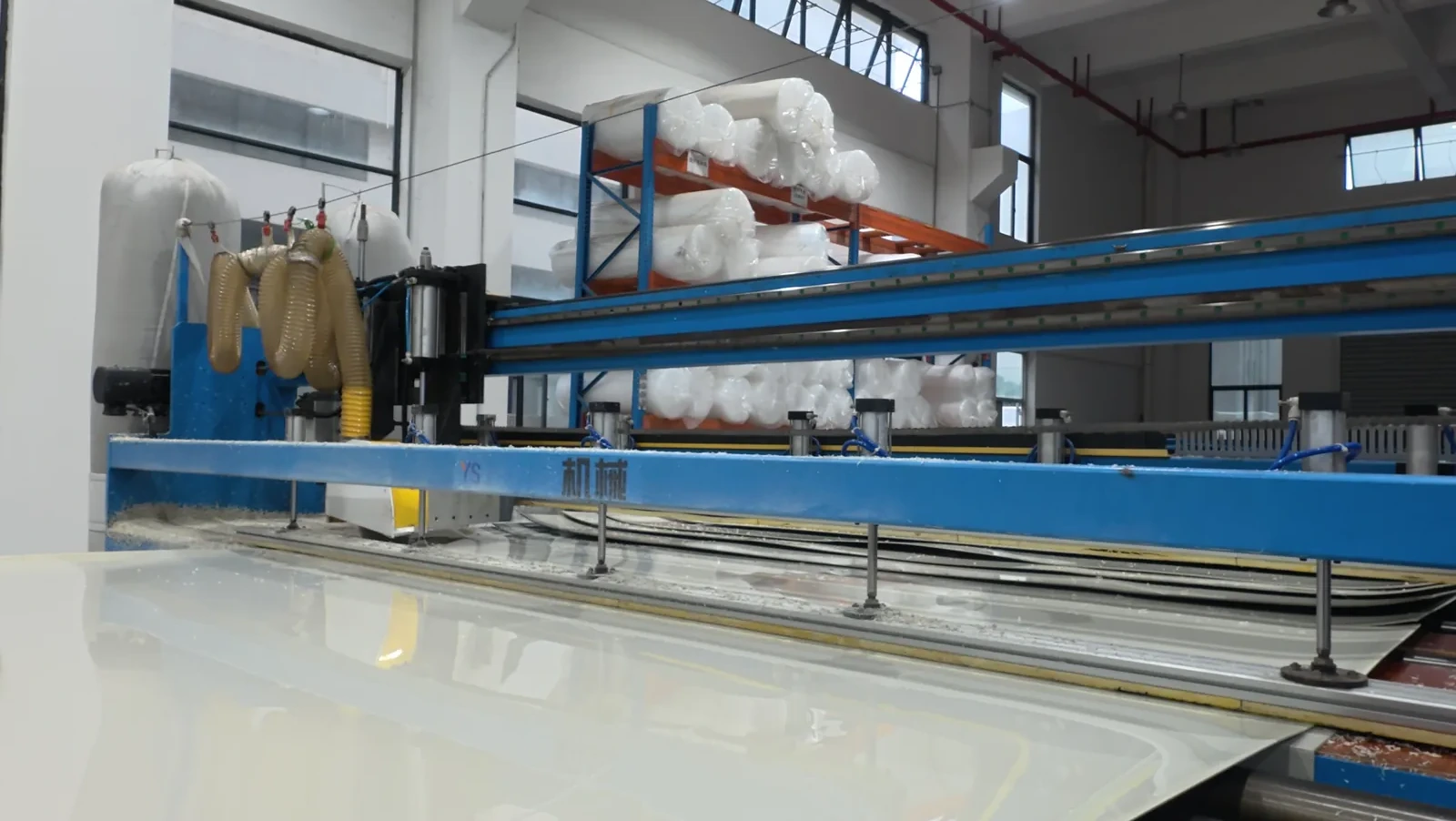
Ask for a Drawing Review Before Fabrication
A useful RFQ includes a plan view, sections through walls and drains, and any detail that changes the fabrication path. Mark tolerances only where the mating equipment requires them. If a tray is intended to fit beneath existing equipment, include a verified site measurement and identify which dimensions are critical.
Also state whether the buyer needs a preliminary layout, fabrication drawing approval, or a final as-built document. These are different deliverables. Keeping them separate helps the buyer review interfaces before PP sheet cutting and welding starts.
A short process reference can help procurement teams understand why dimensions, corner details, and cut edges should be settled before fabrication.
Odniesienie do filmu: PP Sheet Cutting Process: Precision Edge Cutting | QEEHUA shows one sheet-cutting stage that may be relevant after a tray drawing is approved. It does not demonstrate final tray suitability, capacity, or compliance for a specific chemical duty.
Define Inspection, Test, and Handover Expectations
State exactly what must be submitted with the tray: approved drawings, material identification requested by the buyer, visual inspection records, any specified test record, packing requirements, and delivery documentation. Where testing is required, state the test method, test conditions, acceptance criteria, and required record. “Leak test required” alone is not specific enough for consistent review.
For the chemical-information portion of the file, use the supplier and site safety information already required by the project. OSHA provides an overview of Hazard Communication Standard labels, including the relationship between labels and safety data sheets. That information supports an informed RFQ but does not itself approve a material choice.
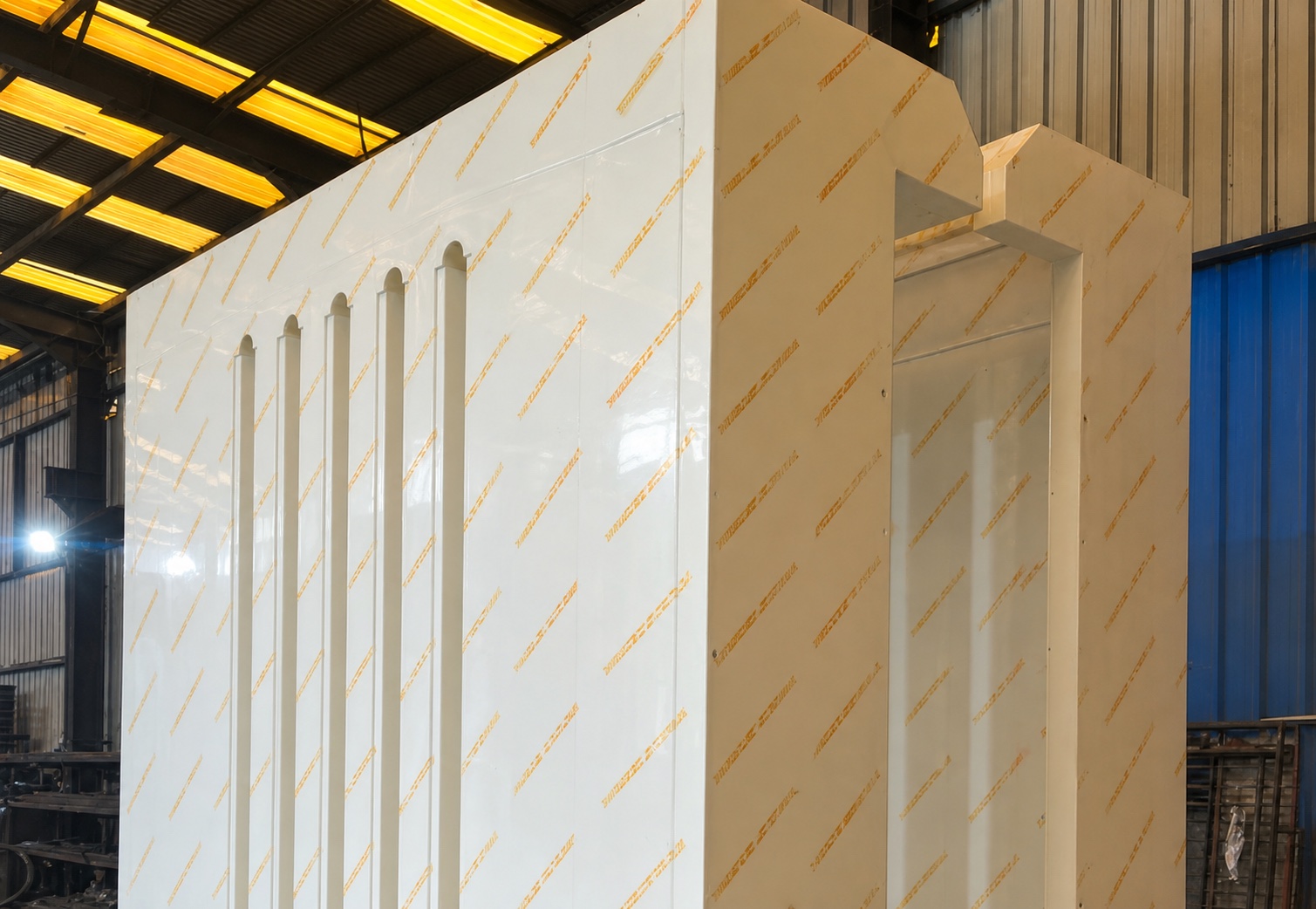
Use This Handover Checklist
- One marked-up drawing showing dimensions, units, interfaces, and the containment footprint.
- A chemical-duty schedule with current safety data sheets where appropriate.
- Provide the buyer’s stated containment basis and any project-specific acceptance criteria.
- Handling, access, drainage, cleaning, and installation constraints.
- The required drawing-approval, inspection, packing, and delivery records.
Prepare a PP Chemical Bund Tray RFQ
Send the tray layout, chemical-duty schedule, primary-container arrangement, and documentation requirements to QEEHUA for a project-specific review. If the tray is part of a larger fabricated tank package, compare the separate PP tank RFQ checklist before combining scopes.
Frequently Asked Questions
Does a chemical bund tray replace the primary chemical container?
No. A chemical bund tray is a secondary-containment component. The RFQ must identify the primary containers, their arrangement, and the tray鈥檚 intended containment role.
Should the RFQ include chemical names and concentrations?
Yes. List each chemical, concentration, operating temperature, contact condition, and current safety data sheet revision so that material suitability can be reviewed for the actual duty.
Is PP sheet automatically suitable for every chemical bund tray?
No. PP sheet suitability depends on the actual chemical duty, concentration, temperature, contact conditions, fabrication details, and project requirements. Confirm those inputs before fabrication is released.
Which drawing details are most important for a fabricated PP tray?
Provide the internal usable dimensions, wall and corner details, drains or penetrations, support points, clearances, and every interface with adjacent equipment or flooring.