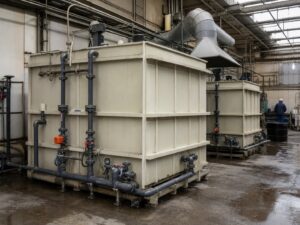
A PP secondary-containment bund should use an isolated drain and sampling point when liquid may need to be checked, removed, or routed without opening the containment boundary to an uncontrolled discharge. The RFQ should distinguish clean rainwater or wash water from a chemical release, define valve access and normally-closed control, and show how a sample can be taken safely before any liquid leaves the bund.
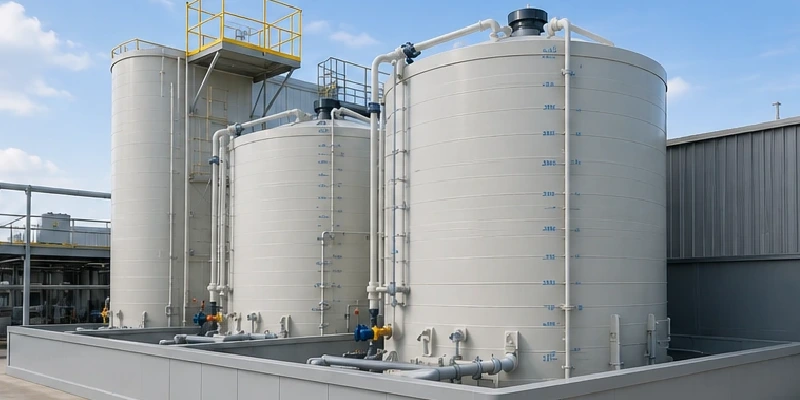
Separate routine drainage from a chemical-release pathway
The first question in a PP secondary-containment bund review is not “which valve should we buy?” It is whether the liquid is allowed to leave the bund at all under the observed condition. A secondary-containment area may collect clean rainwater, equipment wash water, process liquid, leaked chemical, or a mixture that cannot be identified visually. Those streams should not share an uncontrolled outlet.
Ten EPA secondary-containment reference explains the role of containment and controlled release decisions for regulated oil storage. It is useful boundary context, not a universal approval for a chemical bund or a substitute for the site’s permit and chemical-management plan.
For hazardous-waste storage installations, 40 CFR 264.175 provides a regulatory example of secondary-containment requirements. Applicability depends on the facility and material; use the responsible environmental engineer’s interpretation rather than copying a rule into an RFQ.
QEEHUA’s practical decision rule is to make the “liquid leaves the bund” step deliberate. If an operator can open a low-point valve without seeing a sample, confirming the receiving system, and recording the decision, the design is missing a control layer.
Identify when an isolated drain is justified
An isolated drain is normally justified when the PP secondary-containment bund has a credible collection volume and a realistic need to remove liquid, but the discharge must remain closed until its condition is known. Typical triggers include:
- Outdoor or semi-open storage where rainwater can enter the containment area.
- Wash-down or decontamination activities that must be separated from a spill response.
- Multiple containers, pumps, valves, or transfer points where the source of a liquid may not be obvious.
- Low points that would otherwise retain liquid against the PP liner or block inspection.
- A discharge route that connects to stormwater, wastewater, a treatment system, or a recovery tank with different acceptance criteria.
- Sites that require a normally-closed valve, lockout, seal, permit, or documented release decision.
Do not add a drain only because a drawing template contains one. A drain can create a weak penetration, a trapped dead leg, or a false sense that the bund is safe to discharge. If there is no approved receiving route or operating procedure, the RFQ should state “no automatic discharge” and define how collected liquid will be removed.
Define the sampling point as part of the drain detail
A sampling point should allow an operator to take a representative sample without standing over an open chemical pool or dismantling the main drain. For a PP secondary-containment bund, place it where the collected liquid actually passes, and identify the valve, cap, isolation, container position, and safe access on the drawing.
| Detail to specify | RFQ question | QEEHUA fabrication check |
|---|---|---|
| Sample location | Is the port at the low point or in a representative branch, and can stagnant liquid be excluded? | Keep the port accessible after the PP liner, cover, grating, or equipment is installed. |
| Isolation | Can the sample be taken while the main discharge remains closed? | Show valve orientation, cap, blind, or double-isolation concept and avoid an unprotected open stub. |
| Sample volume and container | What sample size, bottle, label, and handling method does the procedure require? | Provide clearance for the container and protect the PP wall from impact or point loading. |
| Material compatibility | Are the sample valve, tubing, gasket, and cap compatible with the possible chemical? | Do not assume the PP bund material makes every small fitting chemically suitable. |
| Record and decision | Who tests the sample, what parameters are checked, and who authorizes discharge? | Include the tag, valve ID, sample ID, date, result, and disposition in the handover or operating record. |
Sampling is not automatically laboratory testing. The project may require a visual check, pH, conductivity, a chemical-specific strip, or a laboratory chain of custody. The RFQ should name the required decision and responsible role without inventing a universal threshold.
Show the containment boundary, low point, and discharge route
The plan and section views for a PP secondary-containment bund should show the PP floor or liner slope, bund wall, penetrations, sump or low point, drain valve, sampling point, cover or grate, and the downstream route. Mark whether the route ends at a closed recovery tank, a treatment system, a permitted drain, a vacuum truck connection, or a temporary container.
Keep the sample point upstream of any dilution or treatment that would hide the condition the owner is trying to assess. Conversely, if the project needs a treated-effluent sample, show a separate point at the approved discharge boundary. One port should not be expected to represent both raw spill liquid and treated wastewater.
For material and fabrication context, link the detail to the PP spill-containment pallet checklist i PP sheet selection, fabrication, and applications hub. The isolated drain is an interface decision; it does not replace chemical compatibility review, liner design, or the site’s discharge approval.
Coordinate PP penetrations, valves, and maintenance access
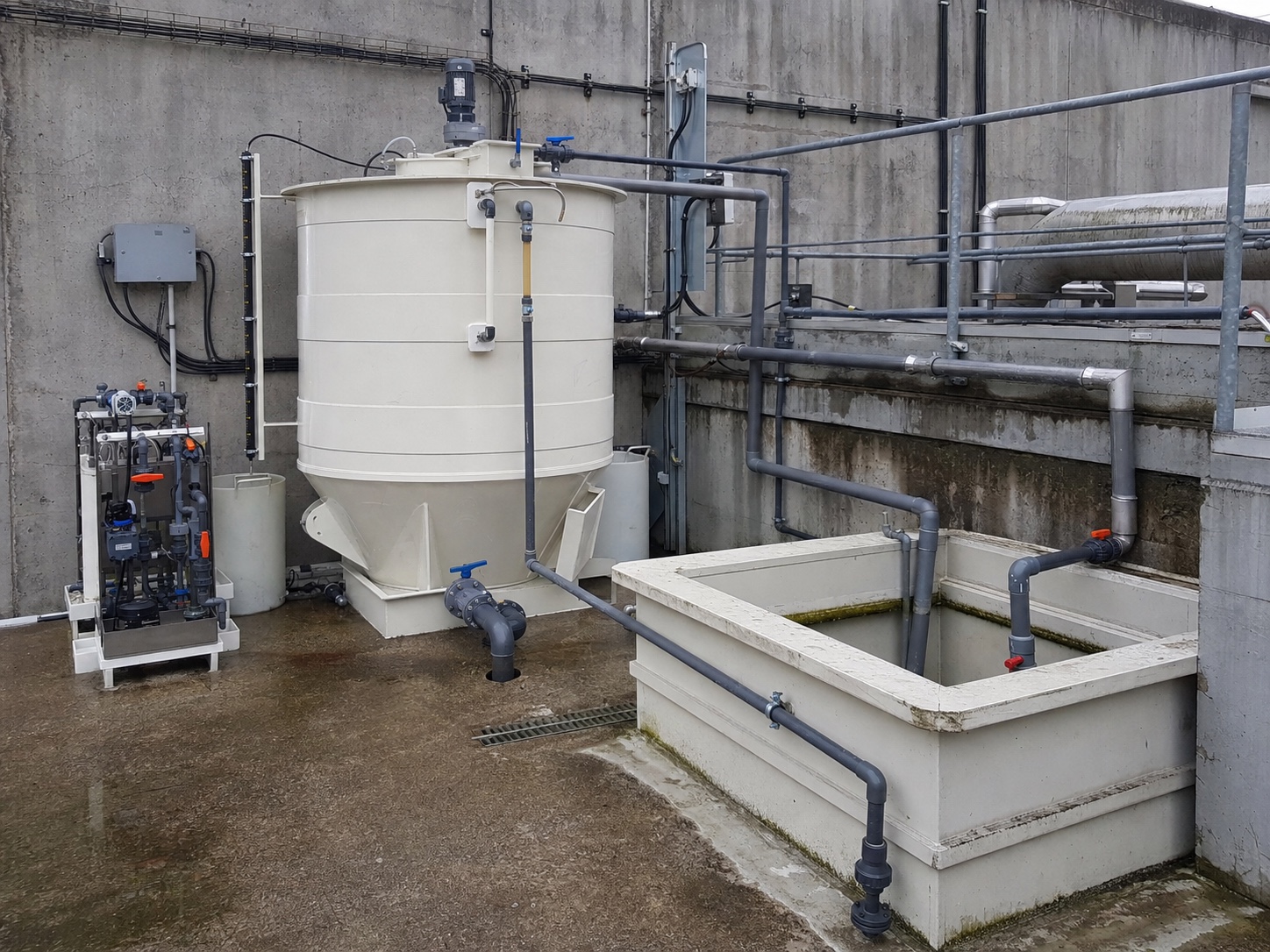
A drain or sample port in a PP secondary-containment bund is a fabricated penetration, not just a plumbing symbol. Define the pipe or fitting material, flange or threaded connection, gasket, weld detail, reinforcement, valve support, and inspection method. Keep heavy valves and external pipe loads on independent supports where required; do not let a small PP wall nozzle carry an unplanned bending load.
QEEHUA reviews the detail in the installed position: can an operator reach the valve with gloves and face protection, see its normally-closed status, remove the cap, place a sample bottle, and clean the low point? Is there enough clearance to repair a weld without removing the entire storage system? These practical questions often change the best drain location more than the nominal pipe size.
Drainage and cleanout planning should also be coordinated with the PP equipment drainage and cleanout access guide. A bund can be liquid-tight yet still fail its operational purpose if residue remains trapped under equipment or behind a support.
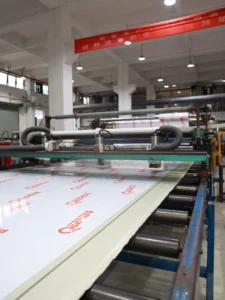
Odniesienie do procesu: this QEEHUA clip shows PP sheet haul-off and calibration. It is a general manufacturing reference for dimensional and surface consistency, not a bund-drain design, sampling method, or discharge approval.
Odniesienie do filmu: Ekstruzja arkuszy PP: proces odciągania i kalibracji | QEEHUA. This is a general PP manufacturing-context reference, not a bund drainage or sampling procedure.
Include isolation, inspection, and handover evidence in the RFQ
Ask the supplier to return more than a price and a material name. A practical PP secondary-containment bund drain and sampling RFQ should request:
- Containment plan and section with low point, slope, drain, sample port, valve access, cover, and discharge route.
- Operating sequence showing normal valve state, inspection, sample collection, release authorization, and spill lockout.
- Drain and sampling component schedule with material, size, gasket, valve, cap, support, and connection responsibility.
- Compatibility assumptions for stored chemical, rainwater, wash water, residue, and possible mixtures.
- Fabrication drawing, weld map, penetration detail, dimensional checks, leak or water-hold test where specified, and repair procedure.
- Access and maintenance check showing sample-container clearance, valve visibility, drain-down, cleaning, and safe replacement.
- Handover records: approved redline, valve and sample-point tags, photographs, test results, operating instruction, and scope exclusions.
For a complete chemical-tank scope, use the PP tank RFQ checklist to keep service conditions, dimensions, nozzles, supports, and documentation aligned. The bund drain should be traceable to the same project tag as the tank or equipment it protects.
Common mistakes with bund drains and sample points
- Open drain to stormwater: the operator cannot prove that the liquid is clean before release.
- Sample port downstream of dilution: the sample no longer represents the liquid held in the bund.
- Valve hidden under equipment or grating: the normally-closed status and lockout cannot be checked quickly.
- One drain for incompatible areas: a shared low point can mix chemicals and complicate response.
- Heavy valve mounted on thin PP wall: external loads create stress at the penetration and make repairs difficult.
- No record of sample disposition: a test was taken, but nobody can show who authorized release or where the liquid went.
An isolated drain and sample point improve control of collected liquid in a PP secondary-containment bund; they do not determine the site’s legal discharge limit, emergency response plan, or chemical compatibility by themselves.
Często zadawane pytania
Does every PP secondary-containment bund need a drain?
No. A drain is justified only when the bund has a defined need to remove collected liquid and an approved, controlled receiving route. If discharge is not allowed or no safe route exists, the design may use manual removal or a closed recovery arrangement instead.
When should the bund include a separate sampling point?
Provide a separate sampling point when the liquid must be checked before release, recovery, treatment, or incident classification, especially when rainwater, wash water, and chemical spills can collect in the same area. Keep the point representative and accessible while the main discharge remains isolated.
Can a PP drain valve be welded directly to the bund wall?
Only when the penetration, reinforcement, valve load, welding procedure, access, and service compatibility are included in the approved design. A heavy valve or forced pipe run may require an independent support and a controlled flange or fitting detail.
What should be recorded after a bund sample is taken?
Record the bund and valve tag, sample-point ID, date and time, liquid description, test or laboratory method, result, person responsible, discharge or recovery decision, and any follow-up action. Keep the record with the equipment handover or operating log.
For a PP secondary-containment bund review, send the containment layout, stored-chemical information, discharge route, valve concept, and handover requirements through the Strona kontaktowa QEEHUA. We can review the PP liner, penetration, access, and fabrication details before quotation.