A PP vs PVC sheet substitution in fabricated chemical equipment requires a separate review of the process liquid, temperature, support, and joining method. An existing PVC drawing does not verify a PP design. Name the component and the reason for the proposed change before comparing catalog statements. Record both normal operation and cleaning or upset conditions, because those may control the material decision. Ask for data tied to the actual grades and specimen conditions, then check whether the planned welds, fasteners, supports, and inspections still fit the drawing. QEEHUA can discuss a PP sheet request after the duty and the open question are defined; a request does not itself establish approval.
PP vs PVC material checks
A PP vs PVC sheet comparison creates several decisions for a fabricated part. A removable panel, a duct section, and a liquid tank do not have the same contact pattern or load. Start by writing down what the existing PVC part does and which requirement is driving the change. If the question is chemical exposure, the material evidence must describe that exposure. If the question is a welded geometry, the joint design needs its own review.
Use a named grade on both sides. “PVC” can refer to different formulations and sheet products, just as “PP” does not identify a single QEEHUA grade. A supplier’s general polymer description is useful background, but it cannot stand in for the product sheet, fabrication instructions, and project acceptance record. The QEEHUA PP sheet page describes the available discussion path without turning the old PVC specification into a PP order.
- Identify the part, its drawing revision, the reason for changing material, and the project owner who will accept the change.
- Request grade-specific documents for both candidate sheets rather than comparing two generic polymer summaries.
- Keep material, joint, and finished-equipment checks as separate lines in the decision record.
Process liquids and cleaning
The process liquid is more than a chemical name. Concentration, contact duration, temperature, stress, and cleaning can alter what a test result means. ASTM D543-20 describes chemical-resistance testing with conditions selected for the end use. Its public scope distinguishes immersion from short wet-patch contact. Use that distinction to describe the part’s actual exposure before asking either supplier for a recommendation.
Normal and upset duty
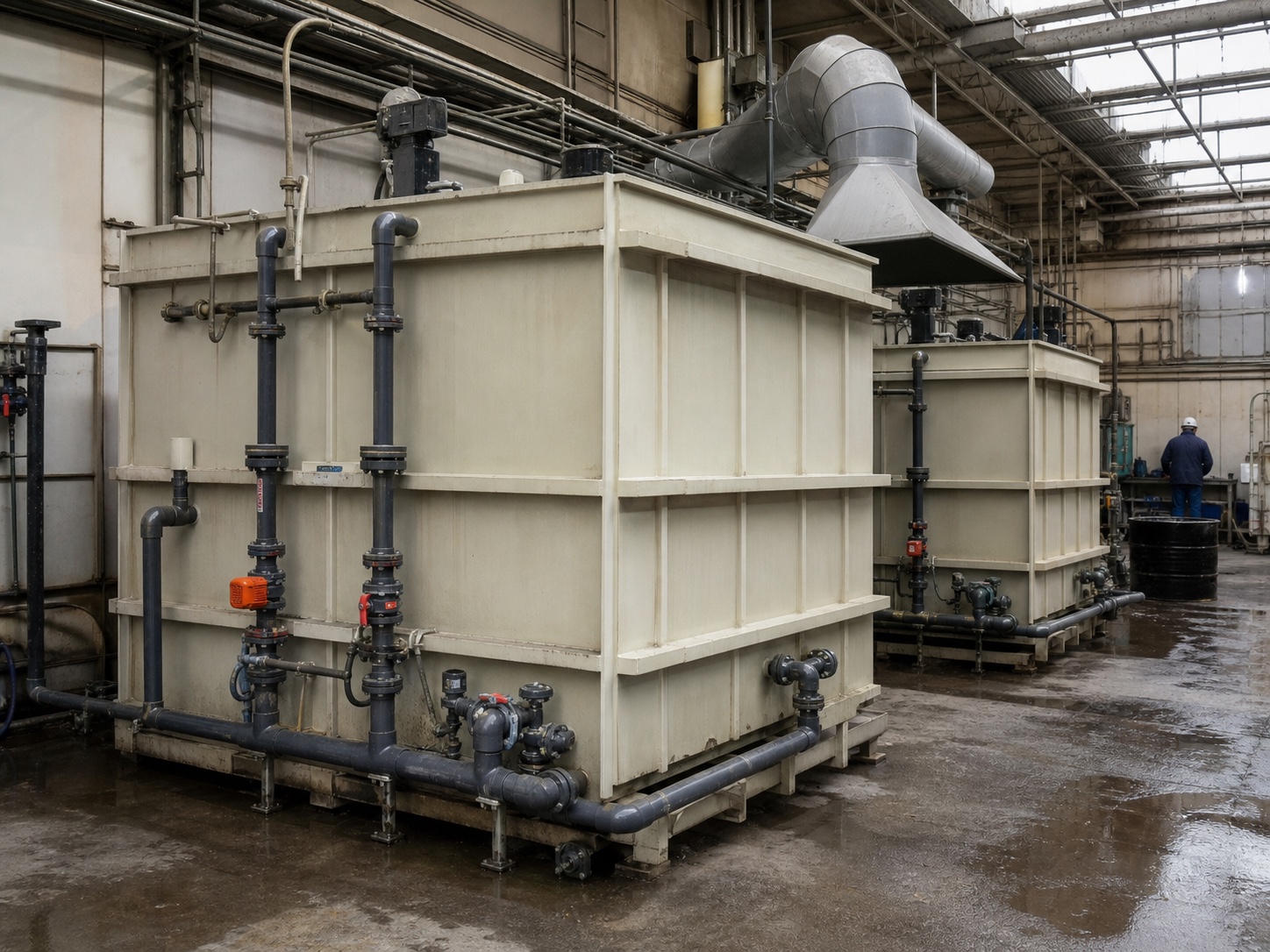
Record continuous contact, splashes, washdown, and a credible upset separately. A duct panel may see condensate in one area and cleaning fluid in another. A tank cover may see vapor, droplets, and a wipe-down agent rather than immersion. A single chemical compatibility symbol is unlikely to describe all of those zones. State which surface or joint touches each medium.
Where QEEHUA’s chemical-resistance table lists a medium at a stated concentration and temperature, it can support preliminary PP screening. It is not a PVC test and is not a final service guarantee for a welded assembly. For a deeper record format, see the chemical-tank material guide.
Temperature and load
Temperature must be paired with the kind of load and its duration. A brief cleaning cycle, a constant liquid level, and a heated panel under support pressure raise different questions. Ask whether the supplier’s reported property was measured under a comparable condition. Do not use a heat-deflection or Vicat result as a blanket continuous service temperature.
The QEEHUA data sheet reports a deflection temperature under load of 137.0°C for a tested PP sample under ASTM D648-18. The document does not state a saleable-grade code or the load condition in the table. That number can identify a test record; it cannot prove that the proposed sheet will support a particular span at 137°C. The engineer needs geometry, supports, time under load, and the actual operating range.
Pressure or vacuum is also a component question. A flat-sheet property does not calculate a duct wall or tank wall. If the original PVC design includes local reinforcements, access doors, or penetrations, mark each feature for review rather than assuming a material substitution leaves it unchanged.
Fabrication and joints
Joining is where a material change becomes visible in the drawing. A weld preparation, rod match, adhesive or mechanical joint, thermal movement allowance, and inspection method all belong to the specified sheet and part. The existing PVC joining instructions should not be copied to PP without a new procedure and material match.
Joint method review
Show the proposed seam or interface on the drawing. State whether the order is for loose PP sheet, cut panels, or a fabricated component. If another fabricator will join the material, the buyer should identify who owns the procedure and what inspection record will be supplied. A sample sheet alone may answer a machining question but not a welded-corner question.
Ten wet-scrubber material article describes why liquid duty, gas duty, condensate, and fabrication details need distinct inputs. That separation is useful for a proposed PVC-to-PP change in a scrubber, duct, or process enclosure.
Evidence for a switch
Prepare a short PP vs PVC sheet comparison file before changing the purchase specification. The table below is organized by the decision, not by generic claims that one polymer is always better. A numerical comparison is valid only if the values refer to named grades, compatible methods, and conditions that matter to the same part.
| Review item | Existing PVC record | Proposed PP record | Decision needed |
|---|---|---|---|
| Chemical contact | Exact media, concentrations, contact modes, and temperature | PP grade evidence for the same duty | Does either record leave a liquid or cleaning step untested? |
| Temperature and load | Original geometry, support and load basis | New grade data plus part review | Must span, support, or operating limits change? |
| Fabrication | Existing joint and inspection detail | PP joint method, matching materials and inspection | Who approves the revised fabrication drawing? |
| Dokumentacja | Current drawing and acceptance record | Grade, sample, method and revision | Which document closes each open item? |
The table does not state that QEEHUA supplies PVC or that its PP sample has been qualified for the proposed equipment. When a test report is missing, leave the cell open. A specific open question is more useful than a reassuring but untraceable check mark.
Sample request checklist
For a PP vs PVC sheet substitution, a representative sample is useful only if the buyer defines how it will be judged. For appearance or cutting, a flat panel may answer the immediate question. For a joint or enclosure interface, the review may need a fabricated detail. State the scope before sending material to an equipment builder.
- Send the existing drawing and identify each feature affected by the proposed material change.
- List normal, cleaning, and upset liquids with concentration, temperature, duration, and contact mode.
- State the required grade documents, sample form, joint procedure, and inspection question.
Użyj waste-gas treatment application page to place the request in its equipment context. Send the actual drawing and conditions through the Strona kontaktowa QEEHUA when requesting a PP sample or document review. The project team must approve the final substitution.
FAQ and sources
Can the existing PVC drawing be used unchanged for PP sheet?
No. Review the material grade, temperature and chemical duty, geometry, supports, joining method, and acceptance checks before releasing a PP revision.
Can the same welding instructions be used for PVC and PP?
Do not assume that. The proposed PP sheet, matching joining materials, joint geometry, procedure, and inspection need their own project review.
When is a representative sample needed?
Request a sample when an open question about appearance, cutting, joining, or a specific interface cannot be closed by the available grade and project documents.
Source for the general chemical-exposure method: ASTM D543-20, Standard Practices for Evaluating the Resistance of Plastics to Chemical Reagents. The QEEHUA heat-deflection value is from its June 15, 2026 polypropylene-board data sheet and applies to the tested sample only.