A PP sheet duct fabrication drawing should turn the process requirement into buildable details: material grade and thickness, duct geometry, weld-seam locations, access-door construction, low-point drains, supports, interfaces, inspection notes, and revision-controlled acceptance criteria. If any of those items is left to interpretation, the fabricator may produce a duct that fits the layout but is difficult to weld, inspect, drain, or maintain.
PP sheet duct fabrication drawing: define the design basis first
A PP sheet duct fabrication drawing is not only a cutting sketch. The title block or design-basis note should state the handled medium, concentration range, design temperature, pressure or vacuum condition, airflow direction, installation environment, support arrangement, and the cleaning or inspection requirement. For chemical exhaust, also identify where condensate or wash liquid can collect and what the site will do with it.
ISO 15494 treats PP industrial piping components and joints as systems that must withstand the mechanical, thermal, and chemical demands of the conveyed service. A fabricated duct is not automatically covered by that standard, but the principle is useful: connect the material, joint, geometry, and service conditions instead of approving a sheet grade in isolation. Local fire, explosion, pressure, and environmental requirements still govern the project.
Use the drawing to separate design inputs from fabrication notes. The engineer should own the operating envelope and required performance; the fabricator should show how the PP sheet will be cut, formed, welded, supported, inspected, and handed over. This separation prevents a convenient shop detail from becoming an unreviewed design change.
Show weld seams as fabrication geometry, not decorative lines
Every longitudinal, circumferential, corner, branch, transition, and attachment weld should have an identifiable seam or detail reference. The PP sheet duct fabrication drawing should show the sheet grade, nominal thickness, cut edge, joint type, weld method, rod or filler requirement, and the side from which the joint can be reached. If a seam is hidden after installation, add an inspection or test note before it is covered.
- Seam map: assign weld IDs that match the weld log, inspection record, and as-built drawing.
- Joint preparation: show edge preparation, cleaning, fit-up, temporary clamping, and any backing or purge requirement specified by the project procedure.
- Distortion control: identify sequence, temporary supports, or fixture references where a large flat panel could pull out of alignment.
- Interface welds: detail transitions to flanges, dampers, fan connections, sleeves, metal frames, and access-door collars without implying that an untested interface has the same performance as the PP sheet.
ASTM C1147 notes that test-piece welding procedures should reflect the procedures used in actual fabrication. For that reason, a test coupon or procedure qualification is useful only when its material, thickness, preparation, equipment, and welding method represent the duct being built. QEEHUA’s working practice is to inspect the sheet first, keep the joint clean and dry, confirm the rod-to-base-material match, and avoid forced bending or impact at a completed weld.
Detail access doors for real inspection and maintenance
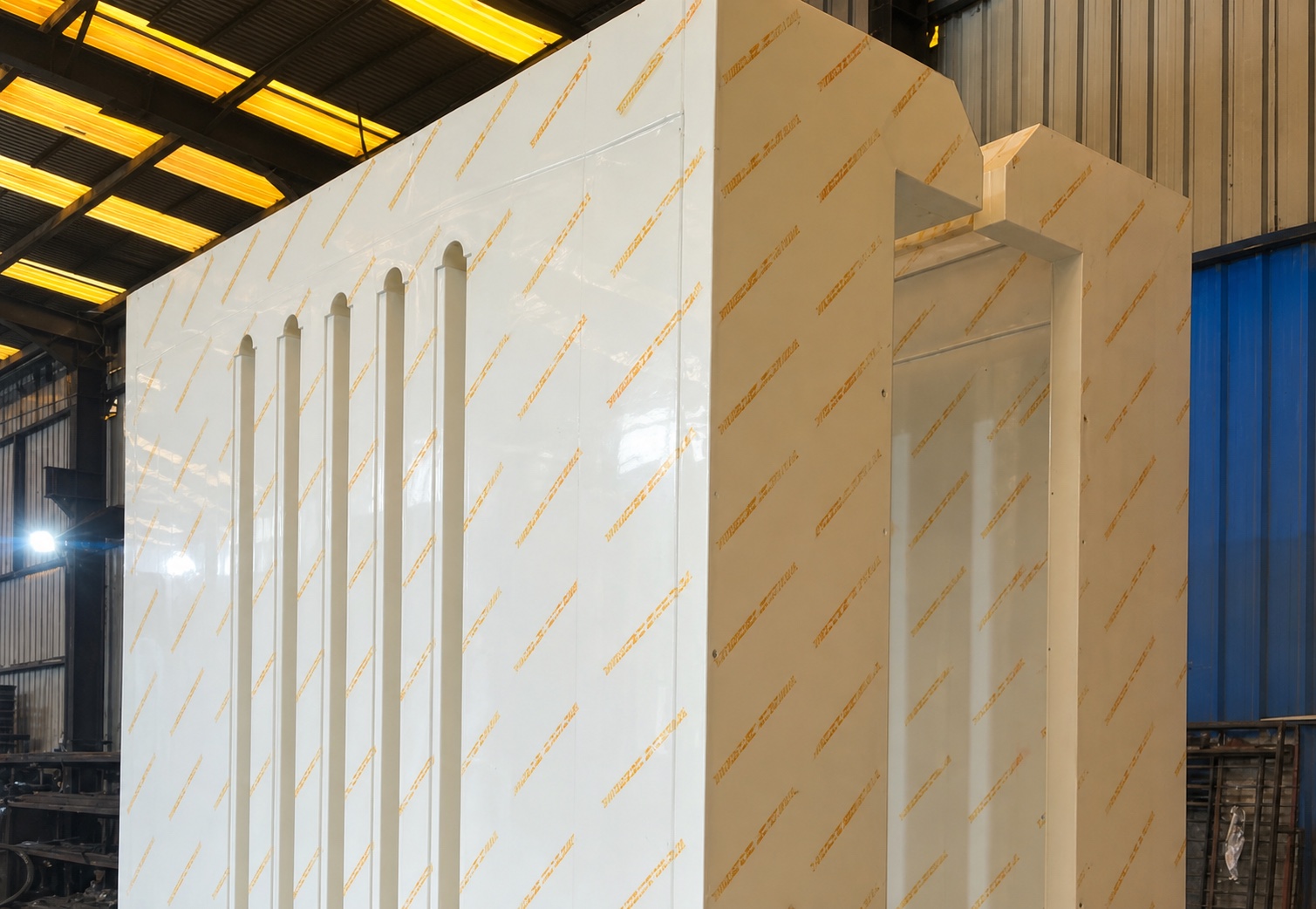
An access door on a PP duct is a maintenance interface, not simply a rectangle cut into the wall. The drawing should identify the purpose of each opening—inspection, cleaning, damper service, filter access, sampling, or internal component removal—and show the usable clear opening, orientation, hinge or removable-panel arrangement, latch location, gasket or seal, and the space needed to open it safely.
Place doors where an operator can reach the relevant component and where the opening does not create a weak corner, interfere with a support, or trap liquid. Changes in direction, section, branch connections, and areas likely to collect deposits deserve particular review. The related PP ductwork inspection-door RFQ guide can help define access hardware and procurement information; this drawing must go one step further by fixing the location, opening direction, surrounding welds, and inspection clearance.
For corrosive exhaust, specify compatible gasket and latch materials, a smooth and cleanable internal face, and a closure that does not rely on an unapproved puncture through the leak boundary. Do not copy metal-duct door dimensions into PP without checking wall thickness, thermal movement, weld access, and the chemical environment.
Make drain details unambiguous at low points
Drain notes are often too vague to build. A PP sheet duct fabrication drawing should identify the low point, intended slope or fall, drain connection size and orientation, valve or cap arrangement, support around the connection, and the safe discharge or collection point. If the duct is washed, show how the operator can isolate, flush, sample, and empty it without sending chemical liquid into an uncontrolled area.
- Mark every change in elevation where liquid can collect, including transitions and horizontal runs.
- Keep the drain path visible and serviceable; avoid a hidden pocket behind a stiffener, flange, or access collar.
- Show whether the drain is normally closed, routed to a neutralization or collection system, or capped for a specific operating condition.
- Check that the drain connection does not reduce the required clear area, create a sharp internal obstruction, or compromise the surrounding weld.
This is where QEEHUA’s internal “inspect first, process second” discipline becomes practical: confirm the duct’s actual low points and fit-up before welding the drain nozzle, then record the completed location and leak-test result. The PP equipment drainage and cleanout guide I PP exhaust-duct leak-test plan are useful companion references, but the fabrication drawing remains the controlling document for the specific duct.
Coordinate supports, transitions, and installation interfaces
Large PP duct panels should not be left to carry unsupported spans simply because the sheet is chemically suitable. Show support centerlines, saddle or frame contact, clamp locations, expansion allowances, lifting points, and the clearance needed to remove an access panel. At a fan, damper, scrubber, wall sleeve, or metal transition, identify which component carries the weight and which joint only provides containment.
SMACNA’s technical standards program is a useful reference for disciplined duct drawings, inspection access, supports, and installation coordination, but its metal-duct tables should not be copied as PP design values. Use the project engineer’s pressure, vacuum, temperature, span, and support calculations, then show the resulting dimensions and notes on the PP drawing.
For sheet selection, connect the drawing to the PP sheet chemical-exhaust ductwork guide i Karta katalogowa i przewodnik po produkcji arkuszy PP. These references help the team review grade, thickness, service conditions, and fabrication evidence without turning a general product page into a project-specific design approval.
Include inspection, testing, and revision controls on the sheet
A fabrication drawing should tell the inspector what to verify and tell the document controller which version is current. Add material grade, thickness, lot or heat identification, weld IDs, dimensional tolerances, surface and edge acceptance, access-door seal checks, drain orientation, support verification, and the required leak or functional test. Where a requirement is project-specific, write “per approved project procedure” and name the document rather than inventing a universal value.
| Drawing block | Minimum information to show | Release question |
|---|---|---|
| Design basis | Medium, concentration, temperature, pressure/vacuum, airflow, location, cleaning and drainage assumptions | Does the drawing match the approved process and equipment duty? |
| Material schedule | PP grade, color, nominal thickness, tolerance, surface, lot traceability and approved substitutions | Can the receiving inspector identify the actual sheet used? |
| Weld map | Seam IDs, joint preparation, welding method, rod, access, sequence and inspection hold points | Can the shop weld and inspect every joint without guessing? |
| Access details | Clear opening, location, opening direction, gasket, latch, clearance and internal cleanability | Can maintenance reach the component without damaging the duct? |
| Drain details | Low point, slope, connection, isolation, discharge route, support and leak-test note | Where will liquid go, and how will the operator prove the drain is usable? |
| Handover | Revision, as-built changes, inspection records, test results, repair disposition and sign-off | Is the installed duct traceable to the approved drawing? |
OSHA’s ventilation guidance recommends keeping drawings, specifications, fan information, operating instructions, and testing records together with a continuing inspection program. That is a useful handover habit for PP chemical exhaust even when the project follows a different code or owner standard.
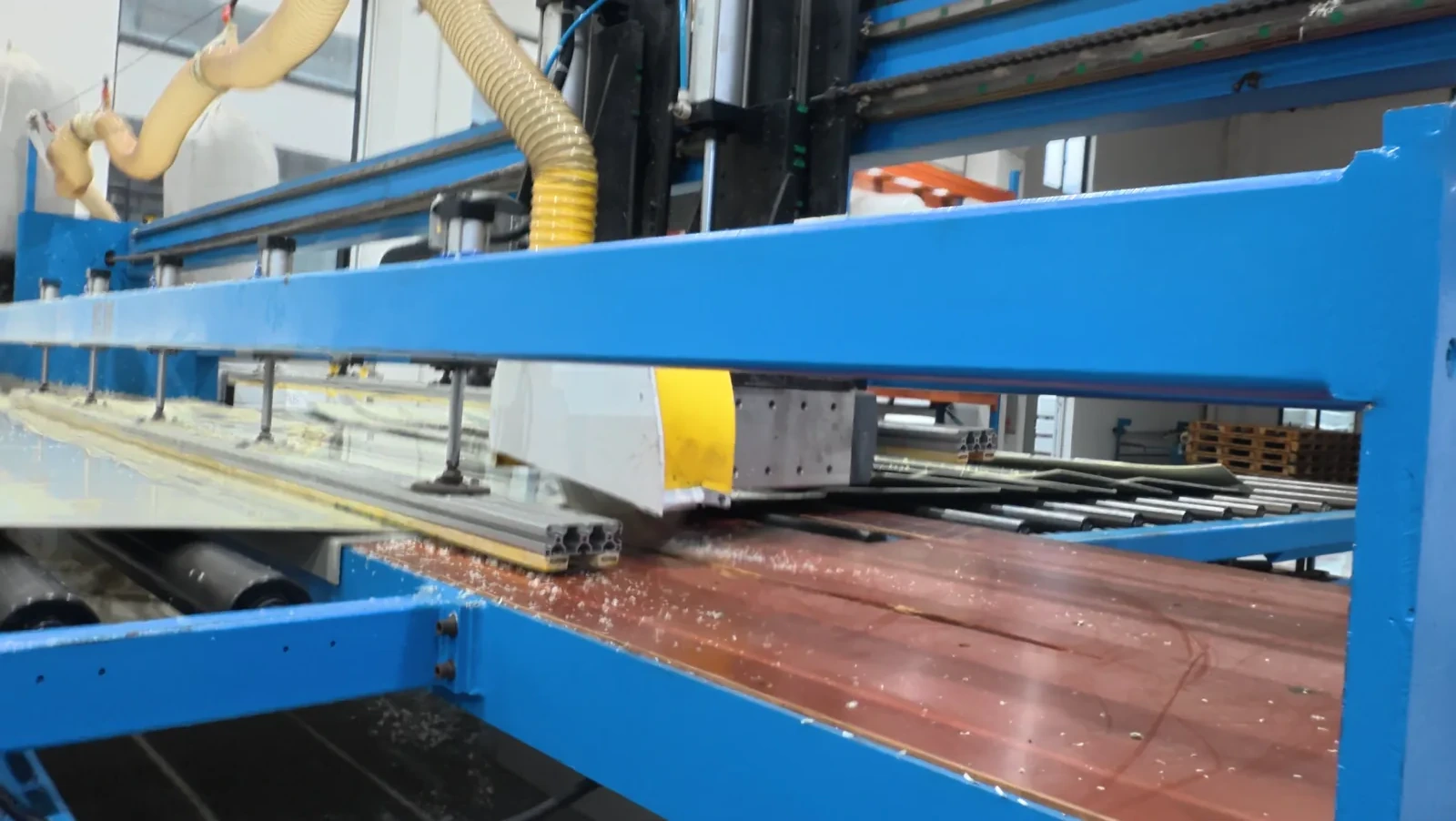
Related QEEHUA process video: this cutting reference shows why a controlled drawing revision matters before panels are cut. It is manufacturing context, not a substitute for engineering calculations, weld qualification, leak testing, or project approval.
Video reference: PP Sheet Finished Products After Cutting | QEEHUA, from the approved QEEHUA playlist. The video does not demonstrate duct design acceptance.
Często zadawane pytania
What is the most important item on a PP sheet duct fabrication drawing?
The service basis and the connection between that basis and the buildable details are most important. The drawing should identify the PP grade and thickness, weld seams, access openings, drains, supports, interfaces, inspection points, and the approved revision.
Should an access door be shown on the duct drawing or only in the RFQ?
It should be shown on both when the door affects fabrication. The RFQ can define procurement requirements, while the drawing fixes the location, clear opening, opening direction, surrounding welds, seal, latch, and maintenance clearance.
How should a PP duct drain be specified?
Show the actual low point, slope or fall, connection orientation, isolation or cap, safe discharge route, support, and the inspection or leak-test requirement. Do not leave the drain as a generic note that the fabricator must locate.
Can SMACNA metal-duct details be copied directly for PP sheet?
No. SMACNA is useful for drawing discipline and coordination, but PP requires project-specific review of chemical service, temperature, pressure or vacuum, welding, thermal movement, supports, and material compatibility.
Send the process conditions, duct layout, material schedule, seam map, access-door and drain details, support interfaces, test requirements, and current revision. Contact QEEHUA for a project-specific drawing and fabrication review.