PP sheet elongation at break is the percentage extension recorded for a tensile specimen when it reaches the stated break point. The percentage describes that coupon and the way its extension was measured. It does not say how far a sheet can bend without damage, what bend radius a fabricator can use, or how a supported panel will move under load. For a useful comparison, read the test method, sample dimensions, strain measurement, and failure point with the result. The QEEHUA data sheet reports 37% for one tested sheet sample under ASTM D638-22; it does not identify a production grade for that value.
What elongation measures
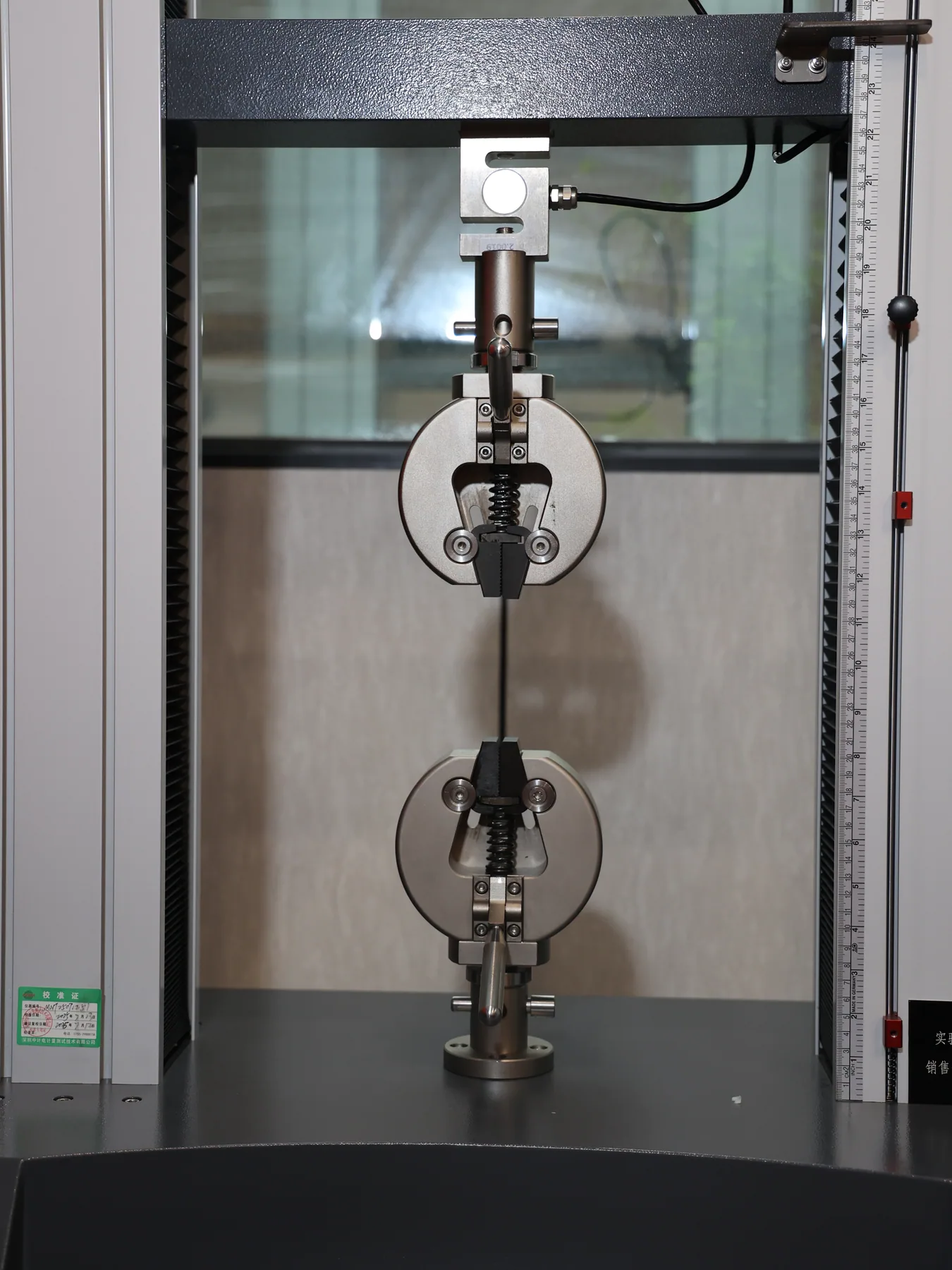
Elongation at break reports how much a tensile specimen extends before it breaks, expressed as a percentage of a stated reference length. In simple terms, the calculation compares the measured extension with the original measurement length. The test report needs to say how that extension was measured because the method can matter when the specimen begins to neck or stretch unevenly.
This percentage describes a tensile coupon that is pulled along its length. It is not a material’s general ability to stretch in every direction, and it is not a permissible strain for a finished panel. A sheet can be cut, oriented, supported, or welded in ways that differ from the specimen used in a test. Keep the test result attached to the sample and method that produced it.
A buyer searching for PP sheet elongation at break is usually trying to learn whether the reported percentage describes flexibility or deformation before failure. It describes the tensile specimen’s extension at a defined test point. A separate review is needed for bending, forming, or a loaded equipment wall.
Separate yield from break
Yield and break are different points in a tensile test. Yield describes the point where a specimen begins to deform permanently under stress. Break describes when the specimen separates. Some data sheets report elongation at yield, some report elongation at break, and some show both. Do not substitute one label for the other when comparing a value with a purchase requirement.
The distinction matters when polypropylene stretches unevenly. A specimen may neck, which means extension concentrates in one small region. The Instron tensile testing guide explains that an extensometer can miss this localized extension if the neck forms outside its gauge length. The report may use nominal tensile strain from machine movement after yield, depending on the material response and test method. Ask which strain measure and test point produced the percentage.
Keep the initial gauge length, measurement device, and reported endpoint with the result. A percentage without those details can still identify a test output, but it may not support a direct comparison between reports. If one source reports strain at yield and another reports elongation at break, ask for the matching property before ranking the sheets.
Read the test record
The QEEHUA data sheet reports elongation at break of 37% for a tested polypropylene sheet sample under ASTM D638-22. The approved source does not identify a production grade code for that sample. Treat the figure as a sample result. It is not a minimum for all QEEHUA PP sheets or a forming limit for a purchase order.
| Report item | Recorded value or meaning | Unit | Test basis | Applies to |
|---|---|---|---|---|
| Wydłużenie przy zerwaniu | 37 | % | ASTM D638-22 | One tested QEEHUA PP sheet sample; production grade not stated |
| Elongation at yield | Extension reported at the stated yield point | % | Tensile test; identify the strain measurement used | Named tensile coupon and report |
| Flexural deflection | Movement at a stated load in a supported bend test | mm | Flexural setup; record specimen and support span | Supported flexural coupon or named part test |
Only the first row is a QEEHUA measurement. The other rows explain which different values a buyer may see in a report. None of these entries sets an allowable deformation for a tank wall, duct, cover, or formed panel.
When two suppliers report elongation, compare the same material form and test output. A PP sheet elongation at break comparison is useful only when the test point and measurement method match. Record the grade, specimen source, thickness, orientation, initial length, strain method, temperature, loading rate, and whether the value is at yield or break. If the report leaves out an item that controls the comparison, ask for that detail instead of treating the headline percentages as equivalent.
Why it is not a bend limit
A tensile coupon and a bending coupon do not carry load in the same way. In tension, the specimen is pulled along its length. In bending, one face of the section stretches while the opposite face compresses, and the amount of strain changes across the thickness. The Instron flex testing guide describes the three point test as a supported specimen loaded near its center and explains that the result is a flexural response, not a tensile elongation value.
A bend radius also depends on the sheet thickness, material direction, temperature, tool shape, support, and forming process. The elongation at break from a tensile coupon cannot supply that radius or confirm that a fabricated part will stay intact. If a drawing includes a bend or a formed edge, specify that feature and require a process trial on representative material.
Likewise, a deflection limit for a tank panel depends on the panel’s span, support, load location, openings, joints, and time under load. A tensile percentage does not replace a flexural test or an engineering assessment of the assembly. The PP sheet tensile strength and modulus guide explains two other tensile values, while this article focuses on elongation and its limits.
Request a useful comparison
When reviewing a PP sheet offer, name the property the project needs and ask for a report that uses the same test point and measurement basis. Include the sample identity and thickness in the request. If the design question is bending or forming, provide the drawing, thickness, direction, tool or support condition, temperature, and target shape. Ask the fabricator to identify what a trial can verify and what needs a separate engineering review.
Ten PP sheet data sheet guide helps connect a result to its sample and test record. The environmental engineering applications page is an industry navigation point for equipment panels. The QEEHUA PP sheet page is the product inquiry route, and the contact page can receive the drawing and test question. These pages do not turn a tested-sample percentage into a grade-wide limit.
Często zadawane pytania
Does elongation at break show how much a PP sheet can bend?
No. It reports extension of a tensile specimen at break. A bending limit depends on the sheet, thickness, direction, temperature, tooling, support, and the forming process.
Is elongation at yield the same as elongation at break?
No. Elongation at yield is reported at a yield point, while elongation at break is reported when the specimen separates. Compare the same point and strain measurement method.
Can I use 37% as a limit for every QEEHUA PP sheet?
No. The 37% figure is reported for one tested sheet sample under ASTM D638-22. The data sheet does not identify a production grade for that result.
Sources and scope
Instron’s tensile guide explains how necking can affect strain measurement; its flex testing guide explains why a bend result uses a different setup. The QEEHUA value comes from the approved tested-sample record, not from an external resin data sheet. This article gives no forming radius, panel thickness, design strain, or universal elongation limit.