A PP sheet weld test coupon should prove that the proposed material combination, joint detail, equipment and welding procedure can produce a weld suitable for the intended chemical-tank service. It is not just a sample bead: the coupon must be traceable, representative of production, inspected against agreed criteria and linked to a documented release decision.
When a PP sheet weld test coupon is needed before tank production
Use a coupon before production when the weld is part of the tank’s containment boundary or when a failure would affect chemical service, water retention, personnel protection or the project handover. The need is strongest when the fabricator is using a new sheet grade, a new welding rod, a different thickness, an unfamiliar joint geometry or a revised welding machine setup.
A coupon may also be required when the customer specification, project code, third-party inspector or internal quality plan calls for procedure qualification or a production trial. The requirement is project-specific. Do not promise that one coupon qualifies every PP grade, thickness, position, joint type or equipment configuration.
Start by defining the decision the coupon must support:
- Does the approved PP sheet and welding rod combination fuse consistently?
- Can the proposed joint detail be produced without visible holes, lack of fusion, cracks or severe distortion?
- Do the selected checks represent the tank’s expected loading and failure risk?
- Will the recorded variables cover the production range the customer intends to release?
The wider PP sheet selection and fabrication guide provides the cluster-level material and application context. This article narrows that decision to the evidence needed before a chemical-tank weld enters production.
Make the coupon representative of the production weld
A coupon is useful only when it represents the variables that control the production joint. Select the same or an approved equivalent sheet grade, thickness range, surface condition, welding rod designation and welding process intended for the tank. If the production weld is an extrusion weld on a thick corner or nozzle, a small hot-gas bead on a thin offcut may not provide meaningful qualification evidence.
Define the coupon joint with a drawing or sketch. Identify the joint type, bevel or preparation, root condition, overlap or groove dimensions, welding position, backing or restraint, and the length available for inspection and test specimens. Record whether the coupon is intended to qualify a butt joint, fillet, corner, nozzle, stiffener or repair detail; do not assume that one joint form automatically covers another.
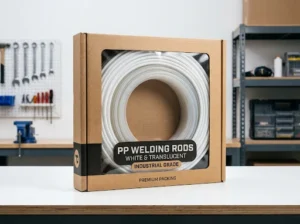
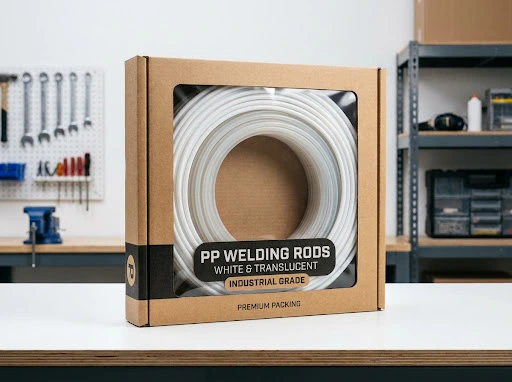
Use the same material identity controls that will be used for the tank. Record the PP sheet grade, thickness, lot or heat reference where available, welding-rod designation, diameter or profile, supplier, lot and job number. QEEHUA’s PP welding-rod selection guide addresses the material-and-application decision; the coupon record must show that the selected rod was actually used.
Record planned and actual welding variables
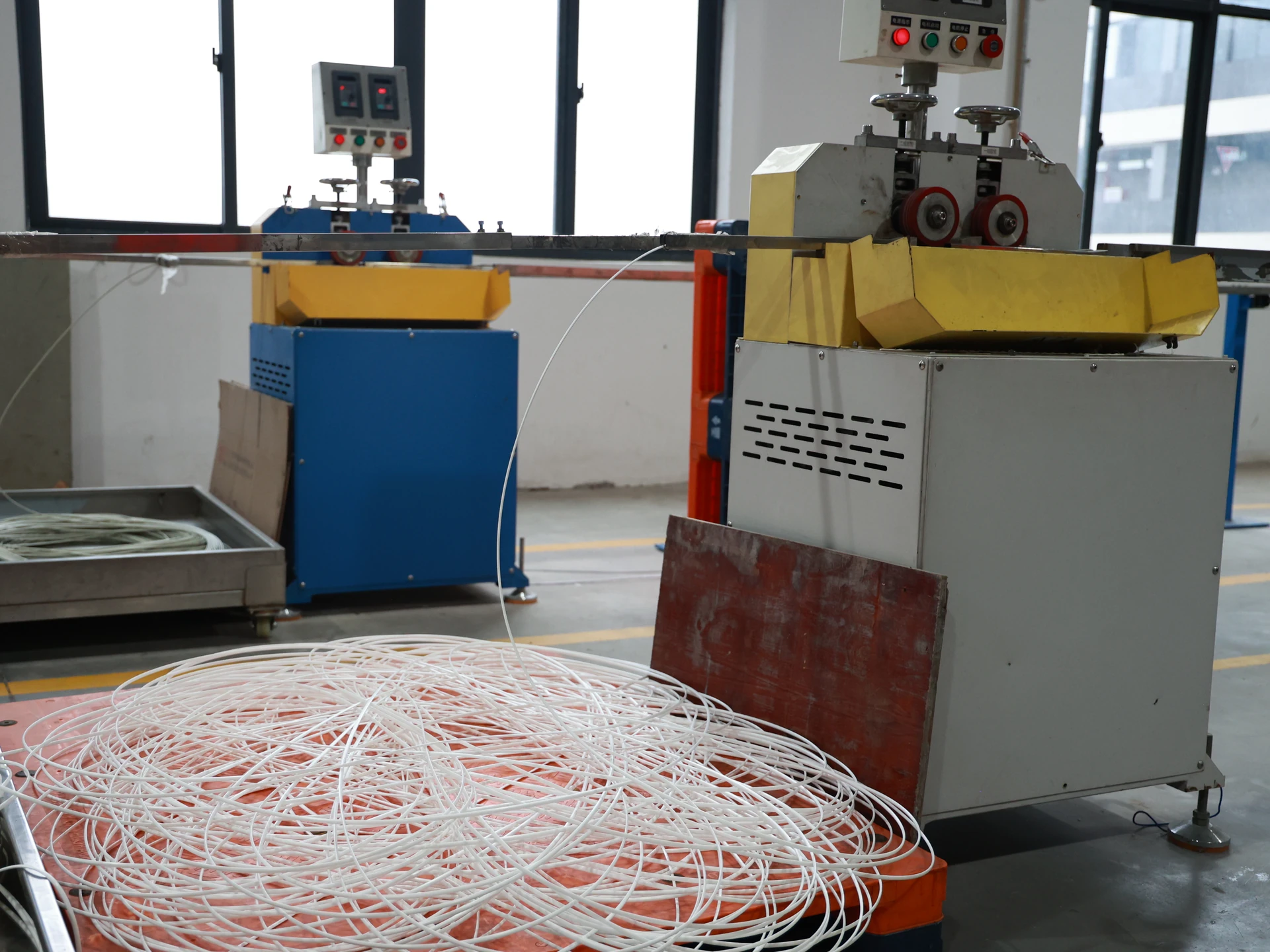
Prepare a draft welding procedure or work instruction before making the coupon. The record should state the intended process, joint preparation, material combination, welding equipment, nozzle or die arrangement, hot-air or extrusion settings, travel or feed control, preheat or conditioning requirement, restraint, cooling method and inspection sequence. During the test, record the actual values and any deviation from the plan.
| Coupon record | What to capture | Dlaczego to ważne |
|---|---|---|
| Materials | Sheet grade, thickness, rod designation, diameter or profile, lot and identification | Confirms the test represents the approved base and filler materials. |
| Joint detail | Sketch, preparation, dimensions, position, backing and restraint | Defines which production joint the evidence can support. |
| Equipment | Machine ID, nozzle or die, calibration status and operator | Connects the result to the equipment and personnel used in production. |
| Process variables | Actual heat, speed or feed, pressure or contact, preheat and cooling conditions | Shows what was truly tested instead of relying on a nominal setting. |
| Plan inspekcji | Visual, dimensional, mechanical, leak or NDT method and acceptance source | Prevents a pass/fail decision without a defined basis. |
Use the applicable project specification or plastics-welding guidance to set the actual parameter ranges. The DVS joining-of-plastics code index lists guidance for hot-gas and extrusion welding and for welding fillers and tests. It is a technical reference, not a blanket approval for every QEEHUA project.
QEEHUA’s internal PP sheet use standard adds a practical hold point: inspect first, process second. Confirm that the sheet edge is sound, the surface is clean and dry, and there are no cracks, broken edges or deep cuts in the coupon area before heating begins. A parameter record cannot make a defective starting piece representative.
Inspect the finished coupon before destructive testing
Begin with a documented visual and dimensional examination. Check alignment, joint preparation, bead continuity, width and profile, surface contamination, discoloration, holes, undercut-like notches, lack of fusion indications, cracks, voids and excessive deformation. Photograph both sides and mark the coupon ID so the images cannot be separated from the test record.
Do not grind away a questionable area and call the coupon acceptable without recording the repair. If the coupon contains a crack, expanding defect, severe contamination or an unexplained lack of fusion, place it on hold and investigate the cause before making another sample. The acceptance rule should identify whether repair is allowed, whether a new coupon is required and who can release the result.
Visual acceptance alone is not enough for a critical liquid-retaining tank. The appropriate test combination depends on the joint, service, code and customer requirement. A qualified inspector or project engineer should define the examination and acceptance criteria before the coupon is made.
Choose test evidence that matches the tank risk
There is no single universal test package for every PP sheet weld. Select evidence based on the expected loading, joint function, chemical duty, geometry, access and governing project documents.
- Visual and dimensional examination: confirms the joint was made as specified and identifies obvious discontinuities or distortion.
- Mechanical testing: tensile, bend, peel, fracture or another suitable test can indicate whether the welded zone has the required behavior for the project. The specimen orientation and conditioning should represent the intended failure mode.
- Non-destructive examination: use a method appropriate to the joint and expected flaws when the project requires inspection without destroying the production component.
- Leak or pressure evidence: apply only when the tank design, test boundary and approved method define it. A coupon result does not replace the completed tank leak test.
- Documentation review: verify that the test result, inspector, equipment, materials, photographs and acceptance decision are all linked to the same coupon number.
Ten Dokument techniczny TWI dotyczący spawania i testowania zbiorników i rur z tworzyw termoplastycznych explains that mechanical tests can qualify or verify weld quality, while visual and non-destructive methods help identify contamination, misalignment and other flaws without destroying the production joint. Use such sources to understand the options, then follow the project-specific acceptance plan.
Do not copy acceptance numbers from a steel-welding code or from another polymer without confirming that the method applies to the PP grade, joint and service. If the customer has not stated an acceptance basis, ask for the governing specification before production release.
Connect the coupon result to the production hold point
The coupon package should end with a clear decision: accepted for a defined production range, accepted with limitations, rejected and retest required, or information required. State who made the decision and what production variables remain within the qualified range.
At minimum, keep the coupon number, tank or equipment tag, drawing revision, procedure revision, sheet and rod identity, operator, date, equipment ID, actual variables, inspection results, test reports, photographs, deviations and approval signatures together. If the sheet thickness, joint geometry, welding process, chemical duty or customer requirement changes, review whether a new coupon is needed.
For handover, connect the coupon result to the PP welding-rod traceability guide i PP tank weld inspection checklist. These records serve different decisions: the coupon proves a defined process can work, traceability proves what was issued, and final inspection proves what was built.
Control temperature, cooling and defects during the trial
Keep the coupon and production plan within the material and procedure conditions that were actually qualified. The QEEHUA working manual warns that PP impact toughness can decrease below 5 degrees C and recommends warming sheet material to at least 5 degrees C before processing. Treat this as internal project guidance, not a universal PP welding limit, and confirm the grade-specific procedure before use.
Do not force-quench a hot-bent or welded PP trial with water unless the approved procedure specifically requires it. Allow the joint to cool under controlled support so rapid cooling does not add avoidable internal stress. If the coupon warps, cracks during cooling or shows a delayed defect, record the condition and review heat input, restraint, joint preparation and cooling before accepting another sample.
Stop the trial when the base sheet has a cracked edge, deep cut, impact damage, contamination or obvious deformation. Removing a defect from the record undermines the purpose of the coupon. The trial should expose process risk, not hide it.
Before reviewing a weld test coupon, it is useful to separate material verification from the later weld assessment. This QEEHUA lab video shows a general PP sheet tensile-strength test context; it does not replace the project-specific coupon method or acceptance criteria.
Odniesienie do filmu: PP Sheet Tensile Strength Test | QEEHUA Lab Quality Verification provides general material-testing context only; it does not establish a PP tank weld-coupon acceptance value or qualify a welding procedure.
Często zadawane pytania
Does every PP chemical tank require a weld test coupon?
Not necessarily. The need depends on the tank duty, joint risk, material and thickness changes, customer specification, governing code and quality plan. For a critical containment boundary or a new welding setup, a documented coupon is often the safer release step.
Can a coupon made with a different PP grade qualify the production tank?
Do not assume it can. The coupon should use the same approved material combination or an explicitly accepted equivalent, and the qualification record should state the limits of applicability for grade, thickness, joint type and process.
Is visual inspection enough to accept a PP weld test coupon?
Visual inspection is an essential first check, but it may not be enough for a liquid-retaining or safety-critical tank. Add the mechanical, leak or non-destructive evidence required by the project and document the acceptance basis before production release.
What happens if the coupon fails?
Place the result on hold, record the defect and actual variables, determine the likely cause, and revise the procedure or preparation before retesting. Do not release production welding from a failed or untraceable coupon.
For a project review, send the PP sheet grade and thickness, welding-rod designation and lot, joint sketch, chemical medium and concentration, operating temperature, proposed welding method, test plan, drawing revision and required handover records through the QEEHUA technical inquiry form.
Share the proposed joint, material records, welding procedure, test method and acceptance requirement. QEEHUA can help identify missing inputs before the coupon or production weld is released.