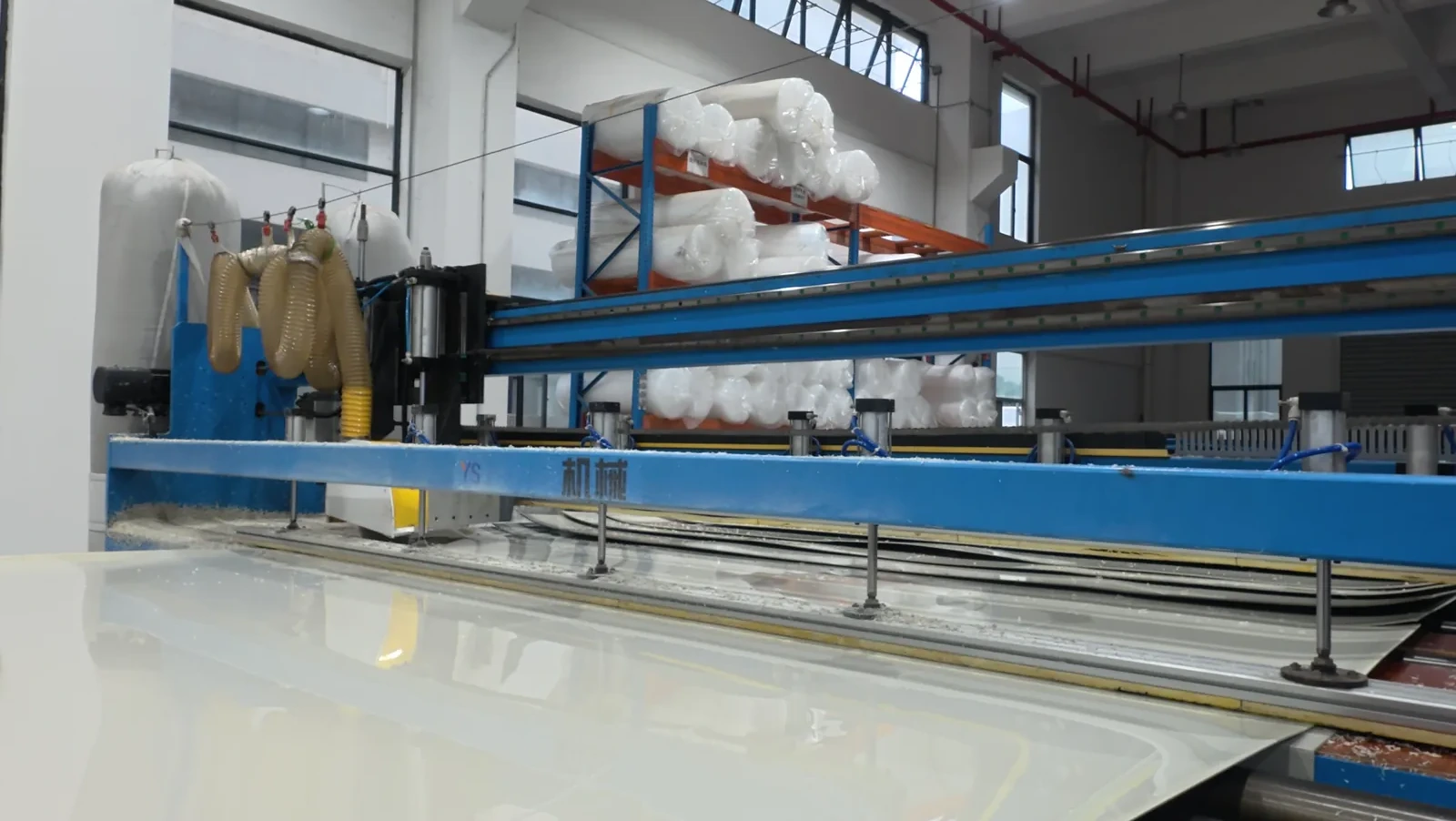
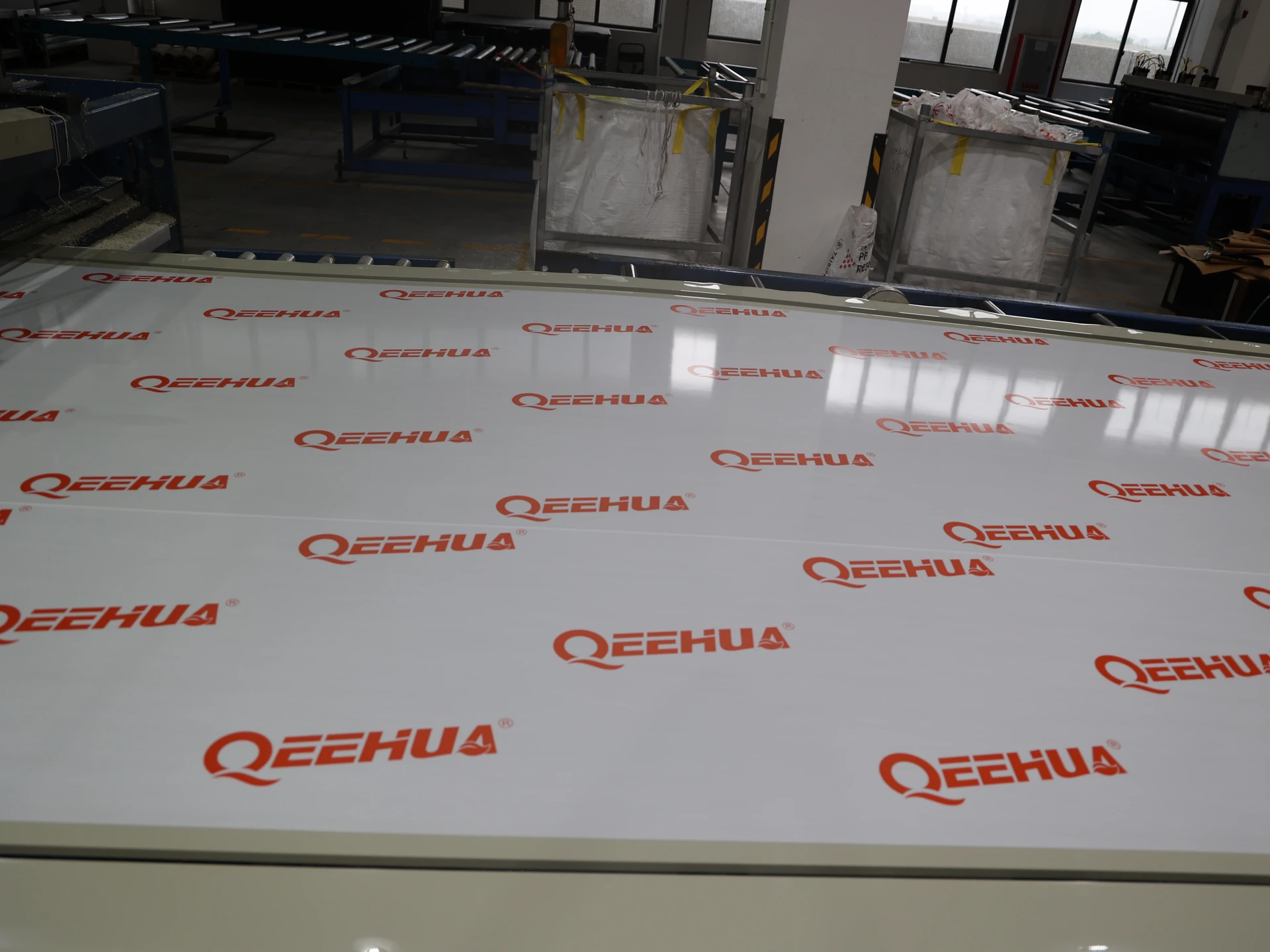
The PP sheet haul-off and calibration stage is relevant to buyers who want a visual reference for the later part of a sheet-production sequence. It is not a substitute for a written requirement. The project still needs the proposed grade, thickness, dimensions, surface expectation, finished component, and installation duty. It also needs the geometry and fabrication details that a production video cannot show. The embedded QEEHUA clip is included as a process reference only. It does not publish a universal thickness tolerance, a guaranteed surface result, or a line setting for your order. Confirm those items in the material request and drawing review.
PP sheet haul-off and calibration should be reviewed against the documented project duty, drawings, fabrication scope, material records, and acceptance requirements.
Project context
PP sheet haul-off and calibration: project review
Use the documented project requirements to compare the relevant material, fabrication, and quality-control inputs before release.
A dimensional requirement has to be expressed in project language. Name the panel size, thickness, cut requirement, mating feature, and the point that will be measured. If the sheet will be used in a long unsupported span or near a load, record that equipment condition separately. Material data alone does not define the structural design.
Buyers should also identify which requirements are visual and which are functional. A surface appearance check may use a flat coupon. Fit at a frame, joint, or penetration may need a cut or fabricated detail. Mixing those questions into one undefined sample request often creates an unclear approval record.
For application context, review QEEHUA’s industry applications and match the inquiry to a named component rather than a broad material label.
Video reference
The embedded video shows a QEEHUA haul-off and calibration process reference. It helps readers see the production stage named in the article. It does not establish a measurement plan for a specific sheet, and it should not be read as evidence for a finished equipment assembly.
Use the video as a prompt to define the actual acceptance check. State which dimension or surface area matters, the drawing revision, the sample size, the method of comparison, and the decision owner. This gives the review a clear outcome instead of a broad request for a calibrated panel.
Video reference: PP Sheet Extrusion: Haul-off and Calibration Process | QEEHUA. It shows the haul-off and calibration stage; confirm the actual dimensional and surface acceptance criteria for the project.
Material checks
QEEHUA reports density, flexural test result, tensile modulus, and notched impact strength for tested PP sheet samples. These results can be relevant to a technical review. They do not create an allowable span, a support layout, or a thickness recommendation. Those items need the finished part geometry, load, joint configuration, and project design basis.
Start with the QEEHUA PP sheet range, then compare the request with the operating conditions and drawing. For chemical-duty equipment, the chemical tank selection guide explains why the medium, concentration, temperature, load, and geometry must remain in the review.
Project data
The following values are presented as a compact reference for the material-review discussion. They remain attached to the tested sample and method. They are not values to copy into a finished-equipment calculation.
| Property | Reported value | Sample and condition | Method |
|---|---|---|---|
| Density | 912 kg/m³ | QEEHUA PP sheet data-sheet sample; conditioning and production grade are not stated | ASTM D792-20 |
| Flexural test | 1,870 MPa | QEEHUA PP sheet data-sheet sample; conditioning and production grade are not stated | ASTM D790-25 |
| Tensile modulus | 1,820 MPa | QEEHUA PP sheet data-sheet sample; conditioning and production grade are not stated | ASTM D638-22 |
| Notched impact strength | 59 J/m | QEEHUA PP sheet data-sheet sample; conditioning and production grade are not stated | ASTM D256-24 |
These are reported values for the data-sheet sample. They do not set a saleable-grade specification, a production tolerance, or a finished-equipment design. Confirm the grade, thickness, drawing, process medium, and operating conditions for the project.
Sources and limits: The embedded QEEHUA process video shows the production scene discussed here. ISO 178 flexural-properties testing and ISO 75-1 deflection under load provide published method or measurement context. The table still identifies the ASTM methods used for the reported QEEHUA sample. Neither external source converts a tested-sample value into an order specification; confirm the project requirements before release.
Before a purchase release, compare the data sheet with the actual request line by line. Check the proposed product, grade or required function, thickness, panel dimensions, colour where relevant, process duty, drawing revision, and sample purpose. A number that is not connected to a named component and condition cannot settle the project decision.
If the project asks for a capability outside the approved data record, state the requirement plainly. This can include a functional grade, an application approval, a special resistance target, a tolerance, or a fabrication test. QEEHUA can then confirm what information is available instead of allowing a general video or a tested-sample value to imply more than it proves.
Factory checks
Keep the order record separate from the visual production reference. It should state the requested sheet, dimensions, colour where relevant, required processing, quantity, and inspection point. If a tolerance is required, identify the feature and the agreed measurement basis in the project documentation.
Where the finished panel will be fabricated into a tank, enclosure, trough, or frame, add the installation details. Supports, cut-outs, welded corners, piping connections, and transport restraints can affect the project review. A flat sample does not represent every one of those conditions.
Video limits
A production clip can show a process stage, but it does not show every material grade, inspection point, or order requirement. It should never be used to infer fixed lead time, universal tolerance, certification, functional performance, or a finished-equipment design.
Release record
Keep the release record simple and traceable. It should identify the customer component, drawing revision, proposed sheet, dimensions, the condition that controls the review, requested fabrication, sample purpose, and the party who will approve the result. When one of those items changes, the review should be reopened for that changed item.
This record also separates a technical discussion from a commercial assumption. A production image, a process video, a sheet coupon, and a completed equipment drawing have different purposes. Keep each item attached to the question it can answer, then record any requirement that still needs a project-specific confirmation.
Sample request
Ask for a flat sample when the check concerns surface, colour, or basic machining. Ask for a fabricated detail when fit, a joint, or an opening is the decision point. Give the reviewer the drawing view and acceptance method. See the PP sheet sample-request guide for a project checklist, then send the drawing and request a project sample.
Frequently asked questions
Does the haul-off and calibration video state a PP sheet tolerance?
No. The video is a process reference. Any tolerance must be confirmed for the requested product and measurement method.
What should be measured on a project sample?
Measure the feature identified in the drawing and request. This can be a sheet dimension, surface area, cut feature, or mating detail.
Can flexural data define support spacing?
No. Support spacing and structural design require the part geometry, load, joints, safety basis, and service conditions.
Why does the sample purpose matter?
The purpose determines whether a flat coupon, a machined panel, or a fabricated detail gives useful evidence for the project.
For PP sheet haul-off and calibration, record the final project assumptions and acceptance checks before releasing the fabrication or purchase scope.