
How Should Low-Temperature PP Sheet Welding Be Controlled Before Tank Fabrication?
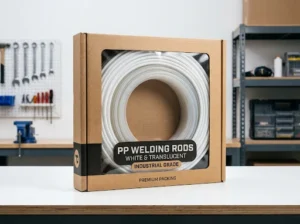
Low-temperature PP sheet welding should be treated as a controlled fabrication condition, not as a reason to simply turn up the hot-air gun. Before a chemical tank is welded, the fabricator needs to confirm the temperature of the sheet, welding rod, joint area and work environment; keep the joint clean and dry; qualify the selected settings on a representative coupon; and record the inspection evidence. This sequence reduces cold welds, residual stress and repairs that are difficult to explain after the tank has been assembled. Short answer: move cold PP sheet and welding rod into a dry, sheltered work area, allow them to equalize gradually, and do not start production welding until the material and joint are at or above the project procedure’s minimum temperature. QEEHUA’s PP sheet use manual uses 5°C as an internal processing threshold: below 5°C, warm the material indoors to at least 5°C before bending, impact or welding. This is project guidance, not a universal code limit. The approved welding procedure, material grade and equipment instructions remain controlling. Why low-temperature PP sheet welding needs a separate control plan Polypropylene does not respond to a cold workshop in the same way as a metal tank. A cold
What Should a PP Sheet Material Traceability Package Include from Receipt Through Fabrication Handover?
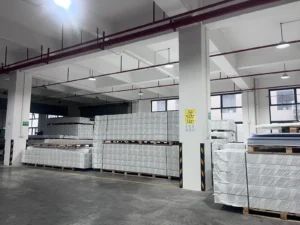
PP sheet material traceability should follow the material through the whole job, not stop when the supplier truck is unloaded. A useful package connects the purchase requirement, supplier lot or batch, receiving inspection, storage location, cut-piece identity, fabrication records, weld records, repairs and final equipment handover. If a panel is cut into several parts, the project should still be able to answer a simple question: which approved PP sheet became this tank wall, liner, duct section or process panel? Short answer: build one controlled traceability chain from receipt to handover. Record the approved grade and thickness, supplier lot or batch, certificate and inspection status; keep the identity attached to sheets and cut parts; link parts to drawings, welds, repairs and inspections; then issue an indexed handover dossier. Supplier documentation is evidence, not a substitute for QEEHUA’s own receiving and fabrication checks. What a PP sheet material traceability package needs to prove The package should prove four things: the material received was the material ordered, the material used in fabrication was released for the job, the finished part can be linked to its drawing and inspection evidence, and any deviation or repair remains visible at handover. This is broader than a
What Should a PP Sheet Weld Test Coupon Prove Before Chemical-Tank Production?
A PP sheet weld test coupon should prove that the proposed material combination, joint detail, equipment and welding procedure can produce a weld suitable for the intended chemical-tank service. It is not just a sample bead: the coupon must be traceable, representative of production, inspected against agreed criteria and linked to a documented release decision. Short answer: Require a PP sheet weld test coupon when the tank duty, joint type, material grade, thickness, welding process or customer specification makes production weld quality a release risk. The coupon should record the actual variables used, show acceptable visual condition, and receive the project-specified mechanical, leak or non-destructive checks before the production hold point is released. When a PP sheet weld test coupon is needed before tank production Use a coupon before production when the weld is part of the tank’s containment boundary or when a failure would affect chemical service, water retention, personnel protection or the project handover. The need is strongest when the fabricator is using a new sheet grade, a new welding rod, a different thickness, an unfamiliar joint geometry or a revised welding machine setup. A coupon may also be required when the customer specification, project code, third-party inspector