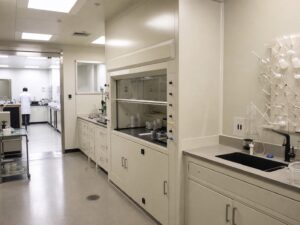
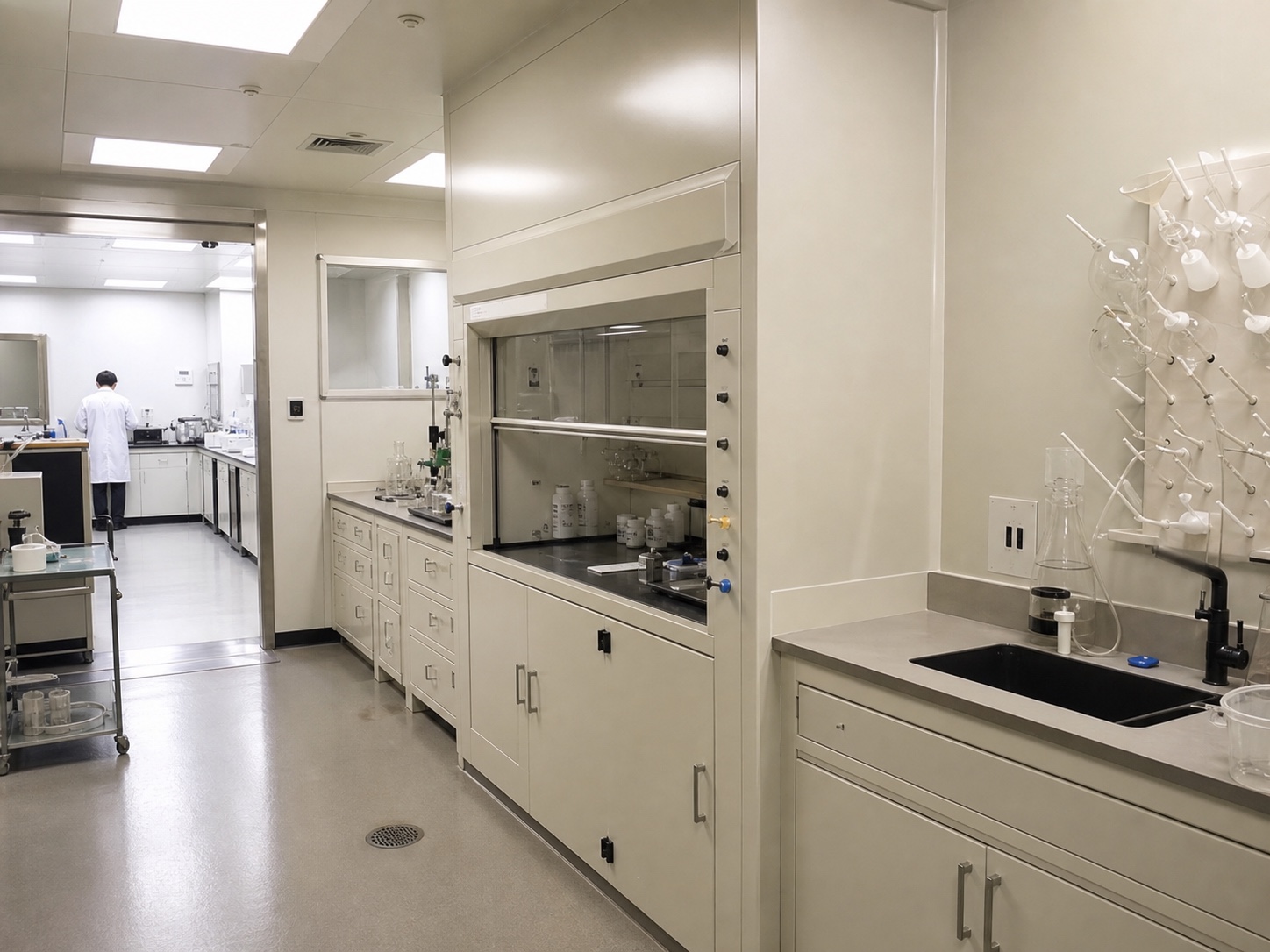
Polypropylene laboratory cabinetry is appropriate for a corrosive chemical room when the cabinet is exposed to the room’s actual chemicals, vapours, splash pattern, cleaning method, and operating workflow—and when the cabinet can be supported, fabricated, ventilated, and inspected as a complete assembly. The material decision should start with the chemical duty and cabinet function, not with the word “laboratory.”
Polypropylene laboratory cabinetry starts with the room duty
A corrosive room may include reagent cabinets, base cabinets, worktops, splash panels, shelving, partitions, wet-bench surrounds, and equipment enclosures. Each component sees a different exposure. A cabinet beside an acid dispensing point may receive concentrated splash; a closed storage unit may see vapour and occasional spills; a work surface may see repeated wiping and abrasive contamination. The same PP sheet specification should not be copied across all of them without checking the duty.
OSHA’s laboratory standard requires a written Chemical Hygiene Plan that addresses procedures, engineering controls, protective equipment, training, and the functioning of fume hoods and other protective equipment. That framework is important for material selection: a PP cabinet can support a corrosive-room workflow, but it does not replace ventilation, exposure control, chemical labeling, spill response, or the laboratory’s approved operating procedure. See the OSHA laboratory chemical standard for the control-plan context.
Separate cabinetry from fume hoods and chemical storage cabinets
One common specification error is using “chemical cabinet” to describe three different functions. Polypropylene laboratory cabinetry may provide storage, a work surface, a base for equipment, or a splash-resistant enclosure. A fume hood is an exposure-control device with an airflow and exhaust function. A chemical storage cabinet may be governed by the stored chemical’s hazard class, segregation, fire protection, and local code. The cabinet material cannot answer all three design questions.
| Room component | Primary decision | PP sheet review focus |
|---|---|---|
| Base or wall cabinet | Will the cabinet remain serviceable under splash, vapour, cleaning, and storage loads? | Chemistry, surface finish, joints, doors, hinges, shelves, support and cleanability. |
| Laboratory worktop | Can the surface handle the process contact and be inspected after cleaning? | Flatness, texture, edge details, cut-outs, splash retention and replacement plan. |
| Fume hood lining or enclosure | Does the complete hood meet its airflow, containment and safety requirements? | Chemical compatibility, fabrication, baffles, penetrations and hood-specific acceptance; PP alone is not hood certification. |
| Chemical storage cabinet | Does the storage system meet chemical segregation and room-code requirements? | Stored chemical list, secondary containment, labeling, ventilation and the responsible safety review. |
| Wet-bench surround or process panel | Can the panel tolerate repeated liquid contact and remain cleanable? | Grade, thickness, welded details, drainage, packaging, installation protection and receiving inspection. |
Check chemistry, concentration, temperature, and contact pattern
Polypropylene is often considered for corrosive laboratory surfaces, but a material name is not a compatibility approval. List every process chemical, mixture, concentration, temperature, contact time, cleaning agent, disinfectant, and likely by-product. Include whether the contact is a puddle, repeated splash, vapour, immersion, or a stressed welded joint. A cabinet shelf with a small spill has a different risk from a liner that remains wet for hours.
Review chemical compatibility for the selected grade and the fabricated condition. Weld beads, sharp inside corners, fastener penetrations, and loaded shelves can create local stress that changes how a material behaves. If the chemical list includes strong oxidizers, unusual solvents, elevated temperatures, or mixed waste streams, request a project-specific review rather than relying on a generic “chemical resistant PP” statement.
QEEHUA’s internal PP use standard follows the practical sequence “inspect first, process second.” For cabinetry, that means confirming the sheet grade, thickness, flatness, edge condition, protective film, and surface before routing, drilling, bending, or welding. A cabinet assembled from a chemically suitable but damaged sheet can still fail at a cut-out, corner, or joint.
Match the PP sheet construction to cabinet geometry
Thickness and support
Cabinet doors, shelves, side panels, worktops, and wet-bench surrounds do not carry the same load. Specify panel spans, shelf loads, support spacing, door hardware, openings, and the location of equipment cut-outs. Do not select thickness only from the cabinet’s external dimensions. The fabricator should review deflection, reinforcement, thermal movement, and the joint design for the actual geometry.
Joints, edges, and cleanable details
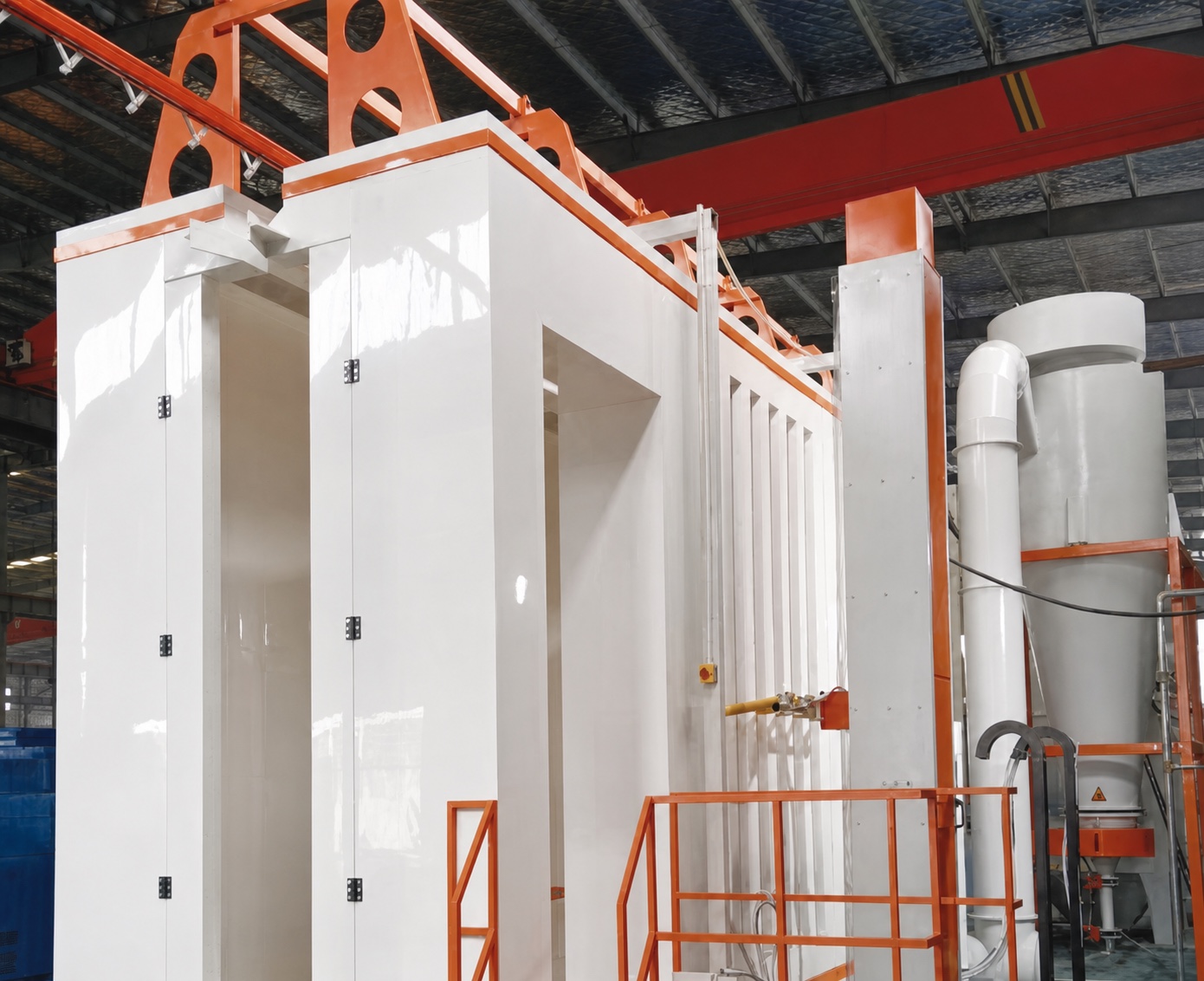
Corrosive-room cabinetry is easier to maintain when seams, edges and fasteners do not create dirt traps or uninspectable pockets. Define whether corners are welded, mechanically joined, or removable; how the inside radius is formed; and how a damaged edge will be repaired. Keep sharp notches, deep scratches, and cracked edges out of load-bearing, bending, or welded areas. The PP manual’s storage and handling guidance also supports keeping finished parts flat, protected, and free from hard-object abrasion until installation.
Coordinate ventilation, access, drainage, and maintenance
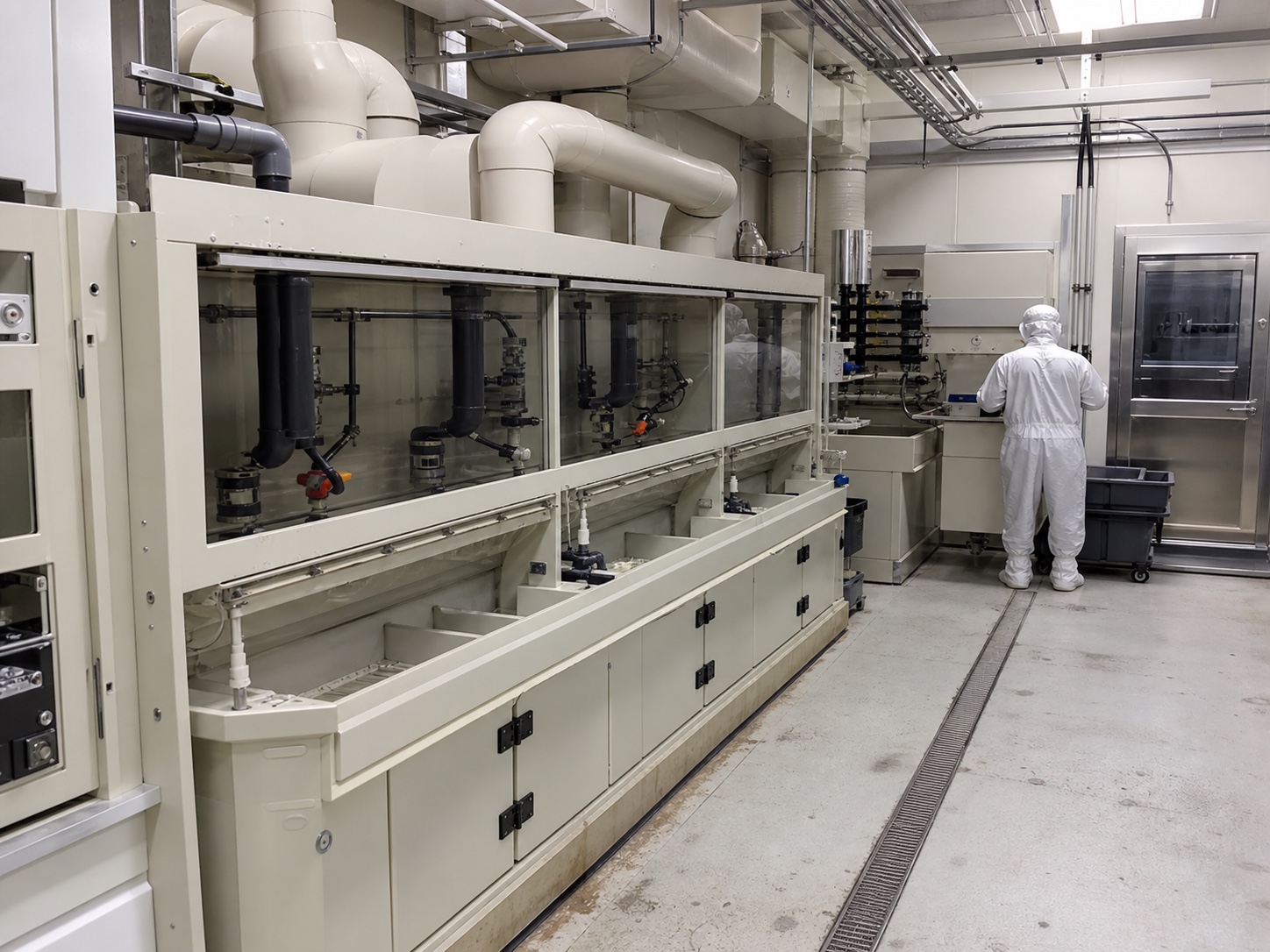
A cabinet in a corrosive room can change the airflow and maintenance pattern even if the PP panels are chemically compatible. Confirm whether the cabinet is open, closed, locally exhausted, or inside a fume-hood airflow zone. Identify door swing, removable shelves, inspection access, drain paths, spill retention, and the location of nearby eyewash or emergency equipment. Do not seal a cabinet in a way that traps vapour or prevents inspection of a leak.
OSHA describes a laboratory-type hood as an enclosure designed to draw air from the laboratory and prevent or minimize escape of air contaminants. Therefore, a PP cabinet or enclosure should not be marketed as a fume hood unless the complete system has the required airflow, containment, commissioning, and safety evidence. For general laboratory context, see OSHA’s laboratories overview.
For wet or frequently cleaned rooms, define the cleaning chemistry and the finish that will be inspected. A smooth surface may simplify visual inspection, while a texture may affect residue retention and wiping. If the project requires a cleanroom or high-purity designation, specify the handling, cleaning, packaging, particle or extractables limits, and acceptance method separately; “PP cabinet” alone does not establish a cleanroom qualification.
Write a laboratory cabinetry RFQ that can be approved
A useful RFQ lets the supplier distinguish a cabinet panel from a fume-hood liner or a chemical storage system. Include the following information:
- Room and process: laboratory function, chemical list, concentrations, temperature, splash or vapour exposure, cleaning agents, and operating schedule.
- Cabinet role: storage, worktop, equipment base, splash guard, wet-bench surround, enclosure, or another defined function.
- Geometry: plan and elevation drawings, panel spans, shelf loads, door and drawer layout, openings, penetrations, drainage and access requirements.
- Material: PP grade or formulation, thickness, color, surface, texture, protective film, welding rod, hardware and any required compatibility evidence.
- Fabrication: cutting, routing, drilling, bending, welding, reinforcement, inspection, repair and dimensional-tolerance requirements.
- Room controls: ventilation interface, cleanroom handling, packaging, labeling, installation protection, and the responsible safety or laboratory engineer.
- Acceptance: appearance, flatness, door operation, shelf load or deflection criteria, leak or splash containment where applicable, documentation and receiving inspection.
For related planning, review QEEHUA’s PP sheet fume-hood guide, ten chemical-storage cabinet checklist, i PP sheets for laboratory and cleanroom applications page. These are adjacent application references, not automatic approval for a particular cabinet design.
When the exact QEEHUA grade, thickness, surface, hardware, cleanroom handling, or fabrication tolerance is not publicly verified, write “to be confirmed by QEEHUA” in the inquiry. Send the chemical list, room drawings, cabinet function, required dimensions, ventilation interface, cleaning method, and acceptance documents before asking for a final recommendation.
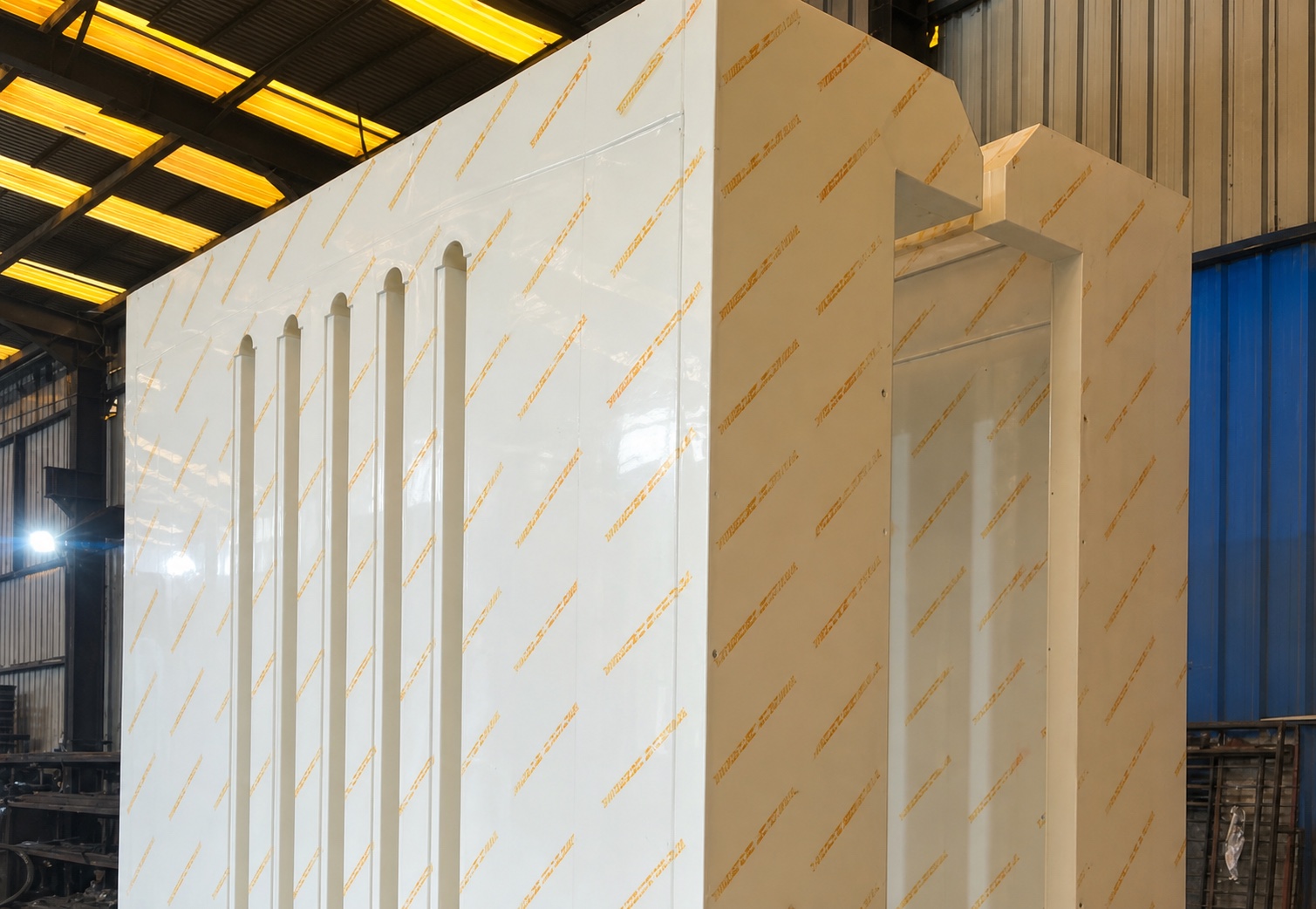
Related QEEHUA process video: this finished-product reference helps show why a cabinet order should connect the sheet, fabricated geometry, and final inspection. It is not evidence of a specific laboratory qualification, chemical compatibility approval, or fume-hood performance.
Video reference: PP Sheet Finished Products: Finished Products | QEEHUA. It provides general finished-product context only; the approved cabinet material, room controls, and acceptance evidence must come from the project documents.
Często zadawane pytania
When is polypropylene laboratory cabinetry appropriate for corrosive chemical rooms?
It is appropriate when the actual chemicals, concentrations, temperatures, cleaning method, splash or vapour exposure, cabinet geometry, ventilation interface, and acceptance requirements have been reviewed for the selected PP grade and fabricated assembly.
Is PP laboratory cabinetry the same as a chemical storage cabinet?
No. Laboratory cabinetry may be a work surface, equipment base, enclosure or wet-bench component. A chemical storage cabinet also has to address the stored chemical hazard class, segregation, labeling, secondary containment, ventilation and local safety requirements.
Can a PP cabinet replace a laboratory fume hood?
No. A fume hood is an exposure-control device with defined airflow and containment performance. A PP cabinet or enclosure should not be called a fume hood unless the complete system has the required design, commissioning and safety evidence.
What should a polypropylene laboratory cabinetry RFQ include?
Include the room function, chemical list, concentration, temperature, splash or vapour pattern, cabinet role, drawings, spans, loads, openings, drainage, PP grade and thickness, surface, welding and hardware, ventilation interface, cleaning and packaging controls, inspection, and acceptance documents.
Send the room drawings, chemical and cleaning list, cabinet function, dimensions, ventilation interface, surface requirements, and acceptance criteria. Contact QEEHUA w celu przeprowadzenia przeglądu konkretnego projektu.