
How Should PP Sheet Machining and Drilling Be Specified Before CNC Fabrication?
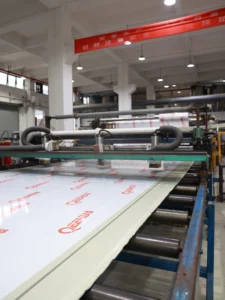
Polypropylene sheet machining should be specified as a controlled fabrication process, not only as a list of cut sizes. Before CNC cutting or drilling, the buyer and fabricator need to agree on the sheet condition, support method, drawing datums, heat-control approach, hole and edge requirements, and the inspection record that proves the released panel is ready for welding or assembly. Short answer: Define the PP sheet grade and thickness, inspect the blank before machining, support it continuously, control heat and vibration, and inspect released edges and holes after unclamping. A useful RFQ connects every machined feature to a drawing datum, a process condition, and an acceptance record. Do not copy one cutting or drilling parameter set to every PP sheet; validate the tool, thickness, feature size, and equipment together. This guide is for OEM buyers, EPC contractors, and fabricators ordering PP panels for chemical tanks, water-treatment equipment, ducts, covers, guards, and other industrial assemblies. Treat the polypropylene sheet machining brief as a controlled handoff between the drawing owner and the CNC fabricator. It complements QEEHUA’s industrial PP sheet range and the broader PP Sheet selection, fabrication, and applications guide. Project drawings, the approved material grade, and the customer’s inspection requirements
How to Review PP Sheet Chemical Compatibility Before Choosing a Tank Liner
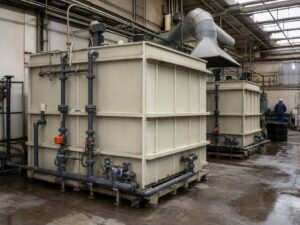
PP sheet chemical compatibility should be reviewed against the real chemical duty, not selected from a chemical name alone. Before choosing a polypropylene tank liner, document concentration, temperature, exposure time, mixed chemicals, mechanical stress, contact mode, and the liner or tank construction. Then connect the screening data to the drawing, weld details, supports, and acceptance plan. Short answer: use a PP chemical-resistance table to screen candidate materials, then confirm the exact chemical, concentration, temperature, contact duration, stress, and fabricated geometry. A chart can remove unsuitable options; it cannot approve a complete tank liner or guarantee service life for an unverified chemical blend. Compatibility review should connect the proposed PP sheet to the actual tank duty and fabricated assembly. Why a chemical name is not enough for PP sheet selection “Is polypropylene resistant to this chemical?” is a useful starting question, but it is not yet a tank-liner specification. The same chemical can produce a different result when concentration, temperature, exposure time, stress, or contamination changes. A liner that sees continuous immersion has a different duty from a splash guard or a tank exterior exposed to vapour and condensate. For a fabricated chemical tank, the sheet is also part of a
How Should PP Sheet Specifications Be Written for a Custom Order?
For a custom polypropylene sheet order, start with clear polypropylene sheet specifications: define the end use, then lock the material, thickness, width, cut format, surface texture, corona-treatment requirement, inspection method, and packing condition. A single request for “PP sheet” leaves too much room for a technically correct sheet that cannot be printed, welded, machined, or fitted to the drawing. Short answer: Write the order as a controlled specification, not a shopping-list keyword. State the intended process, nominal thickness and tolerance, usable width and length, smooth or textured surface, treated side and treatment test for any corona requirement, plus the sample, inspection, and packaging evidence needed before release. This guide covers the custom-order decisions that appear repeatedly in supplier RFQs. It complements QEEHUA’s PP Sheet selection, fabrication, and applications guide. The existing PP sheet thickness review for fabricated equipment focuses on structural and equipment decisions; this article focuses on turning a buyer’s dimensional and surface requirements into a production-ready sheet specification. Polypropylene sheet specifications start with the downstream job The same polypropylene sheet specification can be suitable for one conversion route and unsuitable for another. A tank panel, a machined guard, a thermoformed cover, and a printed or laminated sheet may