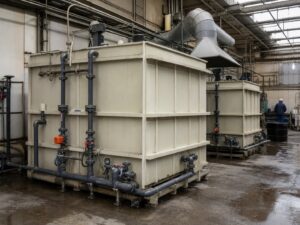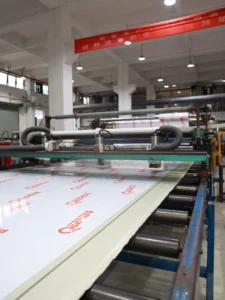

Short answer: A PP aquaculture tank RFQ should define each hatch, drain, and overflow as a controlled interface—not as a generic “opening.” Give the fabricator the tank duty, water and cleaning conditions, opening dimensions, operating and emergency levels, fish-retention method, connected piping, support, welding, inspection, and drawing-revision requirements before quotation.
The existing PP sheet aquaculture tank fabrication guide covers broader material and fabrication checks. This article narrows the procurement question to the three interfaces that most often create ambiguity between the tank, piping, hatch cover, screen, and site teams: access hatches, bottom or side drains, and normal or emergency overflows.
What should the PP aquaculture tank RFQ identify first?
Start with the equipment boundary and operating duty. State whether the tank is used for broodstock, hatchery, nursery, quarantine, grow-out, grading, or another defined stage. Record water source, salinity where relevant, pH range, disinfectants, cleaning agents, operating temperature, maximum level, water-change method, indoor or outdoor exposure, and the expected cleaning frequency. “Fish tank” or “water service” is not enough information for material release.
Also identify the responsibility split. The process or aquaculture engineer sets hydraulic flow, turnover, screen opening criteria, and emergency response. The fabricator can convert those approved requirements into PP sheet panels, welded collars, covers, standpipe interfaces, and inspection records. A quotation should show which dimensions are supplied by the owner, which are proposed by the fabricator, and which remain subject to engineering approval.
How should the hatch and access opening be specified?
A hatch is an access system, not only a cut-out in the top panel. The RFQ should state the clear opening, cover type, hinge or removable arrangement, access direction, edge treatment, gasket or seal requirement, fasteners, expected handling loads, and the working clearance around the opening. If operators must net fish, lift baskets, remove a screen, or reach a drain, show the route and the minimum clear space on the plan and section views.
Hatch fields to put on the drawing
- Unique hatch tag, quantity, plan location, clear opening, and reference datum.
- Cover material, thickness or engineered panel schedule, stiffening concept, handles, hinges, and removal weight.
- Whether the hatch is normally open, splash-protected, sealed against washdown, or only an inspection opening.
- Cleaning access, netting clearance, fall-prevention expectation, and any required lock or latch.
- Interface ownership for frames, gaskets, fasteners, pipework, screens, and field-installed accessories.
Round or radiused corners are often easier to clean and less likely to create a sharp snag point, but the project drawing must control the final geometry. Do not promise a universal hatch size or cover load from the material name. In QEEHUA quotation reviews, a hatch is checked against the panel seam plan and nearby nozzles so that the opening does not remove the support or welding access assumed in the tank layout.
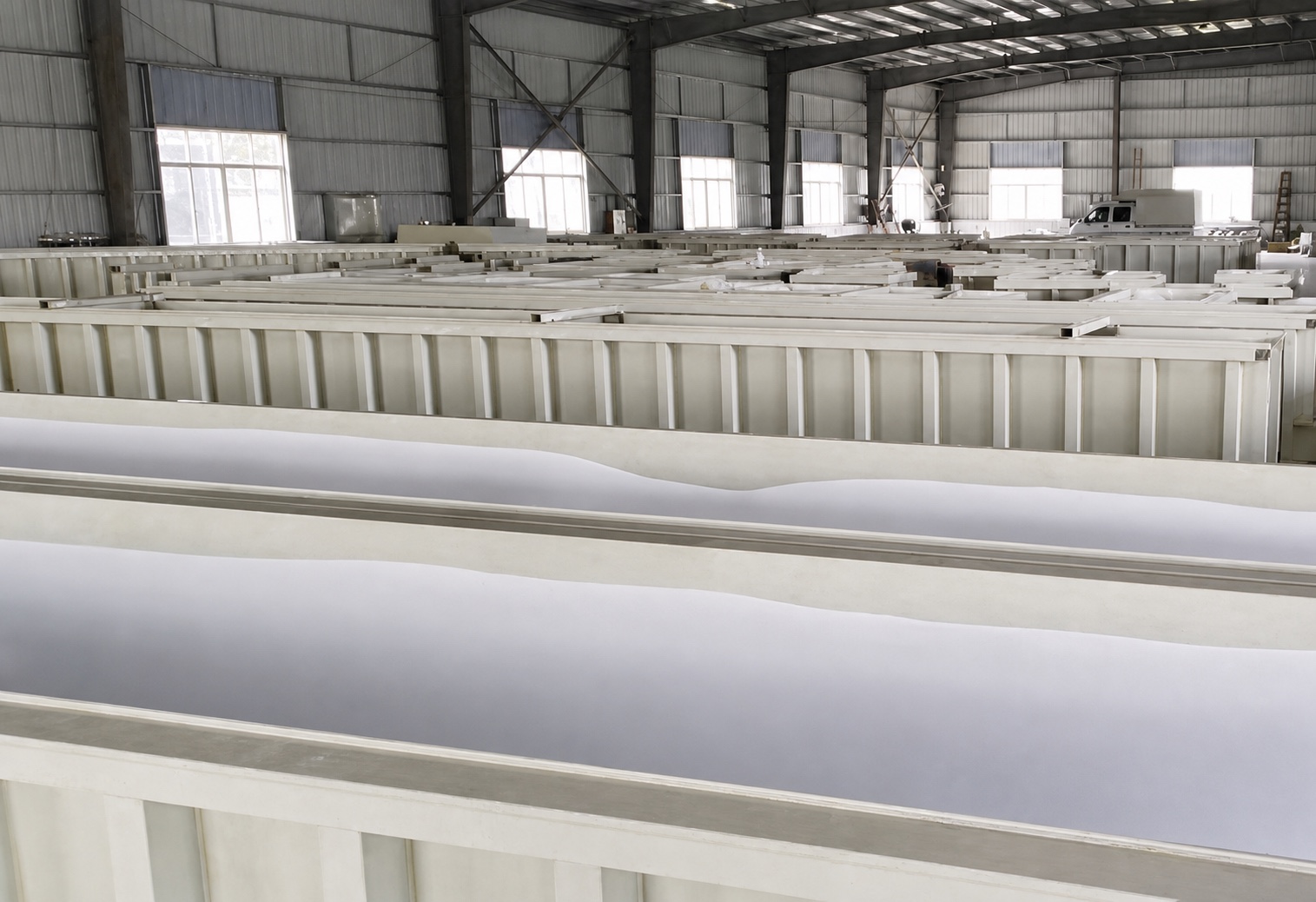
What drain information belongs in the RFQ?
Define the drain function before choosing a nominal pipe size. A bottom center drain may remove settled solids and support full emptying; a side drain may serve a low point, a separate water path, or a maintenance connection. The RFQ should identify the drain tag, location, invert or centerline elevation, tank floor slope, connected pipe material, isolation point, discharge destination, cleanout access, and the expected drained state.
For hatchery and nursery service, fish or eggs may need to be retained while water and solids leave the tank. NOAA hatchery guidance describes center drains with removable standpipes and screens, while aquaculture engineering references distinguish internal and external standpipes for water-level control and fish exclusion. These references support the design discussion; they do not set the opening size or flow rate for a particular species or project. See the NOAA design-of-hatching-facilities reference.
Include the screen or standpipe as a named component. State whether it is removable, how it is supported, what prevents accidental removal, how it is cleaned, and where a blocked screen or closed valve sends water. The drawing should distinguish normal drain flow from emergency drainage and should identify whether the drain discharges to a treatment, recirculation, harvest, or waste-handling route.
How should normal and emergency overflow be documented?
Every tank needs a defined overflow path that matches the approved inflow and operating-level design. The RFQ should state the normal operating level, high level, emergency level, overflow crest or standpipe elevation, outlet route, air-break or venting requirement, screen or fish-retention arrangement, and the receiving system. A drain that can empty the tank is not automatically an overflow, and an overflow that protects the rim is not automatically a solids-removal path.
For circular tanks, published aquaculture guidance describes center-drain and standpipe arrangements that control depth while directing solids, and recommends considering a separate overflow or external standpipe so one blocked path does not silently remove the operating safeguard. The NOAA above-ground tank drainage reference is useful for comparing arrangement types. The project engineer must still establish the actual flow, head, screen area, and emergency response.
| Interface | RFQ inputs | Failure or ambiguity it prevents |
|---|---|---|
| Hatch | Tag, clear opening, cover, seal, access route, handling load, supports, fasteners, cleaning clearance | Opening cannot be used safely, cover clashes with pipework, or a cut-out removes a required support. |
| Drain | Function, location, invert/elevation, slope, pipe size, isolation, screen/standpipe, cleanout, discharge route | Tank cannot fully drain, solids accumulate, fish escape, or the outlet is connected to the wrong collection system. |
| Overflow | Normal/high/emergency levels, crest or standpipe, capacity basis, venting, screen, receiving route, alarm or response | Water bypasses the intended safeguard, the overflow siphons unexpectedly, or one blocked path causes loss of stock. |
Which PP sheet and fabrication details should accompany the interface schedule?
Connect each interface to the material and fabrication package. Provide the requested PP sheet grade or available product reference, panel dimensions, thickness basis, seam locations, welding-rod requirement, joint-preparation method, collar or flange detail, support spacing, and inspection records. For water-contact equipment, add the actual cleaning and disinfectant duty rather than assuming that all freshwater or seawater services are identical.
In QEEHUA RFQ reviews, the hatch, drain, and overflow schedule is checked against the panel seam plan and the removable-access path before a price is finalized. A drain placed over a seam, or an overflow standpipe without cleaning clearance, can force a late collar change. Record the clear opening, pipe centerline, elevation datum, and removal direction on the controlled drawing. These are fabrication-coordination checks, not universal hydraulic or structural sizes.
\n\n
QEEHUA-specific suitability remains project-dependent. A quotation review can check whether the requested sheet, rod, opening reinforcement, and fabrication sequence can be assessed from the supplied drawing, but it should not invent a universal service temperature, fish-safe certification, or structural capacity. If the tank is outdoor, include sunlight and weathering exposure; if the hatch or drain is repeatedly removed, include the expected cycle and replacement interface.
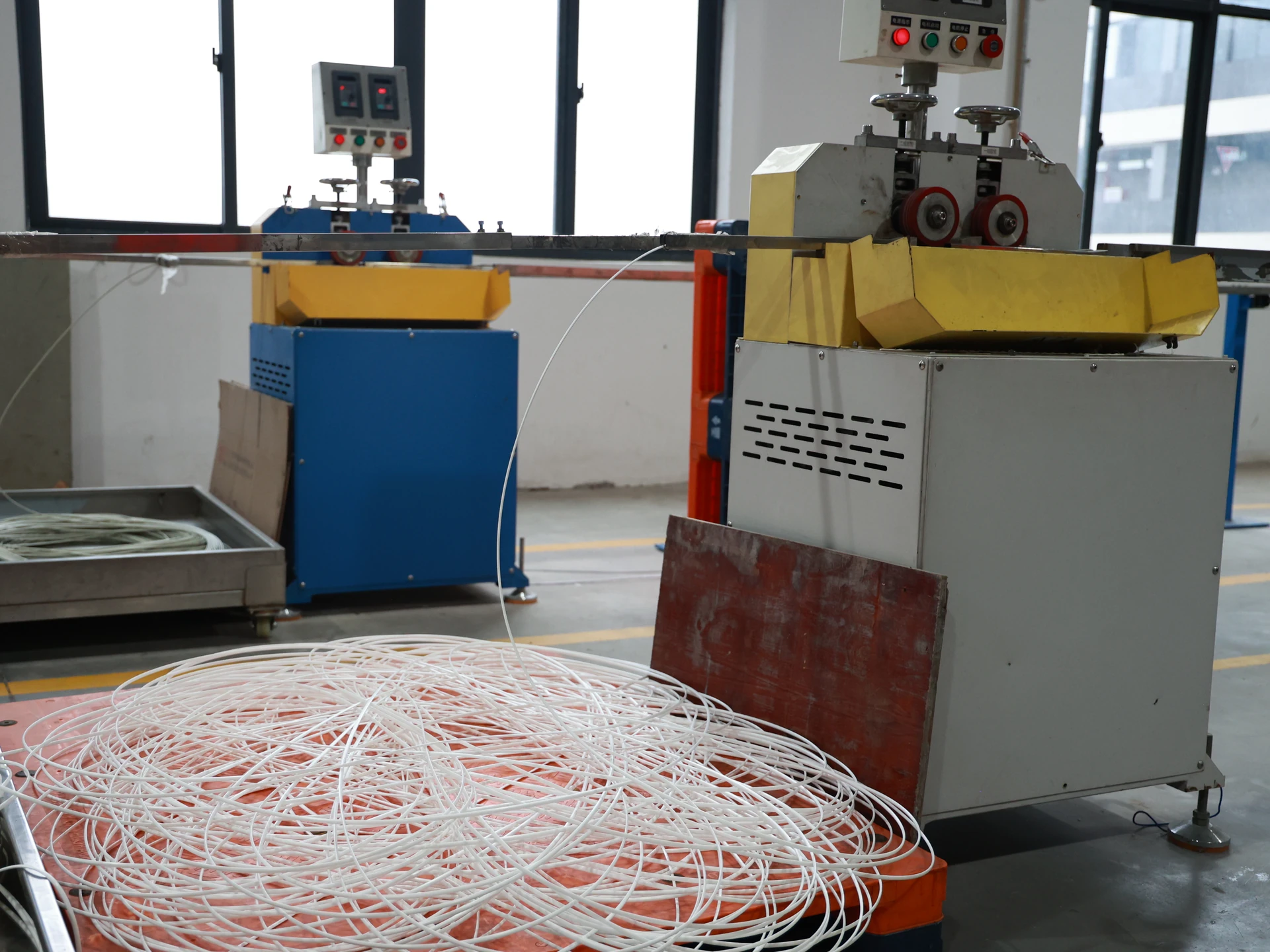
When the job includes extensive panel cutting, a controlled cutting process can reduce mismatched openings before welding. The approved playlist video PP Sheet Finished Products After Cutting | QEEHUA is limited process context; it does not validate the tank hydraulics, hatch load, drain capacity, or fish-retention design.
Once the opening schedule is frozen, the fabrication team can use the cut parts and drawing revision to prepare the welded assembly:
Video reference: PP Sheet Finished Products After Cutting | QEEHUA. It provides limited context for finished PP components after cutting; it does not demonstrate aquaculture tank hydraulics, hatch sealing, drain sizing, or overflow safety.
What documents should be attached before asking for a quote?
- Controlled tank drawing: plan, elevations, sections, liquid levels, hatch tags, drain and overflow elevations, supports, and revision.
- Duty record: species or life stage, water source, salinity or chemistry, cleaning agents, temperature, indoor/outdoor exposure, and operating cycle.
- Hydraulic and stock-retention basis: inflow, turnover, normal and emergency flow, screen or standpipe intent, and the responsible design authority.
- Interface schedule: pipe sizes, materials, gaskets, valves, flanges, screens, access clearances, field joints, and owner/fabricator responsibility.
- Fabrication and inspection scope: PP sheet and welding-rod references, seam plan, cut list, visual or leak checks, packing, and handover records.
For broader project coordination, link the interface schedule to the PP tank RFQ checklist and the canonical PP Sheet Guide. If the project has a separate drainage and maintenance plan, the PP equipment drainage and cleanout guide can provide a useful adjacent review without replacing the aquaculture hydraulic design.
Frequently asked questions
What is the most important field in a PP aquaculture tank RFQ?
Identify the function and controlled elevation of every hatch, drain, and overflow, then connect each one to the water duty, connected pipework, screen or standpipe, access requirement, and drawing revision. A nominal opening size without its function is incomplete.
Should the drain and overflow be combined?
Not automatically. The process engineer should decide whether one arrangement can meet solids removal, water-level control, emergency overflow, fish retention, cleaning, and maintenance requirements. Many projects separate functions so a blocked or removed component does not defeat the remaining safeguard.
Does a PP sheet supplier determine the tank flow rate?
No. The aquaculture or process engineer must establish inflow, turnover, drain capacity, screen criteria, and emergency response. The fabricator can review the approved dimensions and interfaces and produce the PP sheet assembly to the released drawing.
What should QEEHUA receive before quoting the tank interfaces?
Send the controlled tank drawing, water and cleaning duty, operating temperature, normal and emergency levels, hatch/drain/overflow schedule, connected piping, support details, material or welding requirements, inspection scope, and the responsibility split for hydraulic and structural design.
Send the aquaculture tank drawing, hatch/drain/overflow schedule, water and cleaning conditions, and fabrication requirements through the QEEHUA contact page. The final PP sheet and fabricated-interface suitability must be confirmed for the actual project duty.