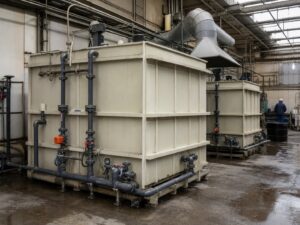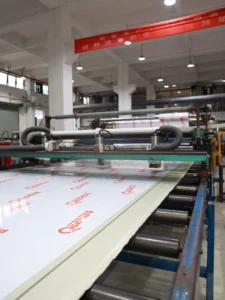
PP sheet chemical compatibility should be reviewed against the real chemical duty, not selected from a chemical name alone. Before choosing a polypropylene tank liner, document concentration, temperature, exposure time, mixed chemicals, mechanical stress, contact mode, and the liner or tank construction. Then connect the screening data to the drawing, weld details, supports, and acceptance plan.
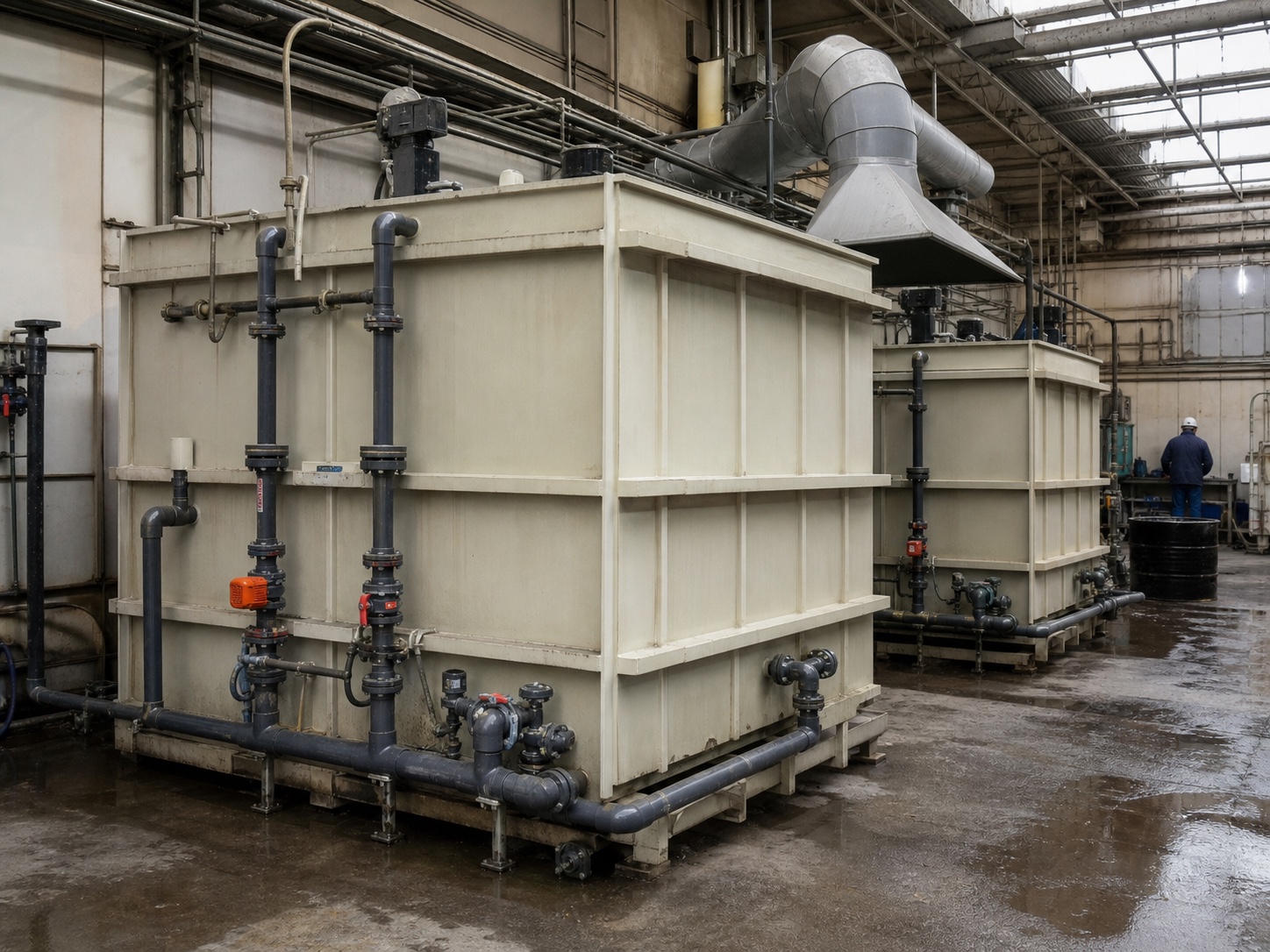
Why a chemical name is not enough for PP sheet selection
“Is polypropylene resistant to this chemical?” is a useful starting question, but it is not yet a tank-liner specification. The same chemical can produce a different result when concentration, temperature, exposure time, stress, or contamination changes. A liner that sees continuous immersion has a different duty from a splash guard or a tank exterior exposed to vapour and condensate.
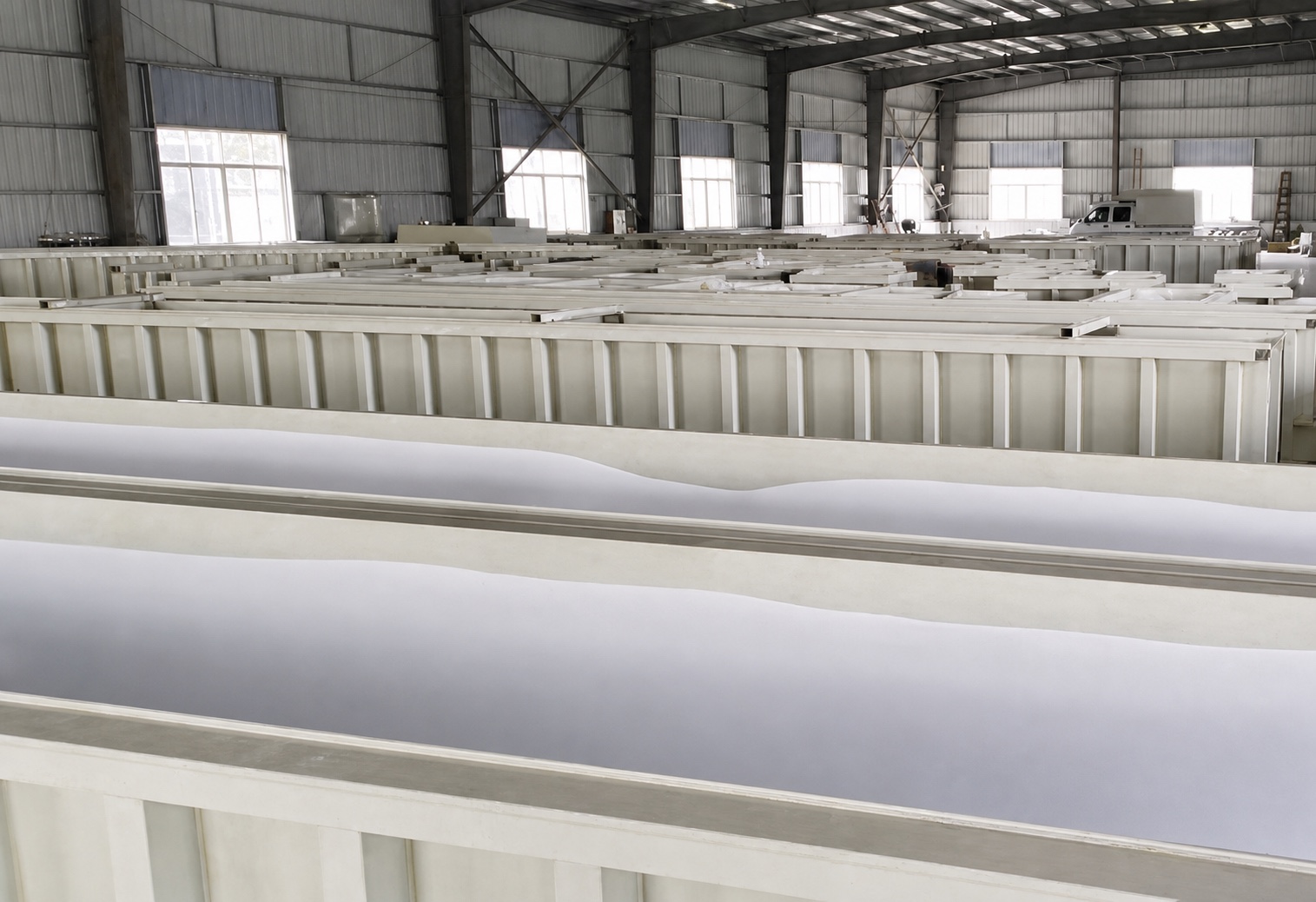
For a fabricated chemical tank, the sheet is also part of a system. The wall, corners, seams, nozzles, drains, cover, stiffeners, supports, and any substrate behind a liner all affect how the chemical duty reaches the material. QEEHUA’s PP Sheet selection and fabrication guide uses this equipment-level approach: define the duty first, then align material, fabrication, and documentation.
A compatibility entry should therefore be treated as a screening result. It does not establish a universal allowable temperature, wall thickness, weld efficiency, or operating life for every PP sheet grade.
Build a complete PP sheet chemical compatibility profile
Before comparing polypropylene with another material, create one duty sheet for every liquid, vapour, cleaning chemical, and credible upset condition that can contact the liner. The following fields are the minimum useful record for an RFQ or design review.
| Input | What to record | Why it changes the decision |
|---|---|---|
| Chemical identity | Exact chemical name, trade name, CAS number where available, additives, surfactants, solvents, and expected contaminants | A commercial blend may behave differently from a single pure reagent. |
| Concentration | Normal, minimum, maximum, and upset concentration | Resistance can change as concentration rises or as a solution becomes concentrated during evaporation. |
| Temperature | Continuous, peak, cleaning, start-up, and shutdown temperatures | Temperature accelerates chemical interaction and reduces mechanical margin under load. |
| Contact mode | Continuous immersion, intermittent fill, splash, vapour, condensate, or external spill | The relevant exposure test and the affected surfaces are not the same for every mode. |
| Time and cycling | Contact duration, batch frequency, thermal cycling, and planned service period | Short exposure data should not be treated as proof of long-term immersion performance. |
| Mechanical condition | Liquid head, panel span, support points, weld stress, pressure or vacuum, and movement | Chemical exposure combined with stress can create a different failure risk from an unstressed coupon. |
Include the cleaning regime separately. A tank may be compatible with its process liquid but not with a hot cleaner, oxidising rinse, or solvent used during maintenance. If a chemical is unknown, mark it as an open item rather than assuming that a typical concentration is acceptable.
Use chemical-resistance charts as screening tools, not approvals
Published charts are useful for narrowing the material list, but the test conditions and rating definitions must stay attached to the result. ASTM D543 explains that plastic chemical-resistance evaluations depend on reagent type and concentration, exposure duration, temperature, stress, and the properties reported. It also cautions that short-time tests for continuous-immersion applications mainly help eliminate unsuitable materials or show a probable relative order of resistance.
ISO 175:2010 describes immersion testing of plastic specimens and the measurement of changes in mass, dimensions, appearance, and other physical properties. The standard is a test method; it is not a blanket approval for a particular PP sheet grade, tank geometry, chemical blend, or fabrication route.
When using a chart in a project review, record at least:
- the source and revision of the chart;
- the chemical concentration and temperature represented by the entry;
- the rating definition and exposure time;
- whether the data concerns unstressed specimens or a stressed component; and
- the additional evidence required before release to fabrication.
QEEHUA’s chemical-resistance references are useful for early screening of individual media at stated temperatures. This is the practical role of PP sheet chemical compatibility review: narrow the material options first, then close the project-specific evidence gaps. For a final decision, send the commercial chemical name, concentration, normal and maximum temperature, cleaning conditions, drawing, and intended contact surfaces so the proposed PP sheet and fabricated detail can be reviewed together.
Separate immersion, splash, vapour, and liner-interface decisions
A chemical tank liner can fail at an interface even when the bulk sheet appears compatible. Review the contact mode for each surface:
- Continuous immersion: check the complete liquid envelope, liquid height, temperature, cycling, and the consequence of permeation or swelling.
- Splash and spill: review the frequency, residence time, cleaning method, and whether liquid can collect at a seam, edge, or support.
- Vapour and condensate: identify the roof, cover, upper wall, stiffeners, and vent path that may see a different concentration from the liquid below.
- Liner interface: define the backing material, bond or mechanical restraint, thermal movement, drainage path, and inspection access behind the liner.
For a liner installed over another structure, do not assume that the substrate, adhesive, gasket, fastener, or drain fitting has the same chemical resistance as PP. The specification should assign responsibility for each wetted and non-wetted interface. If the liner is intended to be replaceable, state how it will be inspected and removed without damaging the tank shell.
A complete PP sheet chemical compatibility decision therefore includes the liner interface, not only the sheet coupon. Record the backing material, restraint method, drainage path, and inspection access on the same approved package.
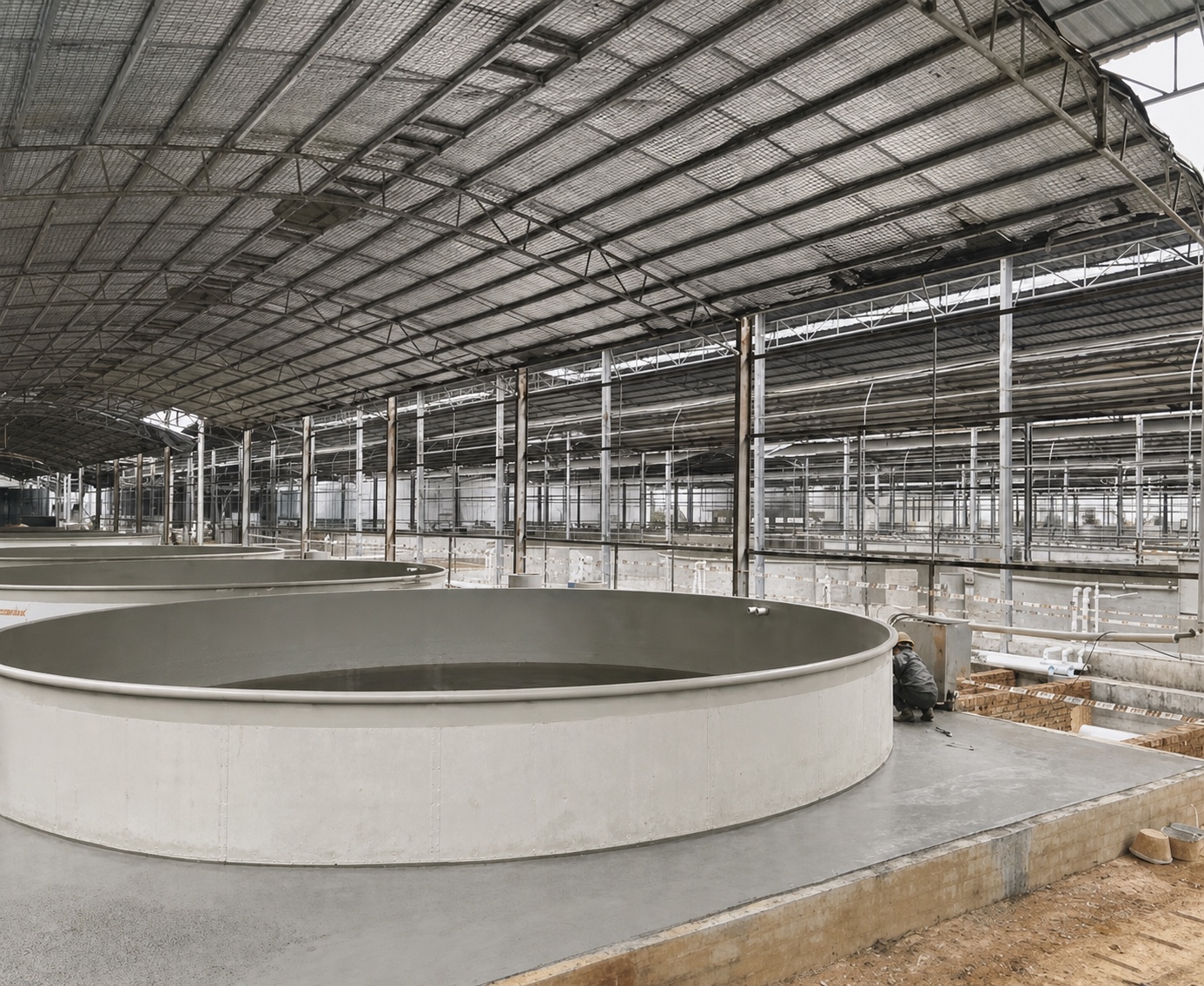
Check tank geometry and fabrication with the material decision
Compatibility does not compensate for an under-designed or poorly fabricated assembly. Before releasing a PP tank liner or fabricated PP tank, review the following details against the approved drawing:
| Design or fabrication item | Review question | Typical evidence to request |
|---|---|---|
| Sheet and thickness | Is the proposed sheet identified by grade, thickness, and intended use, with the design basis recorded? | Material declaration, data sheet, batch or lot reference, and drawing note. |
| Welded joints | Are the weld process, filler or welding rod, joint preparation, access, and inspection method defined? | Weld procedure, joint map, welding-rod identification, and inspection record. |
| Nozzles and drains | Do penetrations, flanges, gaskets, and drain interfaces match the chemical and temperature duty? | Nozzle schedule, interface responsibility matrix, gasket information, and leak-test boundary. |
| Supports and movement | Can the liner or tank move with temperature without local stress, buckling, abrasion, or trapped liquid? | Support detail, clearances, restraint notes, and installation instructions. |
| Inspection and repair | Can seams and hidden areas be reached, tested, repaired, and re-tested before handover? | Inspection plan, repair disposition form, photographs, and release checklist. |
Large panels deserve particular attention at corners, welded returns, cut-outs, and supports. A coupon test cannot reproduce every local load at a nozzle or stiffener. For a tank project, pair the compatibility review with QEEHUA’s PP tank RFQ checklist so service conditions, geometry, fabrication scope, inspection, and documentation are reviewed as one package.
QEEHUA review practice: close the open items before fabrication
In practical project reviews, the most useful compatibility decision is often not “approved” or “rejected” on the first pass. It is a controlled list of open items that can be closed with the customer’s process data. A typical QEEHUA review should flag:
- an incomplete chemical list or an unknown trade blend;
- missing concentration or cleaning-temperature limits;
- a chart entry that does not match the proposed grade or exposure mode;
- an unsupported assumption that a tank liner, gasket, weld rod, and drain fitting share the same resistance;
- geometry or support information that is absent from the drawing; and
- an acceptance plan that does not define inspection, repair, re-test, or handover records.
When the project uses welded PP equipment, include the matching welding consumable and joint plan in the same review. A material decision that ignores weld preparation, filler compatibility, or access can leave the most chemically exposed part of the assembly undocumented.
For sodium hypochlorite, neutralisation, electroplating, or wastewater service, use the relevant QEEHUA application guide as a starting point, then submit the actual process conditions. The sodium hypochlorite dosing equipment guide illustrates the same boundary: concentration, temperature, stress, welds, interfaces, and project data must be considered together.
Material compatibility is only one part of a fabricated PP component. This approved QEEHUA playlist video shows the cutting stage that follows sheet selection; it is useful for understanding how the approved cut plan becomes a physical part.
Video reference: PP Sheet Cutting Process: Cutting Motor and Cut Saw | QEEHUA. It illustrates a fabrication step only and does not replace chemical compatibility confirmation, tank design review, or project acceptance testing.
When should a PP tank liner remain on hold?
Keep the material decision open when the chemical mixture, operating window, stress condition, or interface detail is not defined well enough to compare with the available evidence. It is also safer to pause when the project requires a fire, cleanliness, food-contact, or regulatory claim that has not been confirmed for the exact QEEHUA product and grade.
Do not convert a competitor’s chart, certification, or case study into a QEEHUA specification. If a required term is outside the current QEEHUA evidence, identify it as requiring confirmation and request the missing document or test requirement. A short delay at the review stage is preferable to releasing a liner with an untraceable service assumption.
What to send for a PP sheet chemical compatibility review
Send the process description and the finished-component requirement together. A complete inquiry should include:
- chemical names, concentrations, additives, and cleaning agents;
- normal, maximum, and upset temperatures;
- contact mode, exposure time, cycling, and liquid level;
- tank or liner drawing with dimensions, penetrations, supports, and drains;
- sheet grade, thickness, colour, surface, and any sample requirement;
- welding, machining, forming, gasket, and installation scope;
- inspection, leak-test, repair, re-test, and handover expectations; and
- the required delivery, documentation, and approval route.
QEEHUA can then review the proposed PP sheet route against the real chemical duty and identify which points are supported, which need a project-specific check, and which should remain open before quotation or fabrication.
Send the chemical list, concentration, temperature range, liner or tank drawing, and fabrication requirements through the QEEHUA project enquiry page. A clear duty sheet helps the team review material, welding, interfaces, and documentation together.
Frequently asked questions
Can a PP chemical-resistance chart approve a tank liner?
No. It can screen candidate materials under stated conditions. Final review must also cover concentration, temperature, exposure time, stress, mixed chemicals, liner interfaces, tank geometry, welding, and acceptance requirements.
Does a chemical name alone determine PP sheet chemical compatibility?
No. The concentration, temperature, contact mode, cleaning chemicals, additives, exposure duration, and mechanical condition can change the result. Record those inputs before selecting a sheet or liner.
Should the liner, weld rod, gasket, and drain fitting be reviewed separately?
Yes. Each wetted or exposed component should be identified and checked for the actual chemical and temperature duty. Do not assume that all interfaces have the same resistance as the PP sheet.
When is a project-specific test or confirmation needed?
Request project-specific confirmation when the chemical blend, concentration, temperature, stress, exposure time, grade, or regulatory requirement is outside the available reference data or when the result is critical to equipment release.