
How to Review PP Sheet Chemical Compatibility Before Choosing a Tank Liner
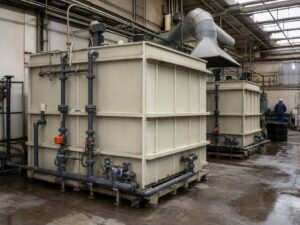
PP sheet chemical compatibility should be reviewed against the real chemical duty, not selected from a chemical name alone. Before choosing a polypropylene tank liner, document concentration, temperature, exposure time, mixed chemicals, mechanical stress, contact mode, and the liner or tank construction. Then connect the screening data to the drawing, weld details, supports, and acceptance plan. Short answer: use a PP chemical-resistance table to screen candidate materials, then confirm the exact chemical, concentration, temperature, contact duration, stress, and fabricated geometry. A chart can remove unsuitable options; it cannot approve a complete tank liner or guarantee service life for an unverified chemical blend. Compatibility review should connect the proposed PP sheet to the actual tank duty and fabricated assembly. Why a chemical name is not enough for PP sheet selection “Is polypropylene resistant to this chemical?” is a useful starting question, but it is not yet a tank-liner specification. The same chemical can produce a different result when concentration, temperature, exposure time, stress, or contamination changes. A liner that sees continuous immersion has a different duty from a splash guard or a tank exterior exposed to vapour and condensate. For a fabricated chemical tank, the sheet is also part of a
How Should PP Sheet Specifications Be Written for a Custom Order?
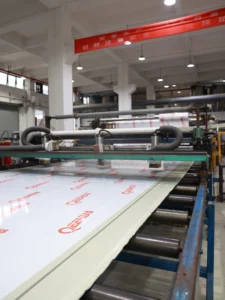
For a custom polypropylene sheet order, start with clear polypropylene sheet specifications: define the end use, then lock the material, thickness, width, cut format, surface texture, corona-treatment requirement, inspection method, and packing condition. A single request for “PP sheet” leaves too much room for a technically correct sheet that cannot be printed, welded, machined, or fitted to the drawing. Short answer: Write the order as a controlled specification, not a shopping-list keyword. State the intended process, nominal thickness and tolerance, usable width and length, smooth or textured surface, treated side and treatment test for any corona requirement, plus the sample, inspection, and packaging evidence needed before release. This guide covers the custom-order decisions that appear repeatedly in supplier RFQs. It complements QEEHUA’s PP Sheet selection, fabrication, and applications guide. The existing PP sheet thickness review for fabricated equipment focuses on structural and equipment decisions; this article focuses on turning a buyer’s dimensional and surface requirements into a production-ready sheet specification. Polypropylene sheet specifications start with the downstream job The same polypropylene sheet specification can be suitable for one conversion route and unsuitable for another. A tank panel, a machined guard, a thermoformed cover, and a printed or laminated sheet may
When Is Polypropylene Sheet Thermoforming Appropriate for Fabricated Equipment?
Polypropylene sheet thermoforming is appropriate when a project needs repeatable curved or contoured parts, a controlled forming tool, and a clear plan for cooling, trimming, and joining the formed component to the rest of the equipment. It is usually not the first choice for a one-off large tank made from flat panels, heavily welded assemblies, deep undercuts, or designs whose chemical and mechanical duty is still undefined. Short answer: choose polypropylene sheet thermoforming when the part geometry can be formed reliably from a qualified sheet and the production quantity justifies a tool or forming fixture. Choose welded PP plate when the equipment is large, highly customized, dominated by flat panels and welded seams, or likely to change during site fit-up. A hybrid route often gives the best result: thermoform the repeatable shell or cover, then weld it to fabricated PP panels, flanges, nozzles, supports, or access details. Sheet quality and processing history influence whether a PP part can be formed consistently for fabricated equipment. What thermoforming changes in a fabricated-equipment project Thermoforming heats a thermoplastic sheet, shapes it over or into a tool using vacuum, pressure, mechanical assistance, or a combination, then cools and trims the part. The result is