Yes, PP sheet can be considered for fabricated chemical neutralization tanks when the liquid duty, temperature, liquid level, support structure, welded joints, and operating procedure are reviewed together. This checklist gives EHS, process, and procurement teams a direct way to decide what to confirm with QEEHUA before ordering.
Short answer: PP sheet for chemical neutralization tanks
PP sheet for chemical neutralization tanks should be evaluated from the actual chemicals, operating conditions, tank geometry, fabrication approach, and site-specific engineering requirements.
What a neutralization tank must do
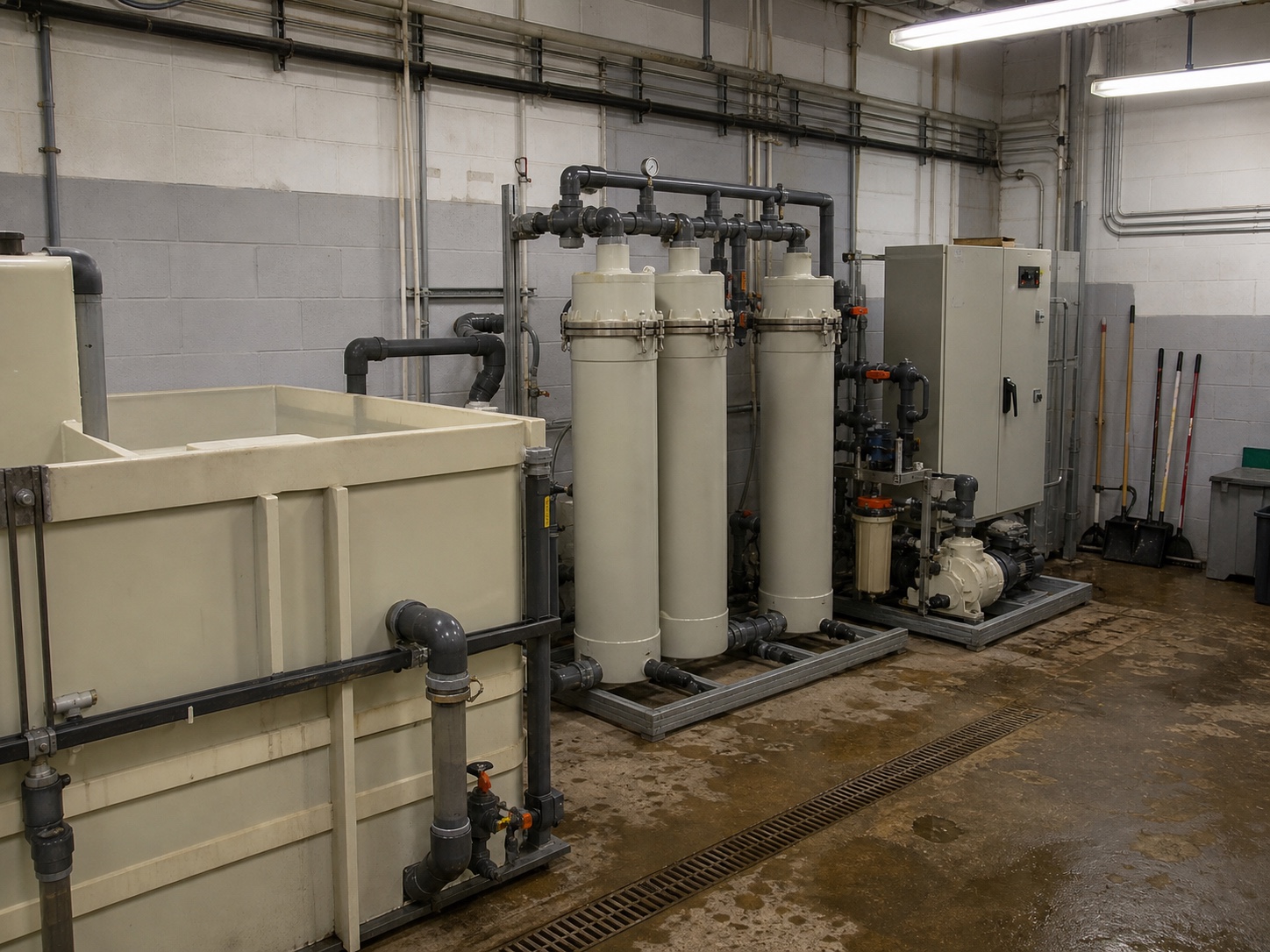
A neutralization tank receives an acidic or alkaline stream, dosing chemical, or rinse water so the process can bring the stream toward a controlled pH range before the next treatment step. The tank may see changing concentration, intermittent dosing, mixing, splashing, and cleaning. Those conditions create a different review question from a static storage vessel.
Define the failure scenario first: overflow, agitator splash, dosing-line leak, drain blockage, or a full operating liquid level. The tank, base, and connected piping should be reviewed as one liquid-handling boundary. For wastewater projects, the EPA industrial wastewater overview is a useful regulatory starting point, but the permit and discharge limits for a specific site remain jurisdiction-dependent.
When PP sheet is a reasonable material option
QEEHUA’s PP Sheet product information describes polypropylene sheets for chemical storage, water treatment, and fabricated equipment. It lists acid- and alkali-resistant applications, standard thicknesses from 3–30 mm, extra-thick options from 40–100 mm, and widths up to 3,300 mm. These are available material options, not a universal neutralization-tank design.
PP becomes a reasonable candidate when the project team can identify the actual liquid exposure and when the fabricator can design the tank around liquid head, support spacing, welded joints, access, and connection loads. Do not infer compatibility from the word “acid” or “alkali” alone: concentration, temperature, residence time, mixed streams, and cleaning chemicals can change the assessment.
Information to send before asking for a PP neutralization-tank review
Give the supplier a short, controlled data package instead of asking for “a PP tank” from capacity alone. The following inputs allow QEEHUA to separate material review from structural and fabrication decisions.
| Input | What to provide | Why it changes the answer |
|---|---|---|
| Liquid duty | Chemical names, concentration range, pH range, mixed streams, and SDS files | Compatibility must be assessed against the actual mixture and exposure, not a generic chemical label. |
| Temperature and time | Normal, maximum, cleaning, upset, and residence-time conditions | Temperature and exposure duration can change material and weld review requirements. |
| Geometry | Working volume, maximum liquid level, length, width, height, cover, and access openings | Liquid head and access affect panel layout, support, and inspection planning. |
| Loads and connections | Agitator, pump, mixer, nozzle, pipe, ladder, platform, and external support loads | Connection loads cannot be treated as part of the sheet surface alone. |
| Operating procedure | Dosing sequence, mixing, drain-down, wash-down, inspection, and maintenance access | Operating events often create the highest splash, local load, or cleaning exposure. |
| Records and rules | Drawing revision, inspection plan, required certificates, and local discharge conditions | Creates a review trail for process, EHS, EPC, and commissioning teams. |
Keep the SDS and labels available to the people who operate and maintain the system. OSHA’s Hazard Communication guidance explains the role of labels and safety data sheets; it does not replace an engineering compatibility review or a site wastewater permit.
How to review PP tank construction details
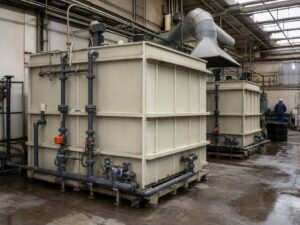
Ask for a drawing that identifies the tank base, side panels, top edge, baffles, mixer opening, nozzles, drain, overflow, and support points. A nominal sheet thickness is only one part of the design. The fabricator should show how the panels are supported, where liquid head acts, and how loads are transferred into the base or frame.
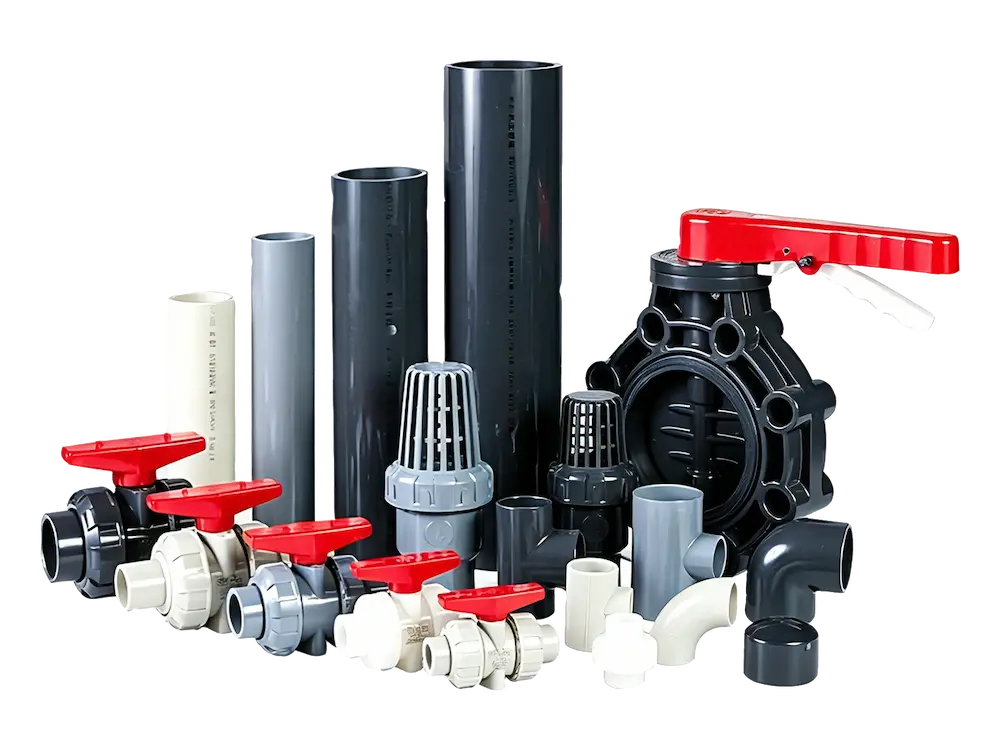
Review every welded seam and penetration as a potential leak path. Request the proposed PP welding-rod match, joint layout, preparation method, inspection method, and the records supplied with the fabricated component. If an agitator or pump is mounted to the tank, show its load and vibration path on the drawing rather than leaving it as a field assumption.
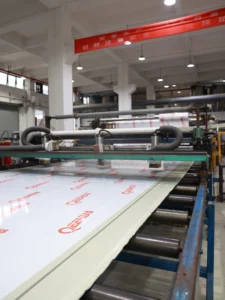
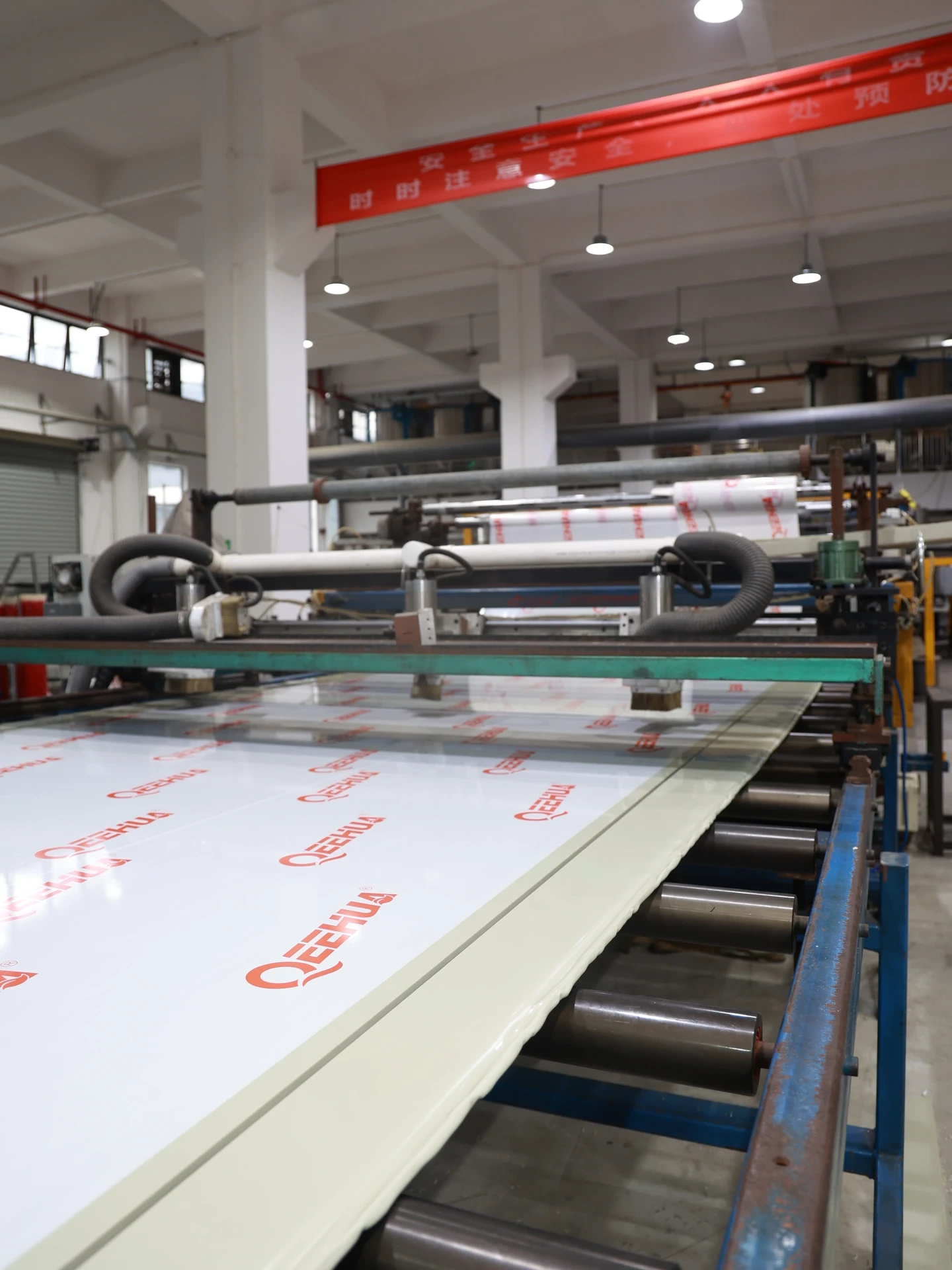
Use the production reference to frame the material discussion: this QEEHUA video shows PP sheet extrusion and sheet formation. It helps a buyer understand where sheet quality and process records fit in a fabricated-tank review; it does not approve a tank design or chemical compatibility.
Video reference: PP Sheet Extrusion: Sheet Formation Process | QEEHUA. The clip is relevant to the sheet-manufacturing step behind a fabricated neutralization tank; confirm the actual grade, design loads, weld procedure, and project conditions before ordering.
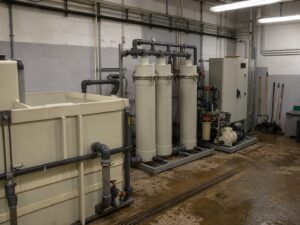
After the tank layout is agreed, check how the neutralization tank connects to the rest of the system. The drain should lead to the intended collection or treatment point, the overflow should have a defined destination, and incompatible liquids should not be routed into a common sump without a written procedure.
A direct procurement checklist for QEEHUA
- State the neutralization process, chemical names, concentration range, pH range, and SDS references.
- Provide working and maximum liquid levels, target volume, tank dimensions, cover, baffles, and access openings.
- List operating, cleaning, and upset temperatures plus expected residence time and dosing sequence.
- Show mixer, pump, nozzle, pipe, ladder, platform, base, and support loads on the project drawing.
- Request the proposed PP sheet option, thickness basis, welding-rod match, joint layout, and inspection records.
- Confirm drain, overflow, secondary containment, discharge route, drawing revision, packing, and delivery constraints.
- Assign final compatibility, structural, and regulatory approval to the responsible project engineer and authority.
Common mistakes that create avoidable risk
- Choosing by capacity alone: a 1,000-liter label does not define liquid head, support, mixer loads, or weld layout.
- Using a single chemical name: mixed streams, dosing chemicals, and cleaning agents can change the exposure.
- Leaving connections to the field: drains, overflow, nozzles, and agitator openings need a controlled drawing.
- Skipping the operating sequence: splash, rapid dosing, and wash-down may govern the review more than steady state.
- Treating a general rule as a project approval: confirm the local permit, EHS procedure, and responsible engineer’s sign-off.
Frequently asked questions
Can PP sheet be used for a chemical neutralization tank?
It can be considered when the chemical duty, concentration, temperature, liquid level, support, welded joints, and operating procedure are reviewed together. QEEHUA-specific suitability and fabrication scope must be confirmed before ordering.
What information should I send for a PP neutralization-tank quotation?
Send the chemical list and SDS files, concentration and temperature ranges, working and maximum liquid levels, tank geometry, mixer and piping loads, drain and overflow concept, drawing revision, inspection requirements, and local project constraints.
Does an EPA wastewater page approve a PP tank design?
No. EPA wastewater information can explain a regulatory context, but it does not approve a material, tank wall design, weld procedure, or site-specific discharge plan. Those decisions require the responsible engineer and applicable authority.
General engineering guidance only. Final material compatibility, structural design, welding quality, regulatory compliance, and operating procedures must be confirmed by the responsible project engineer and the applicable authority.